Skip to content
Recently, a client treating clothing washing wastewater asked whether significant white foam on their Dissolved Air Flotation (DAF) unit surface is normal.
The direct answer is: No.
While minor bubbling is expected in DAF systems, persistent thick white foam indicates the treatment process is out of balance. This issue can reduce treatment efficiency, cause overflow problems, and complicate sludge removal.
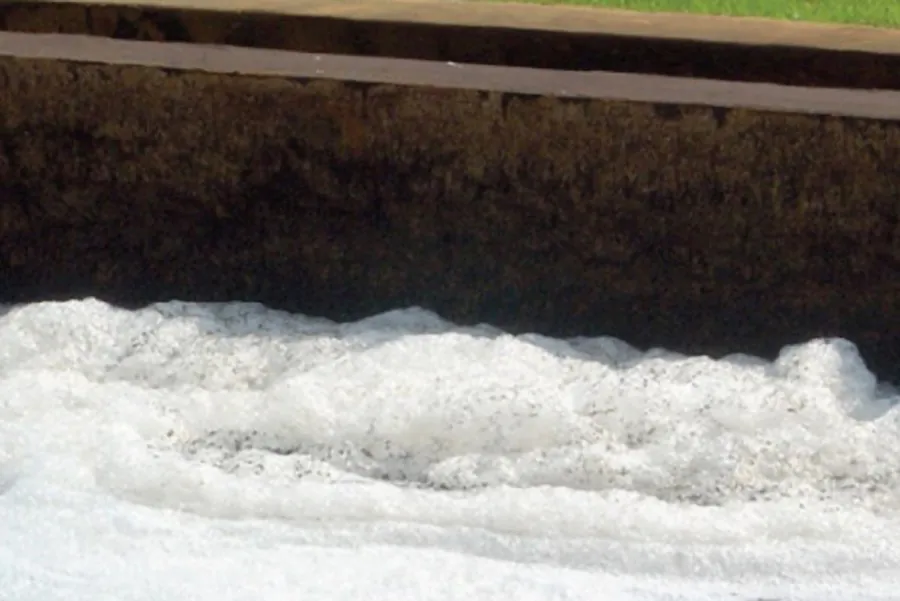
Why Does White Foam Form in a DAF System?
The foam is usually caused by one or a combination of the following factors:
1. Overdosing of Cationic PAM (Most Common Cause)
Explanation:
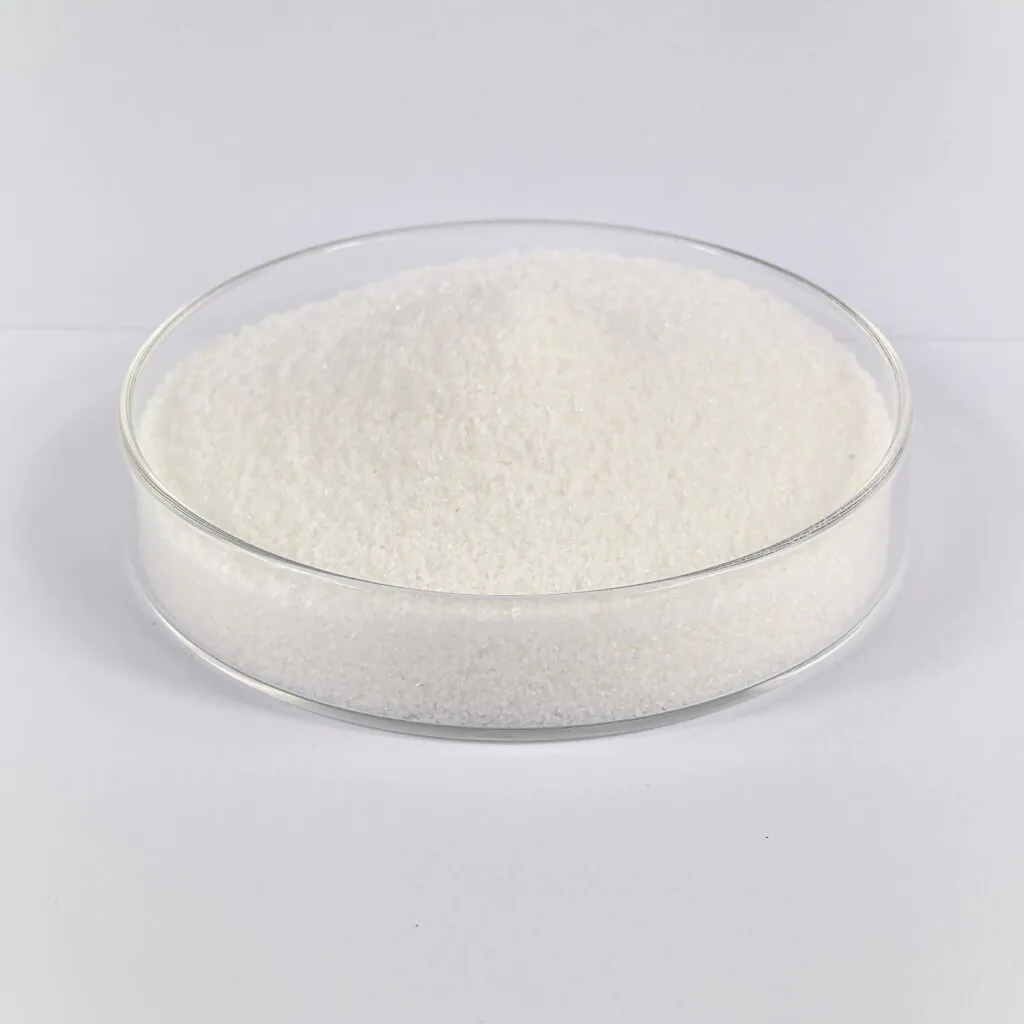
When excessive cationic polyacrylamide (CPAM) is added, not all polymer chains attach to suspended solids. The excess “free” polymer becomes trapped in air bubbles, forming stable, viscous white foam.
Solution:
- Conduct a jar test to determine optimal dosage
- Start with a low dose and increase gradually
- Aim for strong floc formation with minimal surface foam
2. Insufficient Pretreatment with PAC (Coagulant Issue)
Textile wastewater often contains surfactants from detergents and cleaning agents. These are powerful foaming agents.
Explanation:
If the PAC (polyaluminum chloride) dosage is too low, surfactants are not fully neutralized. They enter the DAF system and interact with air bubbles and PAM, intensifying foam formation.
Solution:
- Optimize PAC dosage before adjusting PAM
- Ensure rapid mixing and sufficient reaction time
- Add PAM only after proper coagulation
3. Incorrect Polymer Selection
Cationic PAM varies in charge density (ionicity) and molecular weight.
Explanation:
If the selected CPAM does not match wastewater characteristics (pH, COD, SS), flocculation efficiency drops and foam increases.
Solution:
- Review wastewater analysis (pH, COD, suspended solids)
- Test different charge densities
- Consider trial samples of alternative grades
4. Improper Polymer Preparation
Explanation:
Incomplete dissolution can create undissolved “fish eyes.” These gelatinous particles stabilize foam.
Solution:
- Maintain correct solution concentration (0.1%–0.3%)
- Use gentle mixing
- Allow proper aging time
- Check automatic dosing equipment
5. DAF Operational Parameters
Chemical imbalance is often compounded by mechanical factors.
Explanation:
Excessive recycle ratio or high air pressure creates too many microbubbles, increasing foam formation.
Solution:
- Adjust air-to-water ratio
- Verify saturation tank pressure
- Follow equipment manufacturer guidelines
Recommended Action Plan
Step 1: Perform a Jar Test
Test different PAC and PAM combinations to achieve:
- Clear supernatant
- Large, fast-settling flocs
- Minimal surface foam
Step 2: Optimize PAC First
Coagulation efficiency is the foundation of stable DAF performance.
Step 3: Verify Polymer Preparation
Ensure proper dissolution and aging.
Step 4: Seek Technical Support
Share your latest water analysis report for customized recommendations and product trials.
Conclusion
Significant white foam in a DAF system treating textile wastewater is a clear sign of process imbalance. The most common causes include CPAM overdosing, insufficient PAC pretreatment, improper polymer selection, or incorrect DAF operating parameters.
With proper chemical optimization and system adjustments, foam can be effectively controlled, improving treatment efficiency and sludge management.
If you need assistance selecting the right polyacrylamide or coagulant for your DAF system, contact our technical team for professional support and testing samples.