Skip to content
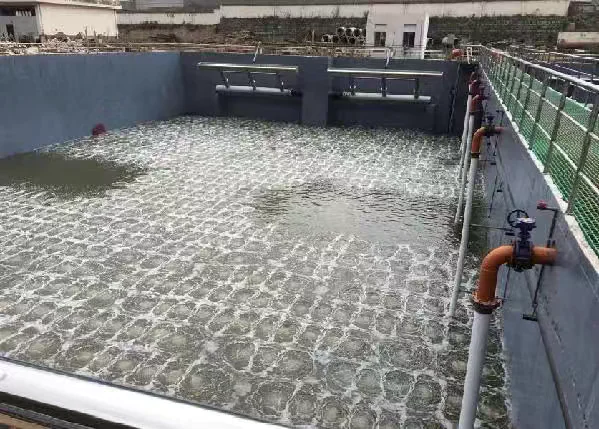
In wastewater treatment, alkalinity in the aeration tank is a critical factor for stable nitrification. ⚠️ Without enough alkalinity, pH drops, nitrification slows, and ammonia nitrogen rises. In serious cases, the whole system may destabilize.
🔹 Why Aeration Tanks Need Alkalinity Supplement?
During nitrification, bacteria convert ammonia to nitrate/nitrite. 👉 This process consumes a large amount of alkalinity, causing pH to fall.
- If influent pH is already <6.5, hydrolysis and acidification push it even lower.
- Nitrifiers lose activity when pH falls below 6.5.
- Even though denitrification generates some alkalinity, if COD is low, it cannot fully offset consumption.
✅ Best operating range: pH 7.0–8.5 (optimum around 7.5).

🔹 Which Alkali Is Best for Supplement?
🏆 First Choice: Soda Ash (Na₂CO₃)
- Mild alkalinity, easy to control.
- Strong base + weak acid salt → no sharp pH swings.
- Larger dosing is needed, but safe and cost-effective.
- Ideal for daily alkalinity maintenance.
⚠️ Use with Caution: Caustic Soda (NaOH solid/liquid)
- Very strong base, highly corrosive.
- pH rises fast, risk of pH shock.
- Above pH 8.5 → ammonia becomes free ammonia (toxic to microbes).
- Best for emergency neutralization, not for daily use.
❌ Not Recommended: Sodium Bicarbonate (NaHCO₃)
- Weak alkalinity, a very large dose required.
- High cost, low efficiency.
- Overdosing may release CO₂, causing foaming.
- Rarely used in wastewater treatment.
📌 Final Recommendation
- ✅ Preferred alkali: Soda Ash (Na₂CO₃)
- ⚠️ Caution: Caustic Soda (NaOH)
- ❌ Not recommended: Sodium Bicarbonate (NaHCO₃)
👉 Keeping alkalinity stable is the foundation of nitrification stability and efficiency. With stricter discharge standards worldwide, scientific dosing and precise pH control are essential for compliance and cost efficiency.