Skip to content
In wastewater treatment, nitrification failure is rarely caused by a lack of nitrifying bacteria — it’s almost always a pH problem. And pH problems in the aeration tank almost always trace back to alkalinity depletion. Understanding this relationship is the foundation of stable ammonia nitrogen compliance.
How Nitrification Consumes Alkalinity
Nitrifying bacteria convert ammonia to nitrate through a two-step oxidation process. This reaction consumes approximately 7.14 g of alkalinity (as CaCO₃) per gram of NH₄⁺-N oxidized. In practical terms, a plant treating influent with 40 mg/L ammonia nitrogen consumes roughly 285 mg/L of alkalinity through nitrification alone — before accounting for any influent alkalinity deficit.
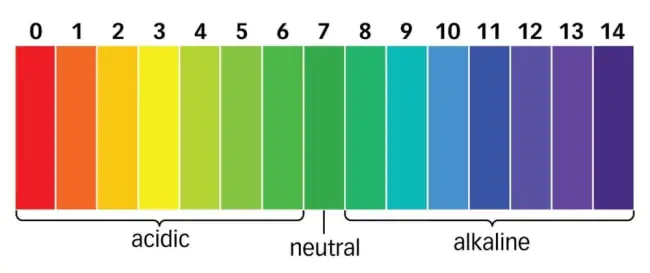
When alkalinity is depleted faster than it’s replenished, pH drops in the aeration tank. The consequences are direct and rapid:
- pH < 7.0: Nitrification rate begins declining measurably
- pH < 6.5: Nitrifying bacteria lose significant activity; ammonia nitrogen in effluent rises
- pH < 6.0: Nitrification effectively stops; system destabilization follows
Denitrification in the anoxic zone regenerates approximately 3.57 g alkalinity per gram of NO₃⁻-N reduced — roughly half of what nitrification consumed. In systems with adequate carbon for denitrification, this partial recovery helps, but it rarely compensates fully, particularly when influent COD is low or denitrification is incomplete.
Target operating range: pH 7.0–8.5, with optimal nitrification performance around pH 7.5. Maintaining residual alkalinity above 80–100 mg/L as CaCO₃ in the aeration tank provides a pH buffer that absorbs load fluctuations without dropping into the inhibitory range.
Three Alkalinity Sources Compared
Not all alkalinity supplements are equivalent in practice. The choice affects pH stability, operator safety, and daily operating cost.
Soda Ash (Na₂CO₃) — First Choice for Daily Alkalinity Maintenance
Soda ash is the most operationally reliable choice for routine alkalinity supplementation. As a salt of a strong base and weak acid, it buffers pH rather than driving sharp increases — dissolving soda ash in the aeration tank raises alkalinity without the overshoot risk that strong bases present.
Practical advantages for daily use:
- pH response is gradual and controllable — overshoot above 8.5 is unlikely at normal dosing rates
- Safe to handle compared to caustic soda — lower corrosion risk to equipment and operators
- Consistent performance across the normal operating pH range
The limitation is volume — soda ash requires larger mass per unit of alkalinity added compared to caustic soda, increasing storage and handling requirements for high-volume systems. Typical dosage: 1.06 g Na₂CO₃ provides 1 g alkalinity as CaCO₃.
Caustic Soda (NaOH) — Emergency Use Only
NaOH is a strong base that raises pH rapidly. In emergency situations — influent pH crash, acute acid shock load — this speed is valuable. For routine daily use, it creates more problems than it solves.
The specific risk in nitrification systems: pH above 8.5 shifts the ammonia equilibrium toward free ammonia (NH₃), which is toxic to nitrifying bacteria at concentrations above 1–5 mg/L. A NaOH overdose that pushes pH to 9.0–9.5 can suppress the very nitrification process it was intended to protect — the opposite of the intended outcome.
NaOH also presents significant operator safety risks and is highly corrosive to dosing equipment without appropriate material selection. Reserve it for emergency neutralization, not scheduled alkalinity supplementation.
Sodium Bicarbonate (NaHCO₃) — Not Recommended for Wastewater Treatment
Sodium bicarbonate provides weak alkalinity — approximately 0.6 g alkalinity as CaCO₃ per gram of NaHCO₃ — requiring very large dosing volumes to maintain adequate alkalinity in the aeration tank. The cost per unit of alkalinity added is significantly higher than soda ash, and at high dosing rates the CO₂ released during bicarbonate dissolution can contribute to foaming in aeration basins. It finds limited practical application in wastewater treatment where soda ash or lime are both more cost-effective.
Practical Alkalinity Dosing Guidance
| Parameter | Target Value |
|---|---|
| Aeration tank pH | 7.0–8.5 (optimum 7.5) |
| Residual alkalinity in aeration tank | ≥ 80–100 mg/L as CaCO₃ |
| Alkalinity consumed per g NH₄⁺-N oxidized | 7.14 g as CaCO₃ |
| Alkalinity recovered per g NO₃⁻-N denitrified | 3.57 g as CaCO₃ |
| Soda ash dosage (typical) | Calculate based on measured alkalinity deficit |
Calculate your alkalinity requirement before selecting a dosing rate. Measure influent alkalinity, calculate nitrification consumption based on ammonia load, subtract denitrification recovery, and dose to maintain the 80–100 mg/L residual target. Adjusting dosage based on measured aeration tank pH alone — without tracking alkalinity — leads to reactive over- and under-dosing that creates the pH instability it’s meant to prevent.
FAQ
Q: How do I calculate how much soda ash to add to maintain alkalinity in my aeration tank?
A: Measure influent alkalinity and ammonia nitrogen concentration. Calculate alkalinity consumed: NH₄⁺-N load (mg/L) × 7.14 = alkalinity consumed (mg/L as CaCO₃). Subtract influent alkalinity and denitrification recovery. The deficit is the alkalinity you need to supplement. Convert to soda ash mass: alkalinity deficit (mg/L as CaCO₃) × 1.06 = soda ash dose in mg/L. Adjust based on measured aeration tank pH and alkalinity weekly until the system stabilizes.
Q: What is the difference between using lime versus soda ash for alkalinity supplementation in wastewater treatment?
A: Lime (Ca(OH)₂) is cheaper per unit of alkalinity but less soluble — it requires slurrying and proper mixing to dissolve completely, and calcium addition can contribute to scaling in aeration equipment over time. Soda ash is fully soluble, easier to handle in solution form, and produces no scaling risk. For large-volume systems where chemical cost is the primary concern, lime is often more economical. For smaller systems or where equipment scaling is a concern, soda ash is the more practical choice despite higher unit cost.
Q: At what effluent ammonia level should I start investigating alkalinity depletion as the cause?
A: If effluent NH₄⁺-N rises above your target without a corresponding increase in influent load, check aeration tank pH and alkalinity immediately. pH below 7.2 combined with rising effluent ammonia strongly suggests alkalinity depletion. Confirm by measuring alkalinity in the aeration tank — if below 50 mg/L as CaCO₃, alkalinity is limiting nitrification. Begin supplementation and expect 24–48 hours for the nitrifying population to recover activity after pH stabilizes.
Alkalinity Is Cheap — Nitrification Failure Is Not
Soda ash costs a fraction of what effluent ammonia violations cost in penalties, resampling, and regulatory scrutiny. The investment in consistent alkalinity monitoring and supplementation — measuring aeration tank pH and alkalinity at least daily, calculating dosage rather than estimating it, and using soda ash rather than caustic soda for routine maintenance — pays back immediately in stable nitrification performance and predictable compliance.
For process chemical supply or technical support on nitrification system optimization, contact our team for recommendations tailored to your influent characteristics and treatment configuration.