Skip to content
In wastewater treatment, low winter temperatures can reduce the performance of key chemicals like Polyacrylamide (PAM) and Polyaluminum Chloride (PAC). Cold water can lower treatment efficiency, increase chemical use, and affect effluent quality. Here’s how to maintain stable and cost-effective operations during cold weather.
How Low Temperatures Affect Flocculants
Cold water (below 10°C / 50°F) impacts chemical processes:
- Reduced Molecular Activity: Slower diffusion lowers collisions between chemicals and particles.
- Increased Water Viscosity: Slows floc growth and settling.
- Altered PAC Hydrolysis: Slows formation of aluminum hydroxide flocs, reducing coagulation efficiency.
Specific Effects:
- PAM:
- Slower dissolution can form “fish eyes” (gel clumps).
- Molecular chains become less flexible, weakening the bridging needed for strong flocs.
- PAC:
- Slower floc formation produces smaller, looser flocs.
- Settling and filtration are less effective.
Best Practices for Cold Weather Operations
1. Chemical Preparation & Dosing
- Warm Water Dissolution: Prepare PAM in 15–25°C (59–77°F) water to prevent clumping. PAC also benefits from slightly warm water.
- Extended Mixing: PAM may need 60–90 minutes gentle agitation to fully dissolve.
- Adjust Dosage: Cold conditions often require higher dosages. Determine amounts with frequent jar tests.
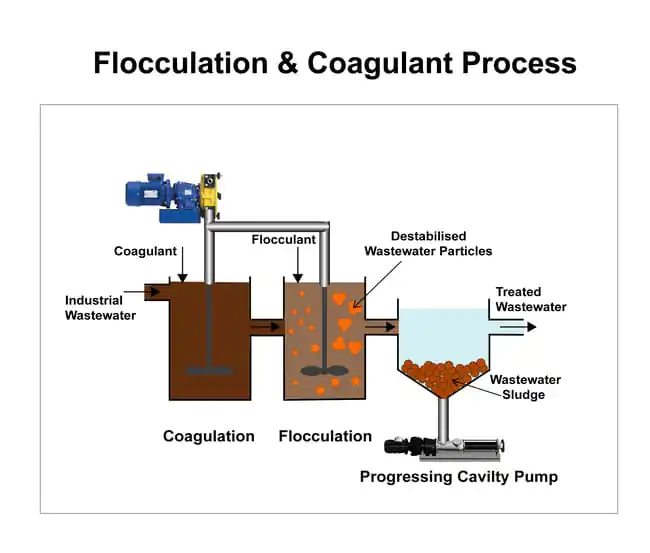
- Optimize Dosing Points: PAC added earlier; PAM added after coagulation to protect flocs.
2. Process Optimization
- pH Control: Maintain 6.5–7.8 for PAC coagulation. Monitor frequently in winter.
- Gentle Mixing: Use lower mixing energy after PAM addition to protect fragile flocs.
- Extended Settling: Allow longer retention in clarifiers to account for slower settling.
3. Application Tips
- Sewage Treatment: Ensure dense flocs in primary and secondary clarification for better solids removal.
- Sludge Dewatering: Use cationic PAM with higher charge or dosage for effective cold sludge conditioning. Mix thoroughly before centrifuge or belt press.
4. Storage & Handling
- Store liquid PAC and PAM in insulated or temperature-controlled areas to avoid freezing.
- Keep dry PAM above freezing to prevent caking.
Conclusion
Winter wastewater treatment requires proactive adaptation. By understanding low-temperature impacts on PAM and PAC, operators can:
- Adjust dissolution methods
- Optimize dosages and dosing points
- Fine-tune process parameters
Frequent jar testing ensures efficient, compliant, and economical plant operation during cold seasons.
Contact us to learn how our high-quality PAM and PAC solutions can improve your winter wastewater treatment performance.