Skip to content
Sand washing wastewater looks straightforward until you’re standing in front of a system that isn’t working. High suspended solids, variable inflow concentration, and the abrasive nature of the particulate load create treatment challenges that generic equipment configurations consistently underestimate. We recently completed a full commissioning and system upgrade at a sand washing facility where the installed treatment system was producing inconsistent effluent quality and poor sludge dewatering results despite using appropriate chemistry. What we found on-site was a textbook case of how equipment configuration and dosing method failures can undermine an otherwise sound treatment design.
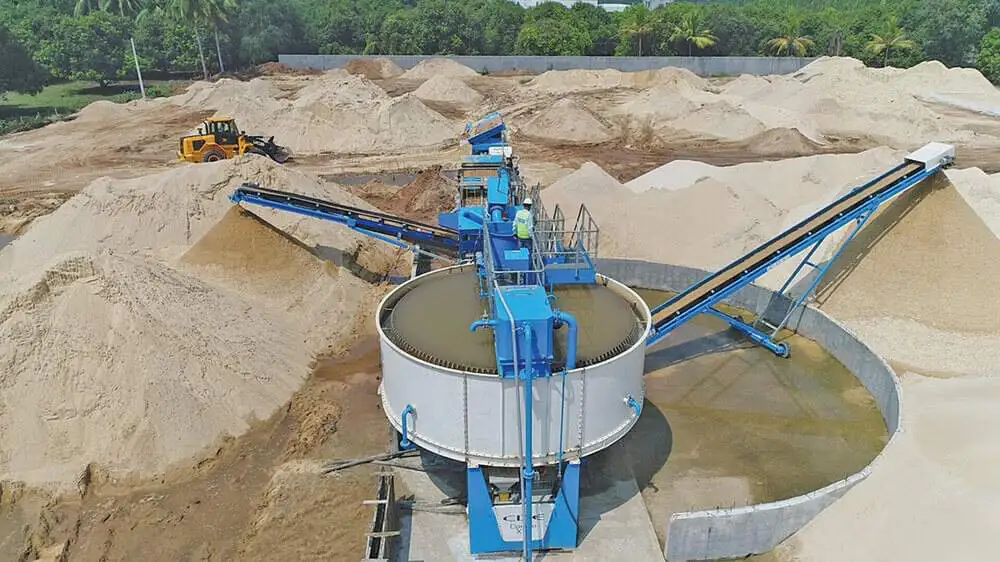
What We Found During On-Site Inspection
Our technical team conducted a thorough review of the existing process configuration, equipment condition, and chemical-wastewater interaction before recommending any changes. Four interconnected problems were identified — each one degrading system performance independently, and compounding each other in ways that made the root cause difficult to identify without a systematic site assessment.
Problem 1: Dosing Tank Capacity Insufficient for Peak Flow Conditions
The facility operated two 1-tonne dosing tanks in alternating service. Under normal flow conditions, this arrangement functioned adequately. During peak production periods — when sand washing throughput increased and wastewater flow rate rose — the system couldn’t keep pace. Tank switching intervals weren’t fast enough to maintain continuous chemical supply, and critically, the dissolution time available before each tank went into service was insufficient for complete PAM hydration.
Incompletely dissolved PAM is a significant problem that operators often underestimate. Polymer gel particles that haven’t fully hydrated don’t contribute to flocculation — they simply pass through the system as undissolved material while the system effectively runs at a fraction of the intended chemical dose. The visible symptom was weak, small flocs during peak flow periods that operators attributed to insufficient dosage, which led to further chemical additions without addressing the actual root cause.
Problem 2: Gravity Dosing Created Uncontrolled Dose Variation
The existing dosing method relied on gravity feed through bottom-mounted pipes and valves. This approach introduces a fundamental control problem: as the tank empties and liquid level drops, hydrostatic pressure decreases proportionally, reducing flow rate through the dosing outlet. A full tank delivers significantly more chemical per unit time than a tank at 20% capacity — without any change to the valve setting.
In practice, this meant the actual chemical dose delivered to the wastewater varied continuously through each tank cycle, peaking when the tank was full and declining progressively as it emptied. The system was never operating at a consistent, known dosage — operators were managing a moving target without realizing it. Treatment performance appeared random because the dosage actually was random within each cycle.
Problem 3: Inadequate Mixing Infrastructure Reduced Contact Efficiency
The flow channel connecting the dosing point to the sedimentation stage had minimal baffle infrastructure. Without sufficient turbulence to distribute the dosed chemical through the full cross-section of the wastewater flow, PAC and PAM were reacting only with the fraction of the flow they directly contacted — leaving a significant proportion of suspended solids uncoagulated.
Poor mixing has a compounding effect on chemical consumption: operators observing inadequate flocculation increase chemical dose, but additional chemical added to a poorly mixed system simply reacts with already-coagulated material rather than reaching the untreated fraction. We found evidence of this pattern in the facility’s chemical consumption records — dosage had been progressively increased over several months without corresponding improvement in effluent quality.
Problem 4: High Sludge Concentration Requiring Precise Dosage Calibration
Sand washing wastewater at this facility carried suspended solids concentrations of 3,000–8,000 mg/L during normal production — significantly higher than typical construction runoff or quarry discharge. At these concentrations, the relationship between chemical dose and flocculation performance is less forgiving than in lower-concentration streams. Underdosing by even 15–20% below the optimal rate produced noticeably weaker floc structure, while the poor dissolution and inconsistent gravity dosing described above meant the system was routinely operating below optimal dose even when tank settings suggested otherwise.
The combination of high suspended solids load and inconsistent dosing created a sedimentation zone that was receiving inadequately conditioned sludge — loose, fine flocs that settled slowly, produced a low-density thickened sludge, and transferred poorly conditioned material to the downstream plate-and-frame filter press.
Problem 5: Downstream Dewatering Performance Limited by Upstream Conditioning Failures
The plate-and-frame filter press was performing below design capacity, producing wet cake with high residual moisture and slow cycle times. This is almost always a symptom of inadequate chemical conditioning upstream rather than a filter press problem in isolation — and this case was no exception. Loose, poorly formed flocs compress under press pressure and seal drainage channels within the cake, preventing water release even at high pressing pressure.
When we examined the sludge entering the press, floc structure was clearly insufficient: small particle size, low structural rigidity, and poor water release when squeezed by hand — a simple but reliable field indicator of conditioning quality before running any formal analysis.
Solutions Implemented During Commissioning
Our team developed a four-part improvement plan in direct collaboration with the facility operators, prioritizing changes that could be implemented without major civil works or equipment replacement where possible.
Solution 1: Dosing Tank Capacity and Pre-Dissolution Protocol
Rather than immediately replacing the existing tanks, we implemented a pre-dissolution protocol as the first step — dissolving PAM in the off-duty tank for a full 60-minute maturation period before switching it into service. This change alone improved dissolved polymer quality measurably: solution viscosity at the same preparation concentration increased by approximately 25%, indicating significantly better polymer chain extension compared to the previous practice of using solution immediately after visible dissolution.
For longer-term reliability, we recommended upgrading to larger-capacity tanks — a minimum of 3–5 tonnes per tank — to extend the time window available for proper dissolution and reduce the frequency of tank switching during peak production periods. This upgrade eliminates the capacity constraint entirely rather than managing around it.
Solution 2: Metering Pump Replacement for Gravity Dosing
Gravity dosing valves were replaced with peristaltic metering pumps calibrated to actual flow measurement at the treatment system inlet. Metering pumps deliver a precisely controlled volume per stroke regardless of tank liquid level, eliminating the dose variation that gravity systems introduce. This single change transformed chemical addition from an uncontrolled variable into a measurable, adjustable parameter.
With consistent dosing established, we could conduct meaningful jar testing to determine actual optimal PAC and PAM dosages for the facility’s wastewater — something that wasn’t possible while dosage was varying continuously. Optimal dosages confirmed through jar testing at consistent concentrations were 20–30% lower than the doses operators had been using previously in attempts to compensate for inconsistent treatment performance, representing immediate chemical cost reduction.
Solution 3: Flow Channel Baffle Modification
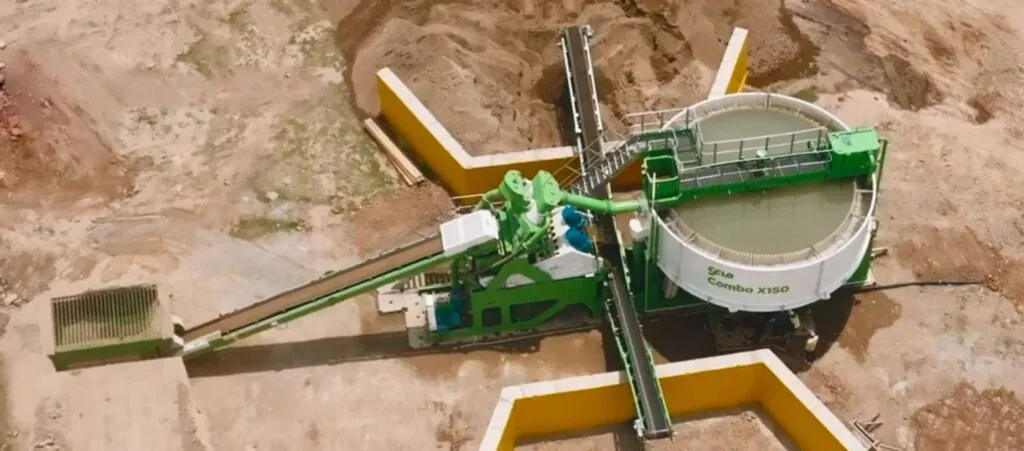
Additional baffles were installed in the reaction channel at calculated intervals to create controlled turbulence zones that distributed chemical through the full cross-section of the wastewater flow. Baffle spacing and geometry were designed to achieve a G value of 50–150 s⁻¹ in the rapid mixing zone immediately after dosing, transitioning to 20–50 s⁻¹ in the flocculation zone downstream — conditions suited to growing large, structurally robust flocs from the initial micro-flocs formed during rapid mixing.
This modification required only materials and fabrication work using existing channel infrastructure, making it one of the lowest-cost interventions with one of the most significant performance impacts. After installation, visual observation of floc quality at the sedimentation inlet showed markedly larger, more uniform floc particles compared to pre-modification conditions.
Solution 4: Dosage Optimization Based on Measured Sludge Concentration
With consistent dosing equipment and proper mixing in place, we conducted systematic dosage optimization using jar testing across the range of suspended solids concentrations the facility typically processes. This established a dosage-concentration relationship that operators could use to adjust chemical addition when wastewater concentration changes with production conditions.
Optimized dosages for this facility’s wastewater: PAC at 150–250 mg/L for coagulation, followed by PAM (anionic, 8–12 million Da) at 2–4 mg/L for flocculation. After valve adjustment and dosage calibration to these targets, floc quality changed visibly within one operating cycle — flocs became larger, more compact, and settled rapidly to produce a dense sludge blanket in the thickening tank rather than the diffuse, slow-settling suspension seen previously.
Results After Commissioning and Optimization
The combined effect of all four improvements was measurable across every performance indicator we monitored during and after commissioning.
| Performance Indicator | Before Optimization | After Optimization |
|---|---|---|
| Effluent Suspended Solids | 200–500 mg/L (variable) | < 50 mg/L (stable) |
| Effluent Turbidity | 80–200 NTU | ≤ 15 NTU |
| Floc Formation Quality | Small, loose, variable | Large, compact, consistent |
| Filter Press Cycle Time | 45–60 minutes | 25–35 minutes |
| Filter Cake Moisture | 82–88% | 74–80% |
| Chemical Consumption | Inconsistent, trending upward | Reduced 20–30% at optimized dose |
| System Operational Stability | Frequent manual adjustment needed | Stable across production shifts |
The filter press performance improvement was particularly significant for the facility’s operations — shorter cycle times and drier cake directly reduce sludge disposal volume and transport cost, which represents one of the largest operational cost line items for sand washing operations with significant sludge output.
The facility’s operators reported that system management became substantially less labor-intensive after optimization. Previously, operators were making manual adjustments multiple times per shift to chase variable treatment performance. After commissioning, the system ran consistently within acceptable parameters across normal production variation without constant intervention.
FAQ
Q: How do I know if my PAM is fully dissolved before using it in sand washing wastewater treatment?
A: Check solution viscosity — properly dissolved 0.1–0.2% PAM solution should feel noticeably thicker than water when rubbed between fingers. Visually, there should be no visible gel particles or undissolved lumps. Allow at least 40–60 minutes maturation time after mixing. If you’re unsure, extend maturation time before switching tanks into service — under-dissolved PAM is a common hidden cause of poor flocculation performance.
Q: What is the difference between using PAC alone versus PAC combined with PAM for sand washing wastewater?
A: PAC alone handles charge neutralization and forms micro-flocs, but micro-flocs settle slowly and don’t dewater well on a filter press. Adding PAM bridges micro-flocs into large, dense aggregates that settle rapidly and release water efficiently under press pressure. For high suspended solids sand washing wastewater above 1,000 mg/L SS, the PAC-PAM combination consistently outperforms PAC alone on both effluent quality and dewatering efficiency.
Q: How often should chemical dosage be adjusted at a sand washing plant, and what triggers the adjustment?
A: Monitor influent suspended solids at least twice per shift during production — sand washing wastewater concentration varies significantly with feed material type and washing intensity. Adjust PAC and PAM dosage when SS changes by more than 30% from the calibrated baseline. Maintain a simple dosage-concentration chart from your jar test results so operators can make quick adjustments without guesswork.
The Right Equipment Configuration Makes Chemistry Work
The chemistry at this facility was never fundamentally wrong — PAC and PAM were the correct treatment approach for sand washing wastewater. What was wrong was the infrastructure supporting chemical delivery: inadequate dissolution time, uncontrolled dosing, and insufficient mixing. These equipment and configuration failures made it impossible for correct chemistry to deliver correct results, and progressive dosage increases made the economics worse without solving the underlying problem.
If your sand washing treatment system is producing inconsistent effluent quality or poor dewatering performance despite using appropriate chemicals, the diagnosis almost always starts with dissolution quality, dosing consistency, and mixing infrastructure — not chemical type. Our technical team provides on-site commissioning support, system audits, and chemical optimization for sand washing and aggregate processing wastewater. Contact us to discuss your facility’s specific challenges.