
We get this question regularly from procurement teams and plant operators: can industrial-grade PAC be used in drinking water treatment? The answer is no — and the reasons go beyond regulatory formality. This article explains what actually differs between the two grades and why using the wrong one creates real compliance and safety risks.
Why the Distinction Matters
Both grades share the same chemical name — polyaluminium chloride — and both work through the same coagulation mechanism. The difference lies in raw material purity, production process, and the contaminants that remain in the final product.
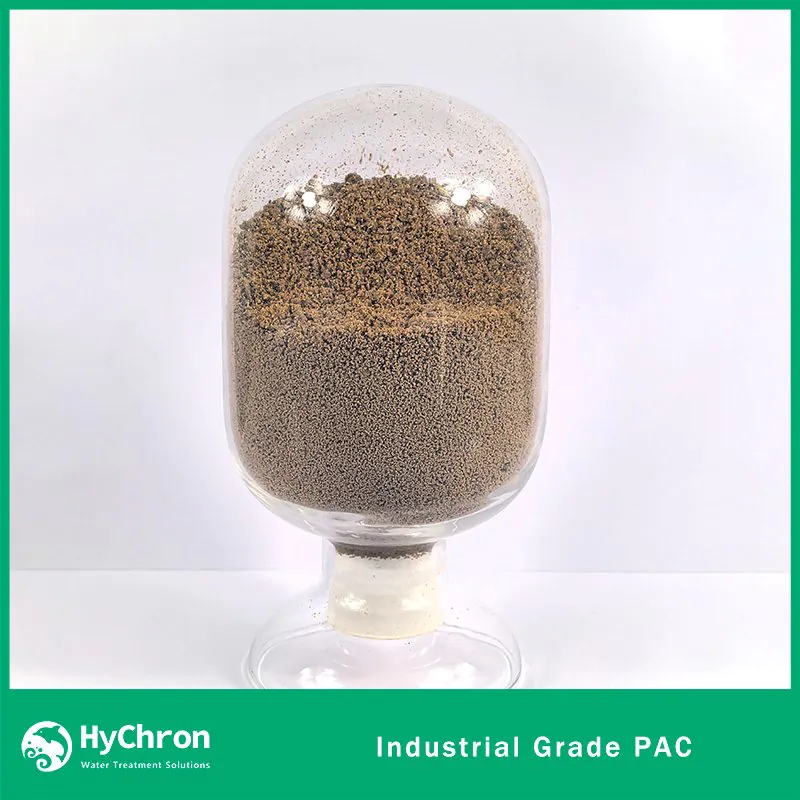
In wastewater treatment, trace heavy metals and elevated iron content in industrial PAC are acceptable because the treated water doesn’t enter the human body. In drinking water treatment, those same impurities accumulate in finished water consumed daily — which is why potable-grade PAC is subject to strict heavy metal limits, residual aluminum controls, and mandatory safety certification.
Using industrial PAC in a drinking water plant isn’t a minor procedural issue. It’s a regulatory violation with public health consequences, regardless of how clear the treated water appears.
Side-by-Side Comparison
| Parameter | Industrial Grade PAC | Drinking Water Grade PAC |
|---|---|---|
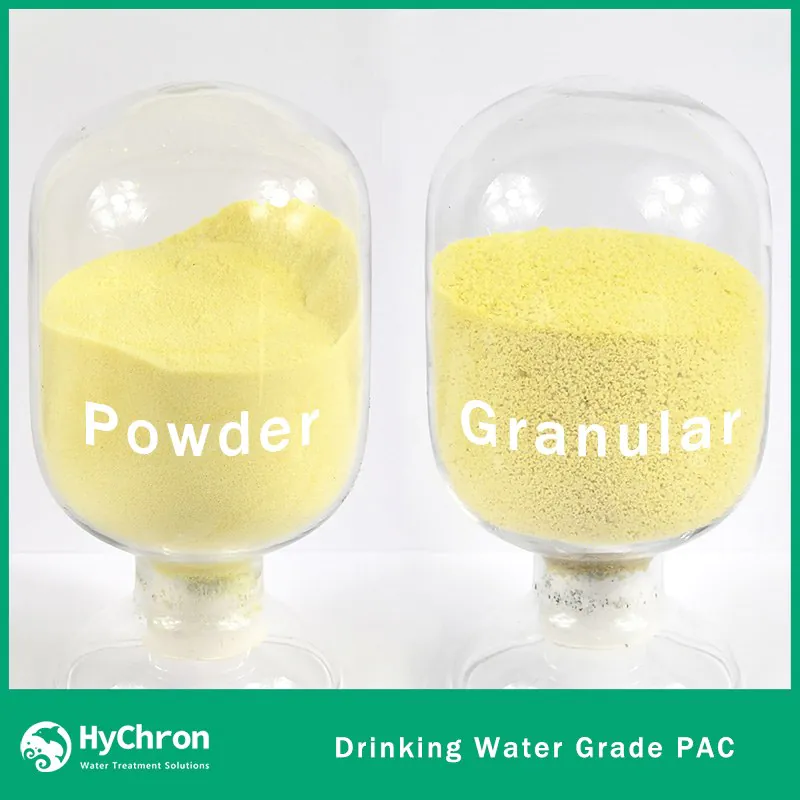
| Color | Dark yellow to brown | Light yellow or golden |
| Al₂O₃ Content | 22–28% | ≥ 30% (tightly controlled) |
| Iron Content | Higher tolerance | Strictly limited (typically < 200 mg/kg) |
| Heavy Metals | Acceptable trace levels | Lead < 5 mg/kg, Arsenic < 5 mg/kg, Cadmium < 1 mg/kg |
| Insoluble Matter | Higher | Very low |
| Production Method | Drum / rotary kiln process | Pressure filtration or spray drying |
| Safety Certification | Not required | NSF/ANSI 60, GB 15892, or equivalent |
| Cost | Lower | Higher |
| Potable water use | ❌ Not acceptable | ✅ Required |
The production method difference is significant. Drum-process industrial PAC uses traditional aluminum and iron-containing raw materials at lower processing temperatures, leaving higher iron and heavy metal residues in the final product. Pressure filtration and spray drying processes used for drinking water PAC remove these impurities, producing a purer, more stable coagulant with lower residual aluminum in treated water.
What Industrial PAC Is Designed For
Industrial PAC prioritizes coagulation efficiency and cost-effectiveness over purity. Its higher iron content actually contributes to coagulation performance in harsh wastewater — iron species provide additional charge neutralization and help form denser floc in high-COD, high-turbidity industrial effluent.
Typical applications where industrial PAC is the correct choice:
- Municipal sewage treatment
- Industrial effluent — steel, mining, chemical, paper mill
- Electroplating and metal finishing wastewater
- Construction site runoff and wash water
The dark color of industrial PAC (caused by iron content) is a reliable visual indicator that it is not the drinking water grade. If a supplier offers brown or dark yellow PAC for drinking water use, that is a red flag.
What Drinking Water PAC Is Designed For
Drinking water PAC meets the purity requirements that make it safe for use in systems where treated water is consumed by people. Higher Al₂O₃ content (≥ 30%) means better coagulation efficiency per kilogram, which partially offsets the higher unit price. Lower iron content means no color contribution to finished water. Controlled heavy metal limits mean no toxic accumulation in distributed water.
Applications that require drinking water-grade PAC without exception:
- Municipal water treatment plants
- Surface water purification (rivers, reservoirs, lakes)
- Emergency water supply systems
- Any system where treated water contacts humans directly
Drinking water PAC must come with a valid safety certification — NSF/ANSI 60 in North America, GB 15892 in China, or the equivalent standard in your jurisdiction. Request the original certificate, verify its validity date, and confirm the certified product matches exactly what is being supplied. Certificates for one product used to justify a different grade are a documented problem in PAC procurement.
FAQ
Q: How can I visually distinguish industrial PAC from drinking water PAC if they arrive unlabeled?
A: Color is the most reliable field indicator. Drinking water PAC is light yellow to golden — industrial PAC is darker yellow, amber, or brown due to higher iron content. Dissolve a small amount in clean water and compare the solution color. However, visual inspection is not a substitute for requesting a certificate of analysis with heavy metal test results for every delivery batch.
Q: Can drinking water PAC be used in industrial wastewater treatment instead of industrial grade?
A: Yes — drinking water PAC will work in wastewater applications, but it costs significantly more per kilogram for no additional treatment benefit in non-potable systems. The purity controls that justify the higher cost of drinking water PAC are irrelevant in industrial wastewater treatment. Use industrial-grade PAC for wastewater and reserve the certified grade for drinking water systems.
Q: What happens if industrial PAC is accidentally used in a drinking water plant?
A: Depending on the duration and dosage, residual heavy metals — particularly lead, arsenic, and cadmium — may accumulate in distributed water above regulatory limits. This creates immediate compliance liability, potential public health notification requirements, and in most jurisdictions triggers investigation by the water safety authority. If industrial PAC is used by mistake, stop dosing immediately, flush the system, test finished water for heavy metals, and notify the relevant regulatory body according to local requirements.
The Grade Decision Is a Safety Decision
Both PAC grades perform coagulation effectively in their intended applications. The distinction isn’t about which product works better — it’s about which contaminants are acceptable in the treated water. Industrial PAC is cost-effective and reliable for wastewater. Drinking water PAC is the only legally and ethically acceptable choice for potable water treatment. Matching grade to application is the starting point of responsible PAC procurement.
HyChron supplies both industrial-grade and certified drinking water-grade PAC with batch-specific certificates of analysis. Contact our team for product specifications or certification documentation for your application.