Skip to content
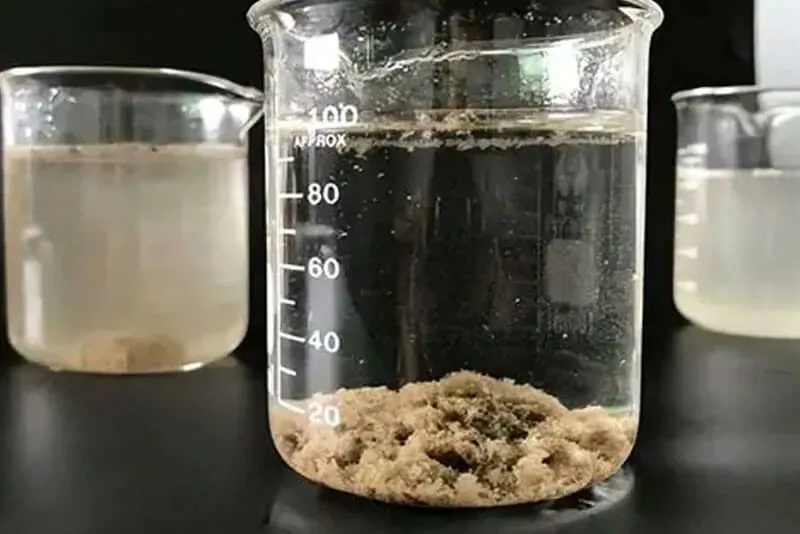
Polyaluminum Chloride (PAC) is one of the most widely used inorganic polymer coagulants in modern water treatment. Its primary function is to gather tiny suspended particles and colloids that are difficult to settle naturally, forming large and dense flocs that can be removed through sedimentation or flotation.
Through a series of physicochemical reactions, PAC acts as both a charge neutralizer and a particle binder, making it indispensable in drinking water and wastewater treatment systems.
1. Core Function: Coagulation and Flocculation
The action of PAC can be divided into two major stages:
(1) Double Layer Compression and Charge Neutralization
Colloidal particles in water—such as clay, bacteria, viruses, and organic matter—are typically negatively charged. Because like charges repel, these particles remain stably suspended.
When PAC dissolves in water, it hydrolyzes to form highly positively charged aluminum complexes. These:
- Neutralize negative surface charges
- Reduce electrostatic repulsion
- Destabilize colloidal systems
- Allow particles to approach and aggregate
This step is known as coagulation.
(2) Adsorption, Bridging, and Sweep Flocculation
PAC hydrolysis produces aluminum hydroxide (Al(OH)₃) gel with strong adsorption capacity.
Adsorption and Bridging
- Gel particles attach to multiple destabilized colloids
- Act as “bridges” connecting particles
- Form large three-dimensional floc structures
Enmeshment and Sweeping
- Growing flocs trap fine particles
- Capture organic matter and pollutants
- Settle rapidly during sedimentation
This stage is known as flocculation.
2. Main Application Areas and Roles
Based on these mechanisms, PAC plays critical roles in various treatment systems.
In Drinking Water Treatment
Turbidity Removal
Removes suspended solids such as silt and clay, producing clear water.
Color Removal
Eliminates color caused by humic and fulvic acids.
Microorganism Reduction
Removes bacteria and viruses attached to particles, reducing disinfection load.
In Industrial Wastewater Treatment
Suspended Solids Removal
Effective for:
- Coal washing wastewater
- Printing and dyeing effluent
- Papermaking wastewater
- Food processing wastewater
Chemical Phosphorus Removal
Aluminum ions react with phosphate to form insoluble aluminum phosphate, enabling efficient total phosphorus reduction.
Demulsification and Oil Removal
Destabilizes emulsified oils for easier separation.

In Municipal Sewage Treatment
Enhanced Primary Treatment
Improves removal of:
- Suspended solids (SS)
- Biochemical Oxygen Demand (BOD)
Chemical Phosphorus Control
Helps meet strict discharge standards.
3. Advantages of PAC Over Traditional Coagulants
Compared to aluminum sulfate (alum), PAC offers several benefits:
Superior Floc Formation
- Larger and denser flocs
- Faster settling rate
- Higher clarification efficiency
Strong Adaptability
- Effective across a wide pH range
- Performs well in low-temperature, low-turbidity water
Lower Dosage Requirement
Achieves equal or better performance at reduced chemical dosage.
Lower Corrosion Risk
Less aggressive toward equipment and pipelines.
Reduced Residual Aluminum
Safer for drinking water applications.
Conclusion
Polyaluminum Chloride acts as a powerful “scavenger” in water treatment systems. Through charge neutralization, adsorption-bridging, and sweep flocculation, it transforms invisible dispersed impurities into large, removable flocs.
Its efficiency, adaptability, and cost-effectiveness make PAC a cornerstone chemical in modern drinking water, municipal sewage, and industrial wastewater treatment processes.