Skip to content
Are PAM and Coagulants the Same Thing?
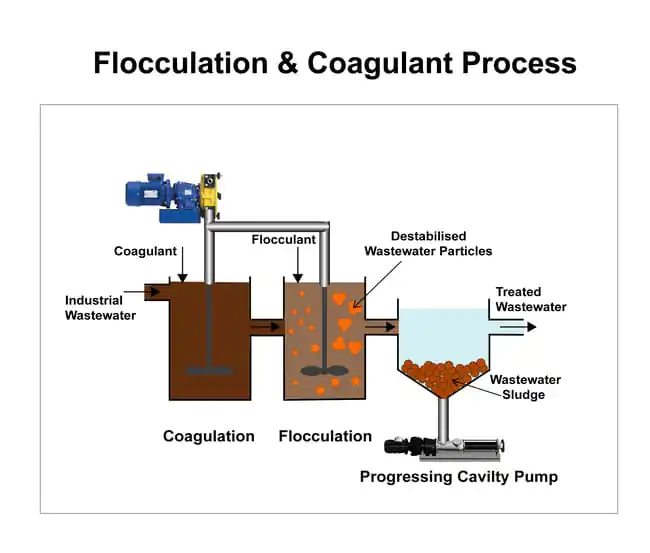
In water treatment, the terms “coagulant” and “flocculant” are often used together — but they serve different roles.
Traditional coagulants such as:
- Aluminum sulfate (alum)
- Ferric chloride
- Polymeric aluminum salts
Primarily work through charge neutralization.
Polyacrylamide (PAM), on the other hand, functions mainly through polymer bridging and floc strengthening.
Understanding this difference is essential for process optimization.
How Traditional Coagulants Work
Coagulants destabilize negatively charged colloidal particles in water by neutralizing their surface charges.
This results in:
- Formation of microflocs
- Initial particle aggregation
- Reduced electrostatic repulsion
However, microflocs formed by coagulants alone are often small and fragile.
This can lead to:
- Slow sedimentation
- Poor sludge compaction
- Higher turbidity carryover
How PAM Works Differently
Polyacrylamide acts mainly as a flocculant.
Its long molecular chains:
- Connect multiple particles
- Strengthen floc structure
- Increase floc size and density
The result is:
- Faster settling
- Better sludge dewatering
- Improved solids capture
If you want to see how PAM enhances settling efficiency in real clarifier systems, you may read:
👉 Improving Settling Speed in Clarifiers with PAM
Performance Comparison at a Glance
| Factor | Traditional Coagulants | Polyacrylamide |
|---|---|---|
| Primary Function | Charge neutralization | Polymer bridging |
| Floc Size | Small to medium | Large and dense |
| Sedimentation Speed | Moderate | Faster |
| Sludge Dewatering | Limited effect | Significant improvement |
| Dosage | Higher | Lower (as aid) |
In most treatment systems, PAM is not a replacement but a performance enhancer.
Cost Consideration: Which Is More Economical?
Many plants evaluate chemicals based only on unit price per ton.
However, the real cost should consider:
- Total dosage per m³
- Sludge volume reduction
- Disposal cost
- Operational stability
If reducing total chemical expenditure is your goal, you may also refer to:
👉 How to Reduce Chemical Costs with PAM
Using PAM as a coagulant aid often allows lower overall chemical consumption.
When Should You Use Both?
In many systems, the optimal solution is:
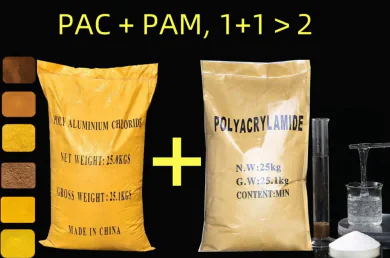
Coagulant + Polyacrylamide
This combination:
1️⃣ Destabilizes particles
2️⃣ Builds strong floc structures
3️⃣ Improves sedimentation
4️⃣ Enhances sludge dewatering
Correct grade selection ensures maximum efficiency.
Why Polymer Quality Makes the Difference
Low-quality PAM may:
- Dissolve poorly
- Form unstable flocs
- Increase overdosing risk
- Cause operational instability
High-quality polyacrylamide provides:
- Stable molecular weight
- Controlled charge density
- Consistent batch production
- Reliable industrial performance
We support clients in selecting polymer grades that complement existing coagulant systems for optimized results.
Optimize Your Treatment Strategy
If your plant experiences:
- Slow sedimentation
- High sludge moisture
- Excess coagulant usage
- Rising chemical costs
It may be time to optimize your chemical strategy.
📩 Contact us for:
- Free application consultation
- Jar testing support
- Customized polymer recommendations
- Competitive bulk pricing
Understanding the difference between PAM and traditional coagulants is the first step toward improving treatment efficiency and cost control.