 Skip to content
Oil production becomes more difficult as reservoirs age. Many oilfields lose pressure and large amounts of crude oil remain trapped underground. Without enhanced recovery methods, companies may leave 40–60% of oil unrecovered.
One proven solution is polymer flooding with polyacrylamide (PAM). This technology improves the movement of injected water and pushes more oil toward production wells. As a result, operators can increase recovery rates and extend the life of oilfields.
Polymer flooding using polyacrylamide can increase oil recovery by 5–15% compared with traditional water flooding. This improvement makes it one of the most widely used enhanced oil recovery (EOR) technologies in the petroleum industry.
What Is Polymer Flooding in Oil Recovery?
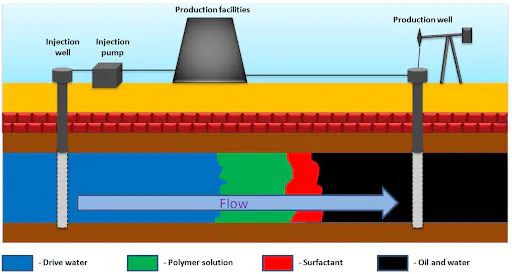
Polymer flooding is an enhanced oil recovery (EOR) method where water mixed with polymers is injected into an oil reservoir. The goal is to improve the efficiency of water flooding.
In traditional water flooding, injected water often flows through high-permeability zones, bypassing large areas of trapped oil. This reduces the sweep efficiency of the reservoir.
Polyacrylamide solves this problem by increasing the viscosity of injected water. Thicker water flows more evenly through the reservoir and pushes oil more effectively toward production wells.
Key Functions of Polyacrylamide in Polymer Flooding
Polyacrylamide improves oil recovery through three main mechanisms:
1. Increased Water Viscosity
The polymer increases the thickness of injected water, allowing it to push oil more efficiently.
2. Improved Sweep Efficiency
Higher viscosity prevents water from bypassing oil zones.
3. Better Mobility Control
Polymer flooding reduces the mobility ratio between water and oil.
Because of these effects, more oil is displaced and recovered.
If you want to understand how PAM improves industrial water treatment, you can also read:
👉 How Polyacrylamide (PAM) Boosts Wastewater Treatment Efficiency
Why Polyacrylamide Is Used in Polymer Flooding
Polyacrylamide is the most widely used polymer for EOR operations. Its chemical properties make it suitable for harsh reservoir environments.
Advantages of Using Polyacrylamide
High molecular weight
Polyacrylamide typically has a molecular weight between 5 million and 25 million Daltons, which allows it to significantly increase water viscosity even at low concentrations.
Good solubility in water
PAM dissolves easily and forms stable polymer solutions, making it practical for field injection systems.
Cost-effective performance
Compared with other polymers, polyacrylamide provides a high viscosity effect at a relatively low cost, making it economically attractive for large-scale oilfield operations.
Reservoir compatibility
Modified polyacrylamide polymers can perform well under moderate temperature and salinity conditions.
Because of these advantages, polyacrylamide has been widely applied in China, North America, the Middle East, and other major oil-producing regions.
Typical Polymer Flooding Process
The polymer flooding process usually involves several operational steps.
1. Polymer Preparation
Dry polyacrylamide powder is dissolved in water to prepare a polymer solution. The concentration normally ranges between 500 and 2500 ppm, depending on reservoir conditions.
Proper mixing is essential to avoid polymer degradation.
2. Injection into the Reservoir
The polymer solution is injected through injection wells into the oil reservoir. The viscous fluid moves slowly through the formation and pushes oil toward production wells.
3. Oil Displacement
As the polymer solution moves through the rock pores, it displaces oil that was previously trapped.
4. Oil Production
The displaced oil flows into production wells and is brought to the surface for processing.
After polymer flooding begins, many oilfields observe significant increases in oil production within months.
Reservoir Conditions Suitable for Polymer Flooding
Polymer flooding works best under certain reservoir conditions.
Moderate Reservoir Temperature
Most polyacrylamide polymers perform best at temperatures below 80–90°C.
Higher temperatures may cause polymer degradation unless special high-temperature polymers are used.
Low to Moderate Salinity
High salinity water can reduce polymer performance. However, specially modified PAM products can tolerate higher salinity levels.
Appropriate Permeability
Reservoirs with permeability above 50–100 millidarcies generally show better polymer flooding results.
Mature Oilfields
Polymer flooding is commonly applied in mature fields after water flooding becomes inefficient.
When these conditions are met, polymer flooding can significantly improve oil recovery.
Real Benefits of Polymer Flooding with Polyacrylamide
Many oilfields around the world have successfully implemented polymer flooding.
Increased Oil Recovery
Field studies show that polymer flooding can increase oil recovery by 5–15% of original oil in place (OOIP).
This improvement represents a large volume of additional recoverable oil.
Improved Sweep Efficiency
Polymer flooding improves the sweep area of injected fluids, allowing operators to recover oil that was previously bypassed.
Extended Field Life
Oilfields that use polymer flooding often extend production for many additional years.
Better Water Management
Polymer injection can reduce excessive water production in some reservoirs.
These advantages explain why polymer flooding remains one of the most important EOR technologies today.
If you want to learn how PAM is used in livestock wastewater treatment, you can also read:
👉 PAM for Livestock Wastewater: Complete Guide
Choosing the Right Polyacrylamide for Oilfield Applications
Not all polyacrylamide products are suitable for polymer flooding.
Several factors must be considered when selecting the correct polymer.
Molecular Weight
High molecular weight polymers provide stronger viscosity and better mobility control.
Hydrolysis Degree
Partially hydrolyzed polyacrylamide (HPAM) is widely used in oilfield flooding because it provides better viscosity performance.
Salt and Temperature Resistance
Reservoir conditions determine whether special polymer modifications are required.
Product Quality
Consistent product quality ensures stable viscosity and reliable injection performance.
For oilfield operators, choosing the right supplier is critical to achieving stable and efficient polymer flooding results.
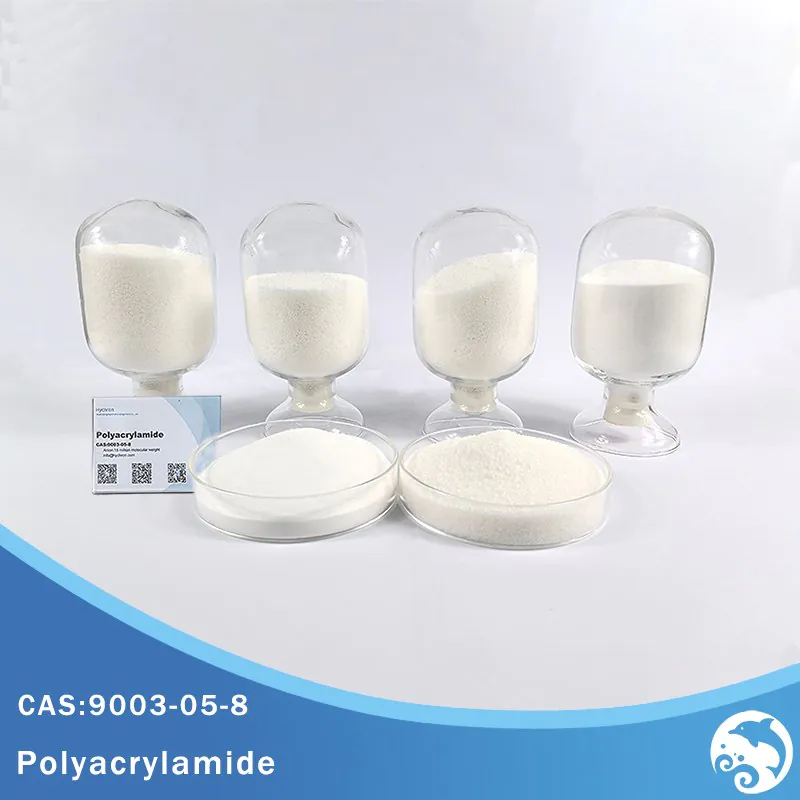
Why High-Quality PAM Matters for Oil Recovery
In oilfield operations, polymer quality directly affects flooding efficiency.
High-quality polyacrylamide offers several advantages:
- Stable molecular weight distribution
- Strong viscosity performance
- Fast dissolution speed
- Excellent mobility control
- Consistent product quality for large-scale injection
Reliable PAM products help operators maintain stable polymer flooding performance and maximize oil recovery.
Conclusion
Polymer flooding with polyacrylamide is a proven enhanced oil recovery technology that helps oilfields extract more crude oil from mature reservoirs. By increasing water viscosity and improving sweep efficiency, PAM allows operators to recover oil that traditional water flooding cannot reach.
With the right polymer grade and proper injection strategy, polymer flooding can significantly improve oilfield productivity and extend reservoir life.
If your oilfield project requires high-performance polyacrylamide for polymer flooding, choosing a reliable supplier is essential. High-quality PAM ensures stable viscosity, efficient injection, and better long-term recovery results.


