
You dose the polymer. Flocs form. Then, before they can settle, they fall apart. Floc breakage is one of the most frustrating problems in wastewater treatment. The instinct is to add more polymer — but that rarely works, because floc breakage is almost never a dosage problem. It is a mechanical, chemical, or procedural issue that more PAM cannot fix. Here are the six most common causes and exactly what to do about each one.
Why Broken Flocs Cannot Be Repaired
Before getting into causes, one important principle: broken flocs do not re-form. Once shear forces disrupt polymer bridges, the damaged polymer folds back onto particle surfaces in a compressed state that cannot bridge again. Adding more polymer after breakage typically makes things worse, not better. Prevention is the only effective strategy.
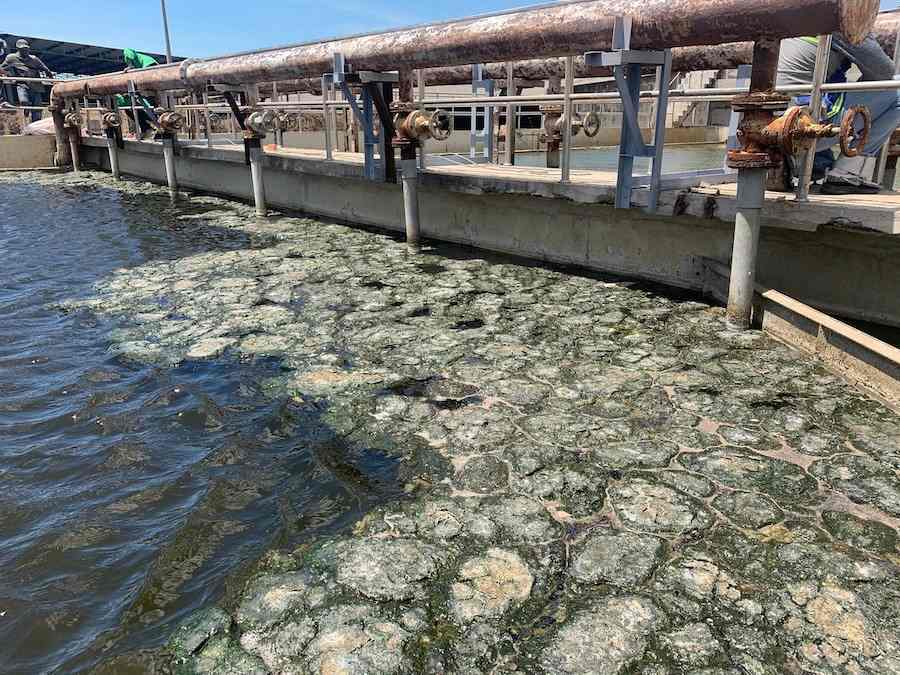
The Six Causes of Floc Breakage
1. Excessive Shear After Floc Formation
The most common cause — and the most preventable.
Flocs are physically fragile. After they form, they cannot tolerate high-speed mixing, turbulent pumping, or flow through sharp pipe bends. Centrifugal pumps, fast-running agitators in the flocculation zone, and narrow flow constrictions after the dosing point are the most frequent offenders.
Fix: Map every step from your dosing point to the settling zone. Eliminate unnecessary pumping after PAM addition. Reduce agitator speed progressively from rapid mix to slow flocculation. Replace centrifugal pumps with peristaltic or progressive cavity pumps where shear damage is confirmed.
If floc breakage is affecting your treatment performance, contact our technical team today for a free diagnosis and product recommendation. → Contact our technical team today
2. Overdosing PAM
Too much polymer breaks flocs apart through restabilization — excess polymer saturates particle surfaces, disrupts existing bridges, and re-disperses settled material back into suspension. Effluent turbidity can actually increase with overdosing compared to a lower dose.
Overdosing is especially common when feed solids concentration drops while dosage stays fixed, or when operators increase dose to compensate for poor settling without first checking whether overdosing is already occurring.
Fix: Run a jar test at current influent conditions. Try dosages 20% above and below your current operating level. If lower dosage produces better flocs, reduce dose in controlled steps until you find the true optimum.
3. Molecular Weight Too Low
Short polymer chains have limited bridging reach. The flocs they form are small, weakly bonded, and break apart easily under even mild shear. If your current PAM grade is performing poorly in a high-shear environment — thickeners, belt presses, high-flow clarifiers — molecular weight mismatch is a likely cause.
Fix: Switch to a higher molecular weight grade for applications with significant shear exposure. For most industrial thickener and clarifier applications, molecular weight above 15 million Daltons provides meaningfully stronger floc structure.
For a detailed guide on molecular weight selection, see: Molecular Weight and Its Impact on Flocculation
4. pH Outside the Effective Range
pH affects both PAM charge density and particle surface charge — the two factors that control how well polymer adsorbs onto particles. For most anionic PAM grades, performance drops significantly below pH 5 and above pH 10. Temporary pH excursions during production upsets can cause sudden floc quality deterioration that looks like a polymer problem but is actually a chemistry problem.
Fix: Install continuous pH monitoring at the treatment inlet. Maintain pH within 6–9 for most anionic grades. If pH excursions are frequent, add pH adjustment upstream of the polymer dosing point.
5. Chemical Interference
Other chemicals in the treatment system can interfere with PAM performance. Surfactants and defoamers block particle adsorption sites. Oxidizing biocides degrade polymer chains over time. Incorrect dosing sequence — PAM added before coagulant has formed precipitates — reduces bridging efficiency significantly.
Fix: Always dose coagulant first with adequate rapid mixing before PAM addition. Review all chemicals dosed upstream of the PAM point for potential interference. If oxidative biocides are in use, check for signs of polymer chain degradation such as progressive reduction in solution viscosity.
6. Incomplete Polymer Dissolution
Fish eyes — undissolved gel fragments in the polymer solution — disrupt floc formation by creating turbulence as they pass through the flocculation zone. Partially hydrated polymer chains also have reduced bridging capacity even when no visible lumps are present.
Fix: Maintain water temperature between 20°C and 35°C during dissolution. Add powder slowly with the agitator running. Allow at least 30–45 minutes mixing time before dosing. Prepare solution at 0.1–0.2% concentration.
For full dissolution best practices, see: Factors Affecting Polymer Dissolution Speed
Quick Diagnostic Guide
Not sure which cause applies to your situation? Work through this sequence:
First: Run a jar test at reduced dosage. If lower dose produces better flocs → overdosing is the problem.
Second: Trace the flow path from dosing point to settling zone. Any pump, valve, or constriction after slow-mix → shear is the problem.
Third: Check pH at the dosing point. Outside 6–9 → pH interference is the problem.
Fourth: Inspect the dissolution tank for gel accumulation. Water below 20°C or mixing time under 30 minutes → dissolution is the problem.
Fifth: If all above are within range and breakage persists → trial a higher molecular weight grade.
Frequently Asked Questions
Can I fix broken flocs by adding more PAM?
No. Once polymer bridges are disrupted, the damaged polymer cannot re-bridge effectively. More polymer after breakage typically causes overdosing and makes settling worse. Focus on preventing breakage rather than recovering from it.
Why do my flocs form well in jar tests but break apart at full scale?
This almost always indicates a shear source in the full-scale flow path — a pump, valve, or pipe fitting — that is not replicated in the jar test. Map every element between your dosing point and the settling zone and eliminate unnecessary mechanical energy after floc formation.
Does product quality affect floc strength?
Significantly. Inconsistent molecular weight between batches produces unpredictable floc strength. High-quality PAM with batch-certified molecular weight delivers consistent performance that matches jar test results in continuous operation.
Conclusion
Floc breakage has six causes — shear, overdosing, low molecular weight, pH excursion, chemical interference, and poor dissolution. Each requires a specific fix. The five-step diagnostic sequence above gives operators a fast path from symptom to root cause without guesswork.
In most cases the fix is operational, not expensive. Adjust the dosage, move the dosing point, improve dissolution procedure, or upgrade the PAM grade — and floc performance improves quickly.
Ready to find the right PAM grade for your system? Request samples and pricing today. → Get in touch today