
Polyacrylamide is one of the most widely used water treatment chemicals in the world — applied in municipal wastewater plants, mining operations, agricultural irrigation, and industrial facilities across every continent. Given this scale of use, the question of its environmental safety is legitimate and important.
The answer is nuanced. Polyacrylamide polymer itself has a well-established, favorable environmental safety profile. The concern that exists — and it is a real concern, not a theoretical one — relates to residual acrylamide monomer, a chemically distinct substance present in all PAM products as a manufacturing byproduct.
Understanding this distinction clearly is essential for anyone evaluating PAM for environmental compliance purposes.
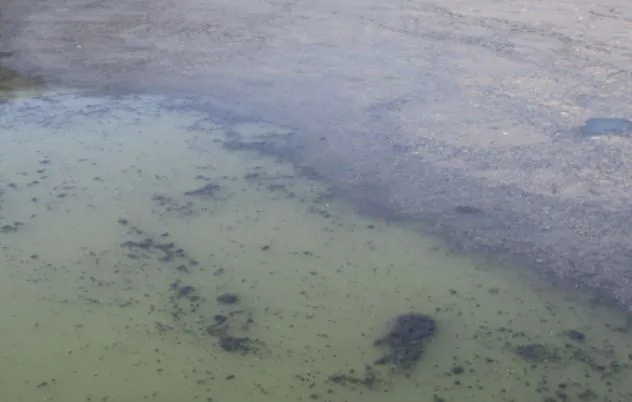
Polyacrylamide Polymer: The Environmental Safety Record
Polyacrylamide polymer — the long-chain molecule that does the treatment work — has been extensively studied over decades of industrial and agricultural use. The weight of evidence supports the following conclusions:
Low acute toxicity: PAM polymer has very low acute toxicity to aquatic organisms. Studies on fish, invertebrates, and algae consistently show no significant adverse effects at concentrations well above those encountered in treated effluent. The US EPA, European Chemicals Agency (ECHA), and regulatory bodies across Asia classify PAM polymer as not acutely hazardous to aquatic life at typical use concentrations.
Non-bioaccumulative: PAM polymer does not bioaccumulate in aquatic organisms or accumulate up the food chain. Its high molecular weight and water solubility prevent significant uptake through biological membranes.
Slow but complete environmental degradation: PAM polymer degrades slowly in the environment through a combination of UV photolysis, biological activity, and hydrolysis. Degradation timescales range from months to years depending on environmental conditions. Importantly, complete degradation does not produce toxic breakdown products — the polymer breaks down ultimately to CO₂, water, and nitrogen-containing compounds.
Regulatory status: PAM polymer is registered and approved for use in wastewater treatment in all major markets including the EU (under REACH), the United States (EPA-approved), China (GB standards), and most other jurisdictions. It is approved for drinking water treatment at defined use levels in most markets, and for agricultural soil conditioning in many countries.
Acrylamide Monomer: The Real Environmental Concern
The environmental safety concern associated with PAM relates not to the polymer but to residual acrylamide monomer — the unreacted building block present in all PAM products at levels that vary significantly with product quality.
Acrylamide monomer (CAS 79-06-1) has a markedly different environmental profile from PAM polymer:
Ecotoxicity: Acrylamide is toxic to aquatic organisms at concentrations in the range of 1–100 mg/L depending on species and exposure duration. It is significantly more toxic than PAM polymer at equivalent concentrations.
Human health classification: Acrylamide is classified as a Category 1B carcinogen and reproductive toxicant under EU CLP Regulation, and as a probable human carcinogen by the US EPA and IARC. These classifications apply to acrylamide monomer — not to PAM polymer.
Environmental fate: Acrylamide is highly water-soluble and mobile in the environment. It biodegrades more rapidly than PAM polymer — with half-lives of days to weeks in soil and water — but its mobility means it can reach groundwater and surface water during this degradation period.
Regulatory limits: Most environmental regulations focus on controlling acrylamide monomer content in PAM products rather than restricting PAM polymer use. EU REACH limits residual acrylamide in industrial PAM to 0.1% (1,000 mg/kg). Drinking water treatment applications require below 0.025% (250 mg/kg). High-quality industrial PAM typically contains below 0.05% (500 mg/kg).
Request full safety documentation and product specifications for any grade in our range. → Get in touch today
What Residual Acrylamide Levels Mean in Practice
The environmental significance of residual acrylamide in PAM depends on the concentration in treated effluent — which is determined by the product’s residual content and the dosage applied.
Calculation example:
- PAM product with 0.05% residual acrylamide (500 mg/kg)
- Applied at 5 mg/L in wastewater treatment
- Acrylamide contribution to treated water: 5 mg/L × 0.05% = 0.0025 mg/L (2.5 µg/L)
- WHO drinking water guideline for acrylamide: 0.5 µg/L
At this dosage and residual content, the acrylamide contribution exceeds the WHO drinking water guideline — which is why drinking water treatment applications require lower residual acrylamide grades and stricter dose controls. For industrial wastewater discharge to receiving waters (not potable supply), the relevant comparison is the environmental quality standard for acrylamide in surface water — typically 0.1 µg/L in the EU under the Water Framework Directive.
This calculation demonstrates why residual acrylamide content is the critical environmental parameter in PAM product selection — and why sourcing from suppliers who provide batch-specific residual acrylamide data is essential for environmental compliance.
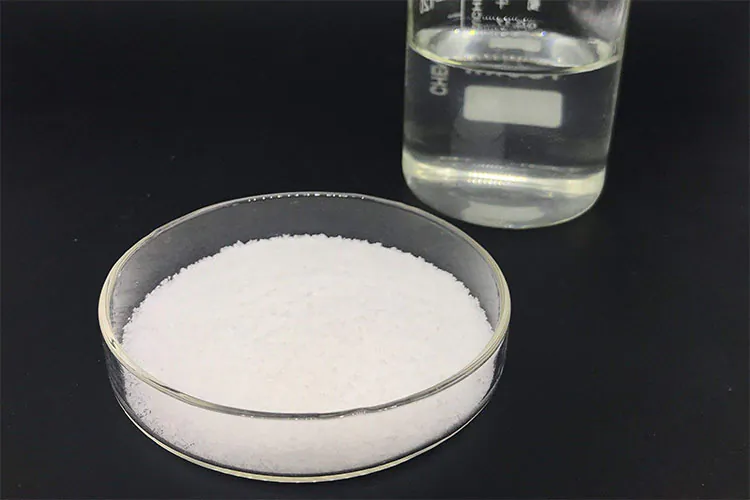
Environmental Safety by Application
Industrial wastewater treatment: At typical industrial dosages (1–10 mg/L) with quality PAM (residual acrylamide below 0.05%), the acrylamide contribution to treated effluent is typically below environmental quality standards for most receiving water types. Verify against the specific standards applicable to your discharge point.
Municipal wastewater treatment: Approved for use under EPA, EU, and most national regulatory frameworks. Residual acrylamide in treated effluent is well below drinking water guidelines when quality-compliant products are used at recommended dosages.
Agricultural soil conditioning: Anionic PAM for irrigation furrow treatment and soil erosion control is approved in the US (EPA), EU, and many other markets. Soil application is subject to residual acrylamide content limits — typically below 0.05%. Acrylamide in soil degrades rapidly through biological activity.
Mining and mineral processing: PAM used in mining thickeners and tailings management is subject to standard industrial discharge regulations. Tailings pond discharge or seepage to groundwater is the primary pathway for environmental exposure. Water quality monitoring downstream of tailings facilities should include acrylamide as a parameter where PAM is used.
Responsible Use: Minimizing Environmental Risk
The environmental safety of PAM use is substantially within the control of the user through product selection and application practice:
Source quality products: Specify residual acrylamide below 0.05% for industrial applications, below 0.025% for drinking water or sensitive receiving water applications. Require batch-specific CoA confirming residual content.
Optimize dosage: Lower dosage means lower acrylamide contribution to treated water. Systematic dosage optimization through jar testing reduces both cost and environmental acrylamide loading simultaneously.
Handle correctly: Prevent PAM solution spills from reaching surface water or groundwater directly. Undiluted concentrated solution contains higher acrylamide concentrations than treated effluent.
Store correctly: Degraded PAM from improper storage may have higher effective acrylamide monomer levels due to polymer chain hydrolysis releasing bound monomer. Correct storage protects both product performance and environmental safety.
For storage guidance, see: Proper Storage Conditions for Polyacrylamide PAM
Frequently Asked Questions
Is polyacrylamide biodegradable?
PAM polymer biodegrades slowly — over months to years in typical environmental conditions. It is not considered readily biodegradable by standard regulatory definitions, but it does degrade completely over time without producing persistent toxic breakdown products. Acrylamide monomer biodegrades significantly faster — days to weeks — but is more ecotoxic during its environmental residence time.
Does PAM affect soil health when used in agriculture?
Anionic PAM used for soil erosion control and irrigation furrow treatment has been extensively studied and has no significant adverse effects on soil biology, plant growth, or soil structure at approved application rates. It improves soil aggregate stability and reduces erosion — effects that are considered environmentally beneficial. Agricultural use is approved in the US, EU, and many other markets subject to residual acrylamide content limits.
Can PAM accumulate in fish or aquatic organisms?
No. PAM polymer does not bioaccumulate in aquatic organisms. Its high molecular weight prevents significant uptake through biological membranes, and it is not lipophilic — the property that drives bioaccumulation in most environmental contaminants. Acrylamide monomer is water-soluble and also does not bioaccumulate significantly, though it has higher acute toxicity than the polymer during its environmental residence period.
Conclusion
Polyacrylamide polymer has a well-established environmental safety record across decades of large-scale use. The environmental concern associated with PAM is real but specific — it relates to residual acrylamide monomer content, not to the polymer itself.
Managing this concern is achievable through product selection — specifying low residual acrylamide grades with batch-specific CoA — and responsible application practice. Facilities that source quality PAM, optimize dosage, and handle the product correctly can use polyacrylamide confidently within applicable environmental regulations while delivering the treatment performance that makes clean water discharge and recycling possible.
Contact us today to request batch-specific residual acrylamide data and environmental compliance documentation for our PAM product range. → Contact our technical team today