
Not every PAM success story involves millions of dollars in savings or complex multi-stage treatment systems. This case study describes a small-scale application at a commercial livestock operation — a pig farming facility — where a simple, correctly implemented PAM program resolved persistent discharge compliance problems and delivered a return on investment within the first month of operation.
The story is representative of a large category of agricultural and small industrial operations that generate significant wastewater but have limited engineering resources, minimal treatment infrastructure, and tight operating budgets. For these facilities, the right polymer program — simple, correctly sized, and properly maintained — can deliver compliance and cost results that more complex and expensive treatment approaches cannot match.
Note: Facility details have been generalized to protect client confidentiality.
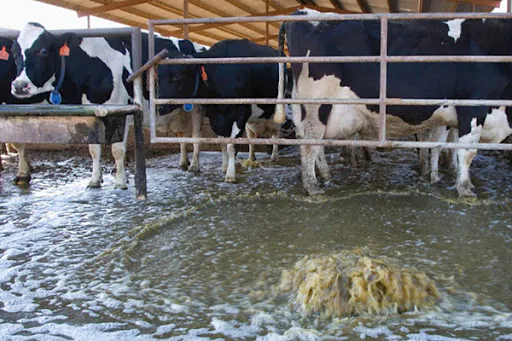
Facility Background
Facility type: Commercial pig farming operation Animal numbers: 4,200 finishing pigs, continuous throughput Wastewater sources: Pen washdown water, feed spillage runoff, manure liquids from flush systems Daily wastewater volume: 85–120 m³/day (variable with washdown schedule) Existing treatment: Two earthen settling ponds in series, total capacity 3,200 m³ Discharge: Irrigation reuse on adjacent crop land (regulated as agricultural discharge) Discharge requirement: TSS below 200 mg/L for irrigation reuse; total nitrogen below 50 mg/L
The Problem
Persistent Compliance Failures
The two-pond settling system had been designed for the facility’s original animal numbers — 2,800 pigs — and had performed adequately for several years. When the operation expanded to 4,200 pigs, both wastewater volume and solids loading increased proportionally, but no treatment capacity was added.
By the time the optimization was requested, the second pond outlet was consistently producing water at 380–520 mg/L TSS — well above the 200 mg/L irrigation limit. The high TSS was also contributing to clogged irrigation emitters, reducing irrigation efficiency and increasing maintenance costs on the irrigation system.
Three irrigation events had been halted by the local agricultural authority following water quality testing — each generating official notices requiring corrective action within 30 days.
What Had Been Tried Without Success
The farm operator had tried two previous approaches:
Approach 1 — Increased settling time: Reduced washdown frequency to decrease daily wastewater volume and increase pond residence time. TSS improved slightly to 320–420 mg/L but remained well above the 200 mg/L limit. The reduced washdown frequency also created hygiene problems in the pens that were unacceptable for animal welfare reasons.
Approach 2 — Commercial pond additive: A biological pond additive product was trialed for three months at a cost of $280/month. TSS showed no measurable improvement. The product was discontinued.
Neither approach addressed the fundamental problem: the settling ponds had insufficient hydraulic residence time to allow natural settlement of the fine organic particles in livestock wastewater.
Diagnosis
Livestock wastewater — particularly from pig operations — contains a high proportion of very fine organic particles from manure solids, feed residues, and microbial biomass. These particles are typically below 10 microns in size, carry strong negative surface charges from organic matter coating, and resist natural gravity settlement even with extended residence time.
Natural settlement velocity for a 5-micron organic particle is approximately 0.025 mm/second — meaning it would take over 11 hours to settle just 1 metre without chemical assistance. The average hydraulic residence time in the second pond was approximately 18 hours at peak flow — theoretically sufficient, but heavily compromised by short-circuit flow patterns in the pond that reduced effective residence time to 8–10 hours for much of the flow.
Jar testing on fresh wastewater samples confirmed rapid, effective flocculation with cationic PAM — large, rapidly settling flocs forming within 60 seconds at 4 mg/L, with settled water clarity below 80 mg/L TSS within 15 minutes.
The diagnosis was clear: natural settlement could not achieve the target TSS without chemical assistance, but a simple PAM dosing system could resolve the compliance problem at low cost.
Contact our technical team today for a PAM program recommendation for your agricultural or small industrial wastewater treatment application. → Contact our technical team today
Solution Design
The solution was deliberately designed for simplicity — appropriate for an agricultural operation without dedicated treatment engineering staff.
Equipment
Polymer preparation: A 200-litre polyethylene tank with a small variable-speed submersible mixer. PAM was prepared as a 0.1% solution manually at the start of each day — approximately 15 minutes of operator time per day.
Dosing system: A peristaltic dosing pump (adjustable 0–10 L/hour) connected to a timer that ran the pump during washdown periods. The pump dosed directly into the inlet channel of the first settling pond.
Total equipment cost: Approximately $1,850 (tank, mixer, pump, timer, pipe fittings).
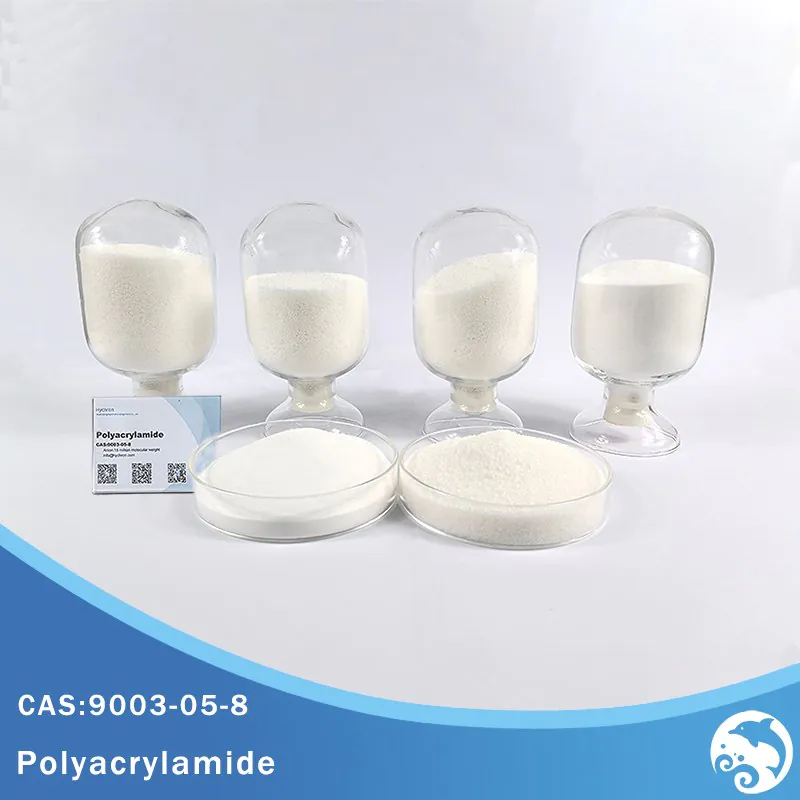
PAM grade selected: Cationic PAM, 8 million Daltons, 40% charge density — selected for rapid dissolution, good performance on organic agricultural solids, and availability in 25 kg bags suitable for manual handling.
Target dosage: 4 mg/L of raw wastewater, adjusted based on visual observation of settled water clarity.
Operating Protocol
The operator’s daily routine added approximately 20 minutes:
- Morning: Prepare 150-litre batch of 0.1% PAM solution (approximately 15 minutes)
- Set dosing pump timer to coincide with washdown schedule
- Check outlet water clarity visually — if turbid, increase dosage by 0.5 mg/L; if consistently clear, reduce by 0.5 mg/L
A simple visual guide — laminated card with photographs of acceptable and unacceptable outlet water clarity — was provided to standardize the operator’s dosage adjustment decisions.
Results
Month 1 (Implementation)
Second pond outlet TSS: averaged 112 mg/L — below the 200 mg/L limit for the first time in over 18 months. Three regulatory authority inspections conducted during the month resulted in compliance confirmation on all three occasions.
Month 2–3 (Optimization)
Operator familiarity with the visual assessment protocol allowed confident dosage adjustment. Average dosage settled at 3.8 mg/L during dry conditions and 5.2 mg/L during high-flow washdown periods. Outlet TSS averaged 88 mg/L.
Irrigation emitter blockage incidents, which had been occurring at approximately 3 per week before treatment, dropped to zero during months 2–3.
Quantified Results at 3 Months
| Metric | Before PAM | After PAM | Improvement |
|---|---|---|---|
| Second pond outlet TSS | 380–520 mg/L | 75–130 mg/L | −75–80% |
| Compliance with discharge limit | Consistently failing | Consistently compliant | Resolved |
| Irrigation emitter blockages | ~12/month | 0/month | Eliminated |
| Regulatory notices | 3 in prior 6 months | 0 | Eliminated |
| Monthly PAM cost | — | $340 | — |
| Emitter maintenance saving | ~$180/month | ~$20/month | $160/month saving |
| Net monthly treatment cost | $180/month | — |
Return on Investment
- Equipment investment: $1,850
- Monthly net cost (PAM minus emitter saving): $180/month
- Payback period: approximately 10 months
However, the farmer also noted that the three regulatory notices had each required approximately 12 hours of management time and external consultant engagement at a combined cost of approximately $3,200. Avoiding a fourth notice — which had been expected given the trend — effectively accelerated the payback to under 4 months.
Key Lessons
Simple problems need simple solutions. The two previous attempts — extended settling and biological additives — were addressing the wrong problem. The fundamental issue was that natural settlement could not treat fine organic particles within the available residence time. A correctly selected polymer applied at the right dosage resolved the problem that more complex approaches could not.
Agricultural operations benefit from simplified dosing protocols. The visual assessment card — rather than turbidity meters or laboratory testing — gave the operator a reliable, intuitive tool for daily dosage adjustment without specialist knowledge. Appropriate-complexity solutions outperform technically sophisticated solutions that require expertise the facility does not have.
Small-scale PAM applications deliver proportional returns. The $340/month polymer cost at this facility is modest, but the return — compliance achieved, regulatory notices eliminated, irrigation system maintenance saved — is highly meaningful relative to the facility’s scale. PAM’s cost-effectiveness is not exclusive to large industrial operations.
For guidance on PAM applications in agricultural settings, see: PAM for Livestock Wastewater: Complete Guide
Frequently Asked Questions
Is cationic PAM safe for use in agricultural discharge that will contact crops?
Cationic PAM at low concentrations (below 5 mg/L) in irrigation water is not associated with adverse effects on crops or soil biology based on available research. Residual cationic PAM in soil degrades slowly and at treatment concentrations does not accumulate to levels of concern. Confirm with your local agricultural authority that PAM use is compatible with your specific irrigation reuse permit conditions.
Can a simple pond-based PAM system handle peak flow events — such as after major cleaning?
With appropriate dosage adjustment, yes. The key is increasing PAM dosage proportionally with flow rate during high-volume events. The operator protocol in this case included increasing dosage by 1–2 mg/L during major cleaning days — confirmed through visual observation. For facilities with very high peak-to-average flow ratios, an equalization tank before the dosing point reduces the magnitude of dosage adjustments needed.
What PAM grades work best for pig farm wastewater specifically?
Cationic PAM at medium to high charge density (30–60%) performs best for livestock wastewater, where the primary contaminants are negatively charged organic particles from manure and feed residues. Molecular weight in the 6–12 million Dalton range provides good performance with rapid dissolution — important for facilities without sophisticated preparation equipment. Our technical team can recommend a specific grade for your animal type and wastewater characteristics.
Conclusion
This livestock farm case study demonstrates that effective PAM treatment does not require large capital investment, sophisticated equipment, or specialist operating staff. A correctly selected polymer, a simple dosing system, and an intuitive operator protocol resolved a compliance problem that had persisted for over 18 months and was escalating toward serious regulatory consequences.
The $1,850 equipment investment and $180/month net operating cost delivered compliance, eliminated regulatory notices, and restored irrigation system reliability — outcomes that significantly exceeded the value of the investment within the first few months.
For small agricultural and industrial operations facing similar challenges, the lesson is straightforward: identify the right polymer for the application, keep the system simple enough for reliable daily operation, and the results will follow.
Contact us today for PAM grade recommendations and a simple treatment program design for your agricultural or small industrial wastewater application. → Get in touch today