Skip to content
Written by the HyChron Technical Team — water treatment specialists with over 15 years of field experience in municipal and industrial systems. Last reviewed: April 2026 | Reading time: ~5 minutes
Industrial wastewater is not a single problem. A textile plant’s effluent looks nothing like a food processing plant’s, and neither resembles what comes out of a mining operation. Contaminant types, concentrations, pH levels, and flow rates vary enormously across industries.
What industrial facilities have in common is this: discharge standards are tightening, regulators are increasing enforcement, and treatment costs are under pressure.
Poly Aluminum Chloride (PAC) is one of the most versatile coagulants available for industrial wastewater treatment — effective across a wide range of effluent types, pH conditions, and contaminant profiles. This article explains how PAC performs in industrial applications and how to apply it correctly.
Treating industrial wastewater and want to evaluate PAC for your facility? Contact our technical team for a free assessment based on your effluent data.
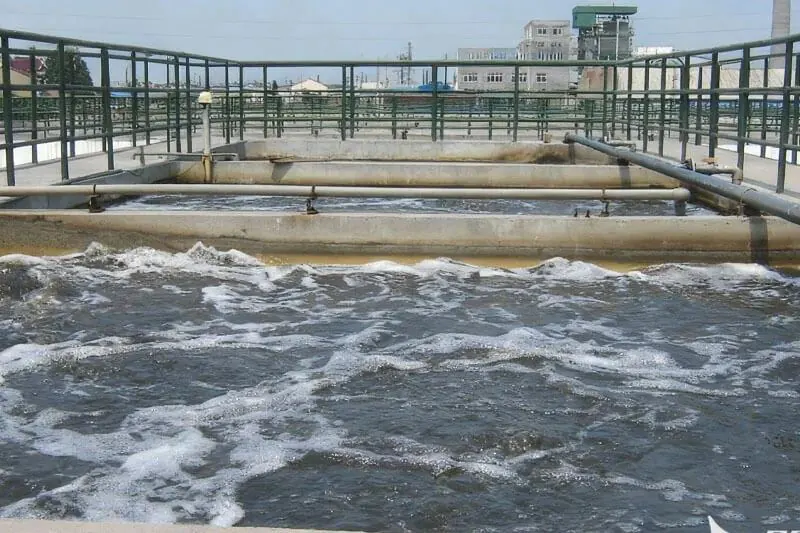
What PAC Removes in Industrial Wastewater
PAC is effective at removing a broad range of contaminants commonly found in industrial effluent:
- Suspended solids (SS) — clay, fibres, fine particulates from manufacturing processes
- Turbidity — from colloidal particles too small to settle naturally
- Color — particularly reactive dyes and chromophore compounds in textile effluent
- COD (Chemical Oxygen Demand) — through removal of colloidal organic matter
- Heavy metals — by co-precipitation at appropriate pH (in combination with pH adjustment)
- Phosphorus — through chemical precipitation, relevant for food and beverage effluent
- Oil and grease — in combination with dissolved air flotation (DAF) systems
The mechanism is the same as in drinking water treatment — charge neutralization followed by floc formation — but industrial applications typically require higher dosages and more careful pH management due to higher contaminant loads.
Why PAC Outperforms Alum in Industrial Settings
Industrial effluent is rarely stable. Flow rates, contaminant concentrations, and pH can all shift significantly within a single shift. Traditional coagulants like alum, with their narrow pH operating window of 6.5–7.5, struggle to maintain consistent performance under these conditions.
PAC operates reliably from pH 5.0 to 9.0 — covering the full range of most industrial effluent without requiring constant pH adjustment. This is particularly valuable in:
- Textile and dyeing operations, where effluent pH varies with dye bath changes
- Food processing plants, where cleaning cycles produce acidic and alkaline surges
- Chemical manufacturing, where effluent composition changes with production batches
Beyond pH flexibility, PAC requires 30–50% lower dosage than alum for equivalent removal, and produces 30–50% less sludge — directly reducing dewatering and disposal costs that are often substantial in industrial operations.
For a full side-by-side comparison: PAC vs Alum: Which Coagulant Is Better?
Dosage Guidelines for Industrial Applications
Industrial wastewater typically requires higher PAC dosages than municipal drinking water due to higher suspended solids and organic loads.
| Application | Typical PAC Dosage |
|---|---|
| General industrial wastewater | 20–80 mg/L |
| Textile / dyeing effluent | 50–200 mg/L |
| Food and beverage processing | 20–60 mg/L |
| Mining and mineral processing | 30–100 mg/L |
| Paper and pulp effluent | 30–80 mg/L |
| Chemical manufacturing | 40–120 mg/L |
Dosing Procedure
- Jar test first — industrial effluent variability makes jar testing essential before any dosage change
- Dose at the highest turbulence point — flash mixing zone, G-value 200–400 s⁻¹ for 30–60 seconds
- Follow with slow mixing — G-value 20–60 s⁻¹ for 15–30 minutes for floc growth
- Monitor in real time — online turbidity or TSS monitoring allows continuous dose adjustment as influent quality changes

PAC in Common Industrial Applications
Textile and Dyeing Wastewater
Color removal is one of PAC’s strongest performance areas in industrial treatment. Reactive dyes carry negative charges that PAC’s cationic aluminum species neutralize effectively, causing dye-particle complexes to aggregate and settle. PAC achieves significant color reduction that is difficult to match with alum alone at equivalent doses.
Food and Beverage Processing
Food processing effluent contains high levels of suspended organic matter, fats, and biological oxygen demand. PAC effectively coagulates these materials for removal by sedimentation or DAF, reducing COD and TSS to levels compatible with discharge or further biological treatment.
Mining and Mineral Processing
Large volumes of turbid process water need to be clarified and recycled efficiently. PAC’s fast settling and performance in variable-quality feed water make it well suited to thickener and settling pond operations, where throughput requirements are high and downtime is costly.
Paper and Pulp Mills
PAC assists in white water clarification, fiber recovery, and pitch control. It also improves retention of fine particles on the paper machine, reducing losses to the effluent stream.
Integration with Existing Treatment Systems
PAC integrates directly into most existing industrial treatment configurations:
- Clarifiers and sedimentation tanks — PAC’s fast floc formation and dense, heavy flocs improve settling efficiency in existing equipment
- Dissolved Air Flotation (DAF) — PAC is highly compatible with DAF systems; its flocs are well-suited to flotation removal
- Filter pretreatment — PAC reduces the load on downstream filters, extending run times and reducing backwash frequency
In most cases, switching to PAC does not require capital equipment changes — only dosage recalibration and jar testing.
Frequently Asked Questions
Can PAC meet discharge standards for my industry?
PAC can significantly reduce suspended solids, turbidity, color, and COD — the parameters most commonly regulated in industrial discharge standards. Whether it meets your specific local limits depends on your influent quality and target standards; jar testing and a pilot trial are recommended to confirm.
Does PAC work in high-salinity industrial effluent?
High salinity can interfere with coagulation. PAC generally performs better than alum in moderate-salinity conditions, but very high salinity (above 5,000 mg/L TDS) may require adjusted dosage or combination with other treatment steps. Contact our technical team for guidance on your specific conditions.
How do I handle PAC sludge from industrial treatment?
PAC sludge from industrial applications must be handled according to local regulations, which vary based on the contaminants present in the original effluent. PAC produces 30–50% less sludge than alum, reducing disposal volume. Our team can advise on sludge characterization and disposal options for your industry.
Conclusion
PAC is one of the most effective and versatile coagulants available for industrial wastewater treatment. Its wide pH operating range, lower dosage requirement, reduced sludge production, and compatibility with standard treatment equipment make it a practical upgrade for facilities currently using alum or other traditional coagulants.
If your industrial facility is facing tightening discharge standards, rising sludge disposal costs, or inconsistent treatment performance, PAC is worth evaluating — and the transition is simpler than most operators expect.
Contact our technical team today for a free effluent assessment, PAC product samples, and a dosage recommendation for your specific industrial application. We respond within 24 hours.