
Written by the HyChron Technical Team — water treatment specialists with over 15 years of field experience in municipal and industrial systems. Last reviewed: April 2026
Food processing facilities generate large volumes of wastewater every day. Washing, blanching, cooking, cleaning, and packaging operations all produce effluent rich in suspended solids, fats, oils, grease, starch, proteins, and biological oxygen demand — contaminants that must be reduced to compliant levels before discharge.
The challenge is that food processing wastewater is highly variable. A meat processing plant’s effluent looks nothing like a fruit canning line’s. Within a single facility, effluent composition shifts with production schedules, cleaning cycles, and seasonal raw material changes.
PAC (Poly Aluminum Chloride) is one of the most effective and widely used coagulants for food processing wastewater treatment. Its ability to remove suspended organics, fats, and colloidal matter across variable pH conditions makes it a practical first-line treatment chemical for a wide range of food and beverage operations.
Running a food processing facility and facing effluent compliance challenges? Contact our technical team for a free wastewater assessment and PAC recommendation.
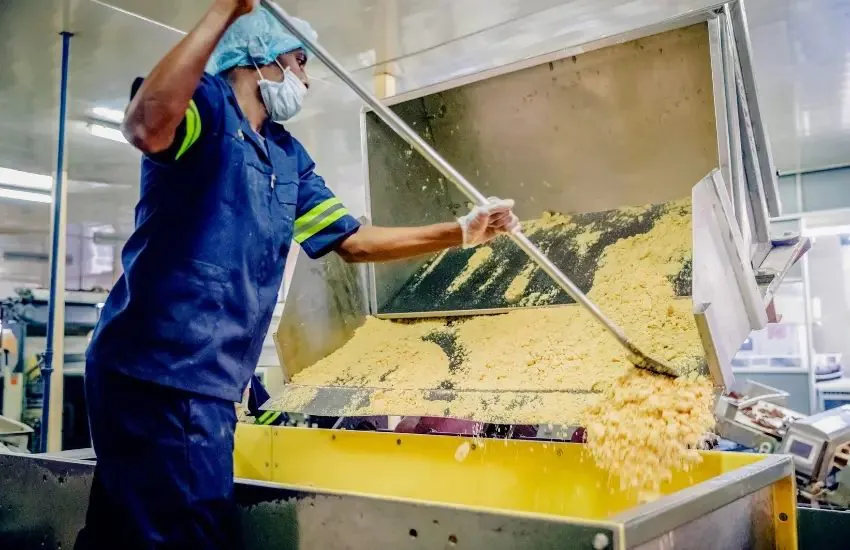
What PAC Removes in Food Processing Wastewater
Food processing effluent typically contains:
- Suspended solids — food particles, fibres, skin fragments from processing lines
- Fats, oils, and grease (FOG) — from meat, dairy, and cooking operations
- Starch and proteins — from grain, vegetable, and meat processing
- BOD and COD — from dissolved and colloidal organic matter
- Phosphorus — from cleaning agents and natural food content
- Color — from fruit, vegetable, and meat pigments
PAC effectively coagulates and removes suspended solids, FOG (in combination with DAF), colloidal organic matter, and phosphorus through charge neutralization and sweep flocculation. This reduces BOD, COD, TSS, and turbidity — the parameters most commonly regulated in food processing discharge permits.
Why PAC Works Well in Food Processing Applications
Handles organic-rich effluent effectively. Food processing wastewater contains high concentrations of colloidal organic matter — proteins, starches, and lipid emulsions — that carry negative surface charges. PAC’s cationic aluminum species neutralize these charges efficiently, causing colloidal organics to aggregate into settleable flocs.
Wide pH tolerance. Food processing effluent pH varies significantly depending on the process stage. Acid cleaning cycles produce low-pH surges; alkaline CIP (clean-in-place) cleaning produces high-pH spikes. PAC’s effective range of pH 5.0–9.0 handles this variability without requiring constant pH correction before dosing.
Compatible with DAF systems. Fats, oils, and grease do not settle by gravity — they require dissolved air flotation (DAF) for effective removal. PAC added ahead of a DAF unit destabilizes emulsified FOG, significantly improving flotation removal efficiency and reducing carry-through to downstream treatment.
Phosphorus removal. PAC reacts with soluble phosphate to form aluminum phosphate precipitates, which are removed with the coagulated sludge. This is particularly relevant for food processing plants with phosphorus discharge limits.
Lower sludge than alum. PAC produces 30–50% less sludge per cubic meter treated compared to alum — directly reducing dewatering and disposal costs that are significant in food processing operations with high daily treatment volumes.
Dosage Guidelines
| Food Processing Application | Typical PAC Dosage |
|---|---|
| General food processing effluent | 20–60 mg/L |
| Meat and poultry processing | 30–80 mg/L |
| Dairy processing wastewater | 20–50 mg/L |
| Fruit and vegetable processing | 15–40 mg/L |
| Beverage production effluent | 20–50 mg/L |
| High-FOG effluent (pre-DAF) | 30–70 mg/L |
These are indicative ranges. Jar testing (ASTM D2035) is required to determine the optimal dose for your specific effluent stream.
Dosing Procedure
- Jar test first — food processing effluent variability makes pre-testing essential
- Dose at the flash mixing zone — G-value 200–400 s⁻¹ for 30–60 seconds
- Follow with slow-mix flocculation — G-value 20–60 s⁻¹ for 15–25 minutes
- For DAF applications — dose PAC upstream of the DAF inlet with sufficient contact time for floc formation before flotation
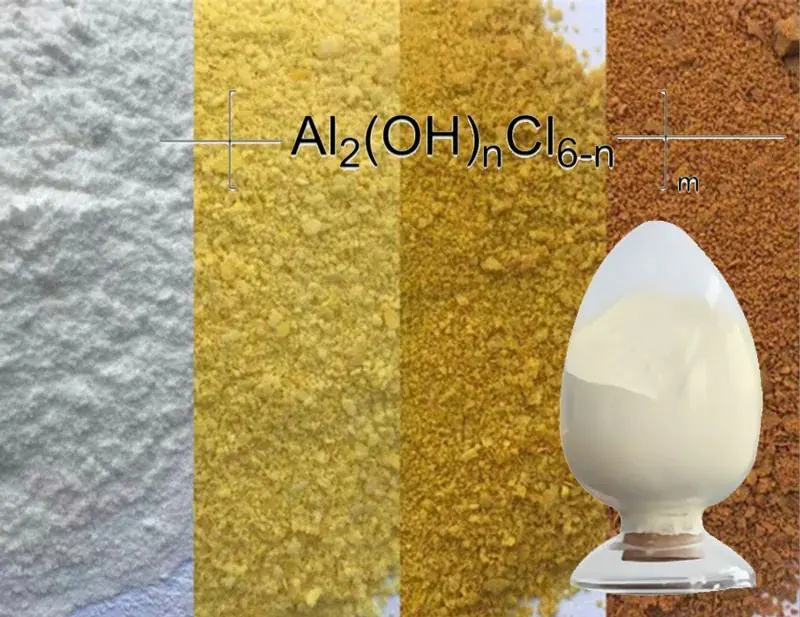
Integration with Food Processing Treatment Systems
Primary clarification. PAC added ahead of primary sedimentation removes the majority of suspended solids and colloidal organic matter, reducing the load on downstream biological treatment.
DAF systems. PAC is widely used in food processing DAF applications for FOG removal. The combination of PAC coagulation and dissolved air flotation achieves significantly better FOG removal than DAF alone.
Pre-treatment before biological treatment. By removing suspended and colloidal COD in the physical-chemical stage, PAC reduces the organic load entering biological treatment — improving its stability and reducing aeration energy consumption.
For a broader overview of PAC in industrial wastewater applications: PAC for Industrial Wastewater Treatment
For comparison with traditional coagulant options: PAC vs Alum: Which Coagulant Is Better?
Food Safety and Regulatory Compliance
PAC used in food processing wastewater treatment must comply with local environmental discharge regulations. Key considerations:
- Residual aluminum in effluent — where treated wastewater is discharged to surface water or reused in non-food-contact applications, residual aluminum levels must meet local environmental limits
- Sludge disposal — food processing wastewater sludge is typically classified as organic waste; confirm local classification and disposal requirements before selecting a disposal route
- Chemical safety documentation — our PAC products are supplied with full Safety Data Sheets (SDS) and Certificates of Analysis (COA) for every batch
Frequently Asked Questions
Can PAC be used in food processing facilities with organic certification requirements?
PAC is used in the wastewater treatment system, not in the food production process itself. It does not come into contact with food products. However, if your facility has specific certification requirements regarding chemicals used on-site, verify with your certifying body before introduction.
How quickly does PAC work in food processing effluent?
PAC reacts rapidly — charge neutralization occurs within seconds of dosing at the flash mixing zone. Visible floc formation typically occurs within 1–2 minutes. Full settling in a primary clarifier takes 20–40 minutes depending on effluent characteristics and clarifier design.
Does PAC remove BOD effectively?
PAC removes the suspended and colloidal fractions of BOD effectively — typically 40–60% BOD reduction. Soluble BOD requires biological treatment for complete removal. PAC is most effective as a pre-treatment step that reduces the load on biological systems rather than as a standalone BOD treatment.
Conclusion
PAC is a practical and cost-effective coagulant for food processing wastewater treatment. Its ability to remove suspended solids, FOG, colloidal organics, and phosphorus across variable pH conditions — combined with lower dosage and sludge production than alum — makes it well suited to the variable, high-organic effluent streams that food processing facilities generate.
Whether used in primary clarification, DAF pre-treatment, or phosphorus removal, PAC delivers consistent and controllable results that help food processing facilities meet discharge standards and reduce operating costs.
Contact our technical team today for a free effluent assessment, PAC product samples with full COA documentation, and a dosage recommendation for your specific food processing operation. We respond within 24 hours.