
Written by the HyChron Technical Team — water treatment specialists with over 15 years of field experience in municipal and industrial systems. Last reviewed: April 2026
Oil and grease (O&G) in industrial wastewater is one of the most persistent treatment challenges across sectors. Whether it comes from food processing, petrochemical operations, vehicle maintenance facilities, or metal working shops, emulsified oil and grease resists gravity separation and passes through conventional treatment systems largely untreated.
Discharge limits for oil and grease are strict in most jurisdictions — often below 10–15 mg/L for direct discharge to surface water — and failing to meet them carries significant regulatory and reputational risk.
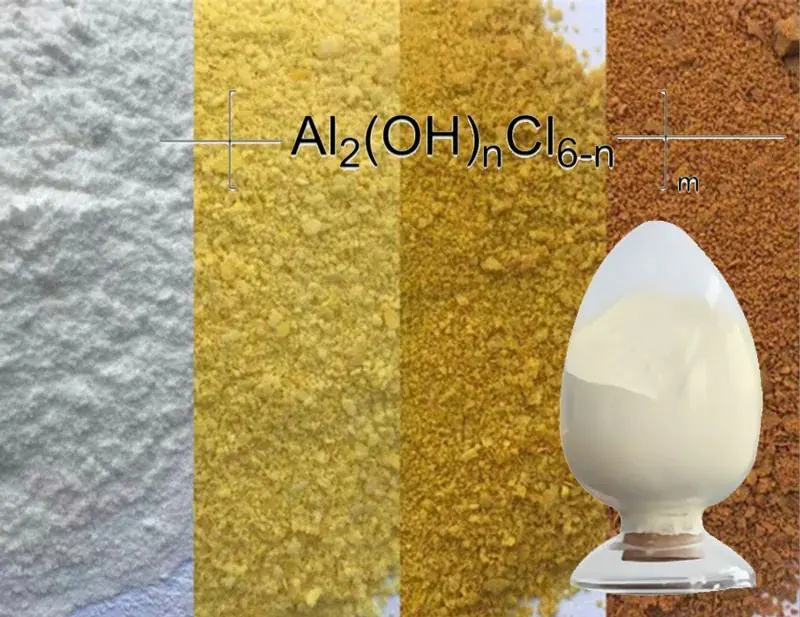
PAC (Poly Aluminum Chloride) is one of the most effective chemical tools for breaking oil and grease emulsions ahead of separation by sedimentation or dissolved air flotation (DAF). This guide explains how PAC removes oil and grease, how to dose it correctly, and how to integrate it into your existing treatment system.
Struggling to meet oil and grease discharge limits? Contact our technical team for a free assessment and PAC recommendation.
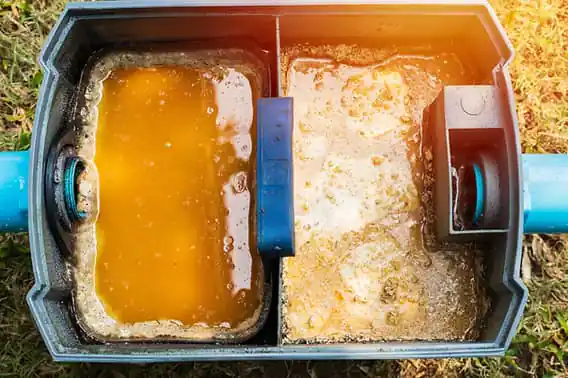
Why Emulsified Oil and Grease Is Difficult to Remove
Free-floating oil separates from water naturally by gravity — this is what API separators and skimmers handle. The problem is emulsified oil and grease, which behaves very differently:
- Emulsified oil droplets are stabilized by surfactants — detergents from cleaning operations, natural emulsifiers in food and biological material, and process chemicals all coat oil droplets and prevent them from coalescing
- Stabilized droplets carry negative surface charges — electrostatic repulsion keeps them dispersed in water and prevents natural aggregation
- Small droplet size — emulsified oil droplets are typically 1–20 microns in diameter, too small to rise quickly by gravity even without stabilization
The result is an effluent that looks uniformly turbid or milky — and one that will not clarify without chemical intervention.
How PAC Breaks Oil and Grease Emulsions
PAC removes emulsified oil and grease through charge neutralization:
- PAC hydrolysis releases positively charged aluminum species into the water
- These cationic species adsorb onto the negatively charged surfaces of emulsified oil droplets
- Surface charges are neutralized — the electrostatic repulsion that stabilized the emulsion is eliminated
- Destabilized oil droplets collide and coalesce into larger droplets
- Larger droplets rise to the surface (for DAF) or are captured in settling floc (for sedimentation)
Because PAC is pre-polymerized, this charge neutralization step is faster and more complete than with alum at equivalent doses — critical for high-throughput treatment systems where contact time is limited.
PAC + DAF: The Most Effective Combination
For oil and grease removal, dissolved air flotation (DAF) combined with PAC coagulation is the industry-standard approach. The combination works because:
- PAC destabilizes oil droplets and aggregates them into micro-flocs
- Micro-bubbles from the DAF system attach to the destabilized oil droplets and flocs
- Oil-laden bubbles rise to the surface where they are skimmed off
Typical O&G removal performance:
- DAF without chemical addition: 50–70% O&G removal
- DAF with optimized PAC addition: 85–95% O&G removal
This improvement is consistent across food processing, petrochemical, and vehicle maintenance applications — wherever emulsified oil is the primary contaminant.
Dosage Guidelines for Oil and Grease Removal
| Application | Oil and Grease Concentration | Typical PAC Dosage |
|---|---|---|
| Food processing (light FOG) | < 200 mg/L | 20–50 mg/L |
| Food processing (heavy FOG) | 200–1,000 mg/L | 50–100 mg/L |
| Petrochemical / refinery effluent | 50–500 mg/L | 30–80 mg/L |
| Vehicle workshop / garage drainage | 100–500 mg/L | 40–80 mg/L |
| Metal working coolant wastewater | 500–5,000 mg/L | 80–200 mg/L |
Jar testing (ASTM D2035) is essential — emulsion stability varies significantly with surfactant type and concentration, directly affecting the required PAC dose.
Dosing Procedure for DAF Applications
- Jar test first — determine optimal PAC dose and contact time for your specific emulsion
- Dose PAC upstream of the DAF inlet — allow 2–5 minutes of contact time for micro-floc formation before flotation
- Flash mixing — G-value 200–400 s⁻¹ for 30–60 seconds immediately after dosing
- Monitor DAF effluent turbidity — online monitoring enables real-time dose adjustment as influent O&G concentration varies
pH Considerations
PAC performs best for oil emulsion breaking in the pH range of 6.0–8.0. Strongly alkaline emulsions (pH > 9) — common in metalworking coolant and alkaline cleaning operations — may require pH adjustment before PAC dosing to achieve effective emulsion breaking.
Applications Across Industries
Food and beverage processing. Cooking oils, fats, and natural food emulsions are the primary O&G sources. PAC combined with DAF is standard practice in meat, dairy, and prepared food facilities. For detailed guidance: PAC for Food Processing Wastewater Treatment
Petrochemical and refinery operations. Emulsified process hydrocarbons require PAC coagulation ahead of API separators or DAF systems. For detailed guidance: PAC in Petrochemical Wastewater Treatment
Oilfield produced water. Emulsified crude oil in produced water is treated with PAC ahead of DAF or IGF systems. For detailed guidance: PAC for Oilfield Wastewater Treatment
Vehicle maintenance and fleet operations. Wash water and workshop drainage contain emulsified petroleum products from vehicle cleaning and maintenance. PAC breaks these emulsions ahead of DAF or coalescing plate separators.
Metal working and machining. Spent metalworking coolants contain highly stable oil-in-water emulsions at high concentrations. PAC is used as the primary emulsion-breaking chemical before DAF or ultrafiltration.
Frequently Asked Questions
Can PAC alone achieve discharge-compliant oil and grease levels?
PAC coagulation followed by sedimentation can achieve moderate O&G reduction, but for strict discharge limits (below 15 mg/L), PAC combined with DAF is the more reliable approach. DAF provides the separation mechanism that captures the destabilized oil droplets more efficiently than gravity settling alone.
How do I know if my oil emulsion is stable or free?
A simple jar test will tell you. Add a small dose of PAC to a sample of your effluent, mix rapidly, then observe. If the sample clarifies and oil rises to the surface, you have a destabilizable emulsion. If the sample remains milky, the emulsion may be highly stabilized and require a higher PAC dose or pH adjustment. Our technical team can support jar testing remotely.
Does PAC work on synthetic coolant emulsions?
Synthetic metalworking coolants use non-ionic and anionic surfactants that create very stable emulsions. PAC is effective at breaking many synthetic coolant emulsions, but highly stable formulations may require higher doses or combination with acid cracking before PAC addition. Jar testing with your specific coolant is strongly recommended.
Conclusion
Emulsified oil and grease removal is one of the applications where PAC delivers the most immediate and measurable impact. By neutralizing the surface charges that stabilize oil-in-water emulsions, PAC enables efficient separation by DAF or sedimentation — achieving O&G removal rates of 85–95% that are simply not possible without chemical pre-treatment.
Whether your facility is in food processing, petrochemical, oilfield, or vehicle maintenance, if you are struggling to meet oil and grease discharge limits, PAC is likely the most practical and cost-effective solution available.
Contact our technical team today for a free emulsion assessment, PAC product samples, and a dosage recommendation for your specific O&G removal application. We respond within 24 hours.