
Written by the HyChron Technical Team — water treatment specialists with over 15 years of field experience in municipal and industrial systems. Last reviewed: April 2026
Oilfield operations generate large volumes of produced water, drilling mud wastewater, and fracturing flowback fluid — all of which contain complex mixtures of hydrocarbons, suspended solids, dissolved salts, and naturally occurring radioactive materials (NORM) that require treatment before reuse or discharge.
Treating oilfield wastewater is challenging. High salinity, emulsified oil, and variable contaminant loads make it difficult for conventional treatment chemicals to perform consistently. Operators need a coagulant that works reliably under these demanding conditions — without excessive dosage or sludge volumes.
PAC (Poly Aluminum Chloride) is increasingly used in oilfield wastewater treatment for its ability to destabilize oil-in-water emulsions, remove suspended solids, and reduce turbidity across a wide range of water chemistry conditions.
Managing oilfield wastewater treatment challenges? Contact our technical team for a free assessment and PAC recommendation based on your produced water data.
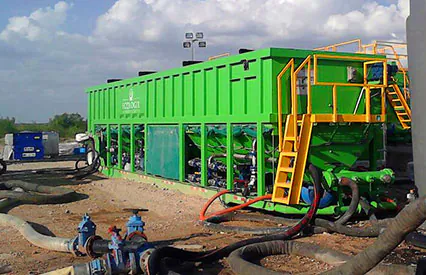
Types of Oilfield Wastewater and What PAC Targets
Produced Water
The largest volume stream in oilfield operations. Produced water contains emulsified and dissolved hydrocarbons, suspended solids, dissolved salts, and treatment chemical residues. PAC targets:
- Emulsified oil droplets (charge neutralization breaks the emulsion)
- Suspended solids and fine particulates
- Colloidal organic matter contributing to turbidity and COD
Drilling Mud Wastewater
Spent drilling fluids contain bentonite, weighting agents, and organic additives that create highly turbid, difficult-to-settle wastewater. PAC effectively coagulates bentonite and fine solids, improving settling rates significantly.
Fracturing Flowback Water
Hydraulic fracturing flowback contains high concentrations of suspended solids, residual fracturing chemicals, and formation fines. PAC is used in primary coagulation ahead of filtration or reinjection systems.
Why PAC Performs in Oilfield Conditions
Effective at moderate salinity levels. While very high salinity (above 10,000 mg/L TDS) can interfere with coagulation chemistry, PAC generally maintains effective coagulation performance at the moderate salinity levels found in many produced water streams — better than alum under comparable conditions.
Wide pH tolerance. Oilfield wastewater pH varies significantly depending on formation chemistry and treatment chemical residues. PAC’s effective range of pH 5.0–9.0 covers most oilfield wastewater conditions without requiring pH pre-adjustment.
Fast-acting emulsion breaking. PAC’s high charge density makes it effective at neutralizing the negative charges on emulsified oil droplets — a prerequisite for efficient oil-water separation in API separators, DAF units, or induced gas flotation (IGF) systems.
Lower sludge than alum. PAC produces 30–50% less sludge than alum at equivalent treatment performance — directly reducing sludge handling and disposal costs that are significant in remote oilfield locations.
For a full comparison of PAC versus alum across all performance parameters: PAC vs Alum: Which Coagulant Is Better?
Dosage Guidelines for Oilfield Wastewater
| Oilfield Application | Typical PAC Dosage |
|---|---|
| Produced water treatment | 20–80 mg/L |
| Drilling mud wastewater | 50–150 mg/L |
| Fracturing flowback water | 30–100 mg/L |
| Pre-treatment before reinjection | 15–50 mg/L |
These are indicative ranges. Jar testing is essential given the high variability of oilfield wastewater composition between wells and formations.
Dosing Procedure
- Jar test with representative samples — oilfield wastewater composition varies significantly; always test before full-scale application
- Dose at the high-turbulence mixing zone — G-value 200–400 s⁻¹ for 30–60 seconds
- Slow-mix flocculation — G-value 20–60 s⁻¹ for 15–25 minutes
- For DAF or IGF applications — dose PAC upstream with sufficient contact time for micro-floc formation before flotation
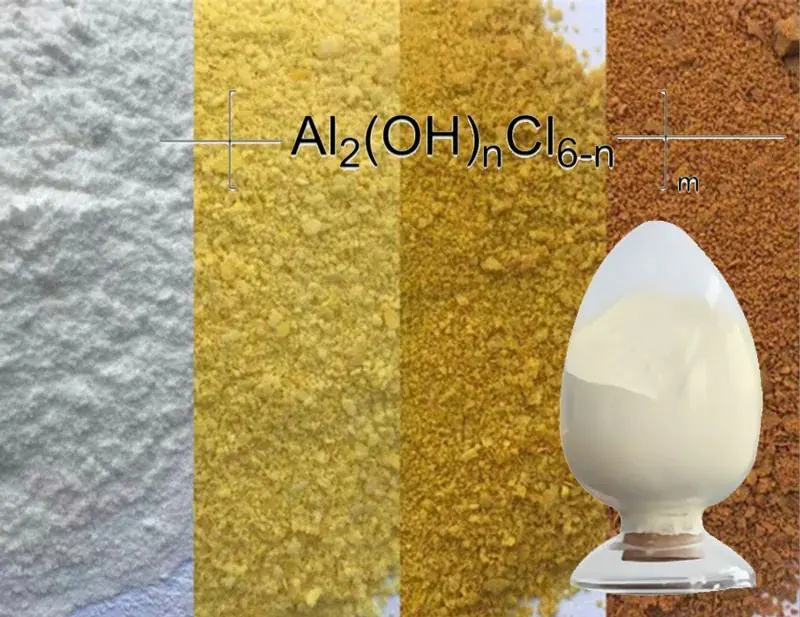
Integration with Oilfield Treatment Systems
API separators. PAC coagulation ahead of gravity separation improves oil removal efficiency by destabilizing emulsified oil droplets that would otherwise pass through the separator.
DAF and IGF systems. PAC is the preferred coagulant ahead of flotation-based oil-water separation. Destabilized oil droplets attach more readily to rising air or gas bubbles, significantly improving oil removal rates.
Filtration pre-treatment. Where treated water is reinjected or reused in fracturing operations, PAC coagulation ahead of filtration reduces suspended solids loading on filters — extending filter run times and reducing backwash frequency.
For broader guidance on PAC in industrial applications: PAC for Industrial Wastewater Treatment
Frequently Asked Questions
Does PAC work in high-salinity produced water?
PAC maintains effective coagulation at moderate salinity levels. At very high TDS (above 10,000–15,000 mg/L), coagulation efficiency may decrease and dosage adjustments will be needed. For high-salinity applications, contact our technical team for application-specific guidance and jar test support.
Can PAC be used for water reuse in hydraulic fracturing operations?
Yes. PAC is used in produced water treatment systems designed to meet water quality specifications for reuse in fracturing operations — primarily targeting suspended solids, turbidity, and emulsified oil that would otherwise damage formation permeability or interfere with fracturing fluid performance.
What happens to PAC sludge from oilfield treatment?
PAC sludge from oilfield applications contains hydrocarbons and may be classified as hazardous waste depending on local regulations and oil content. Sludge characterization and disposal planning should be conducted in compliance with applicable oil and gas environmental regulations.
Conclusion
PAC is a practical and effective coagulant for oilfield wastewater treatment across produced water, drilling mud wastewater, and fracturing flowback applications. Its emulsion-breaking capability, wide pH tolerance, and lower sludge production compared to alum make it a reliable choice for operators who need consistent treatment performance under demanding oilfield conditions.
Contact our technical team today for a free oilfield wastewater assessment, PAC product samples, and a dosage recommendation for your specific application. We respond within 24 hours.