 Skip to content
Written by the HyChron Technical Team — water treatment specialists with over 15 years of field experience in municipal and industrial systems. Last reviewed: April 2026
Charge neutralization is the primary reason PAC works. It is also the most commonly misunderstood aspect of coagulation chemistry — and misunderstanding it leads to dosing mistakes that cost plants money without improving treatment performance.
This article explains the charge neutralization mechanism in PAC clearly and practically: what it is, why it matters, how it differs from other coagulation mechanisms, and what it means for how you dose and mix PAC in your treatment system.
Want to optimize PAC performance in your system? Contact our technical team for a free assessment and dosage recommendation.
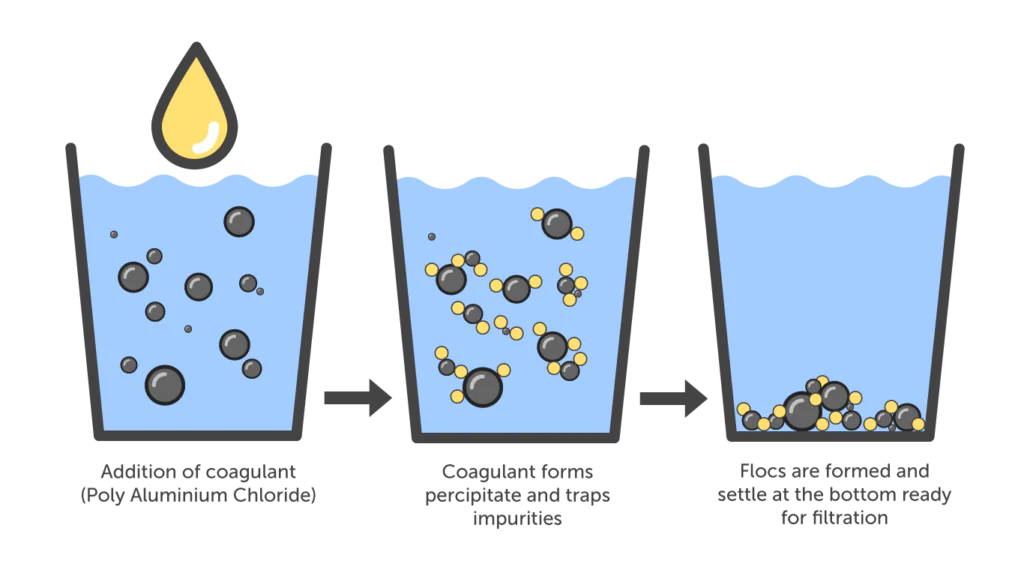
Why Particles Stay Suspended: The Surface Charge Problem
To understand charge neutralization, you first need to understand why colloidal particles stay suspended in water at all.
Most particles that cause turbidity in water — clay minerals, fine silica, organic colloids, bacteria, metal hydroxides — carry a net negative electrical charge on their surfaces. This charge develops through several mechanisms: preferential adsorption of anions from the water, ionization of surface functional groups, and crystal lattice imperfections in mineral particles.
The negative surface charge creates an electrical double layer around each particle — a region of accumulated positive counterions that partially screens the negative charge. But even with this screening, particles still repel each other when they approach closely enough for the charge layers to interact.
This electrostatic repulsion — quantified by the zeta potential, typically −20 to −40 mV for naturally turbid water — is what prevents particles from aggregating and settling. It is the stability mechanism that coagulation must overcome.
How PAC Achieves Charge Neutralization
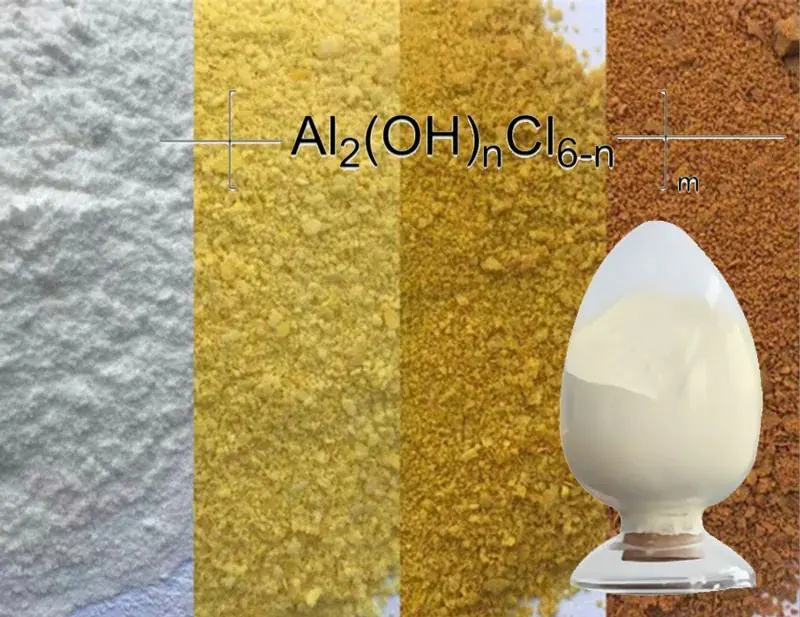
PAC is a pre-polymerized aluminum compound with the general formula [Al₂(OH)nCl₆₋ₙ]ₘ. When dissolved in water, it hydrolyzes to release a range of positively charged aluminum hydroxide species:
- Mononuclear species: Al³⁺, Al(OH)²⁺, Al(OH)₂⁺
- Polynuclear species: Al₂(OH)₂⁴⁺, Al₃(OH)₄⁵⁺
- Large polymer species: Al₁₃O₄(OH)₂₄⁷⁺ (the Al₁₃ polycation) and higher oligomers
These cationic species carry strong positive charges that are attracted to the negatively charged particle surfaces. They adsorb rapidly onto particle surfaces and neutralize the negative charge — reducing the zeta potential from −20 to −40 mV toward zero.
As the zeta potential approaches zero, electrostatic repulsion between particles decreases. Particles that previously repelled each other now collide and stick — beginning the aggregation process that leads to visible floc formation and settling.
Why PAC Is More Effective Than Alum at Charge Neutralization
The key difference between PAC and alum (aluminum sulfate) is the degree of pre-polymerization.
When alum is dosed into water, it releases Al³⁺ ions that must hydrolyze in situ — forming aluminum hydroxide species through reactions that depend on pH, temperature, and reaction time. At low temperatures or suboptimal pH, this hydrolysis is slow and incomplete, reducing the concentration of active aluminum species available for charge neutralization.
PAC’s active aluminum species — particularly the Al₁₃ polycation — are already formed before dosing. They do not depend on in-situ hydrolysis reactions to become active. This is why PAC:
- Reacts faster than alum after dosing
- Maintains effectiveness at lower temperatures
- Requires lower doses for equivalent charge neutralization
- Performs across a wider pH range (5.0–9.0 vs alum’s 6.5–7.5)
For a full performance comparison: PAC vs Alum: Which Coagulant Is Better?
Charge Neutralization vs Sweep Flocculation: Key Differences
PAC removes particles through two distinct mechanisms. Understanding the difference matters for dosage optimization:
| Parameter | Charge Neutralization | Sweep Flocculation |
|---|---|---|
| PAC dose | Lower | Higher |
| Mechanism | Surface charge reduction | Physical entrapment in Al(OH)₃ floc |
| Effective particle size | > 0.1 micron | All sizes including ultrafines |
| Sensitivity to overdose | High — charge reversal possible | Lower — more forgiving |
| Floc characteristics | Dense, compact | Voluminous, lighter |
| Settling speed | Fast | Moderate |
| Best for | High-turbidity water | Low-turbidity or ultrafine particle water |
In practice, both mechanisms operate simultaneously. The optimal PAC dose — determined by jar testing — produces the best combination of both mechanisms for your specific water.
What Happens When You Overdose PAC
Charge neutralization is a dose-sensitive mechanism. At the optimal dose, particle surface charges are neutralized and aggregation occurs efficiently. But if PAC dose is increased beyond the optimum:
- Particle surfaces become saturated with adsorbed aluminum species
- Additional aluminum species deposit on top of the adsorbed layer
- The net surface charge reverses — from negative to positive
- Particles are now positively charged and begin repelling each other again
- Turbidity increases rather than decreases
This charge reversal phenomenon — called restabilization — is one of the most common causes of poor coagulation performance in systems where operators assume that more PAC always means better results. It is also why jar testing to establish the dose-response curve is essential before setting operational dosage.
Practical Implications for PAC Dosing
Rapid mixing is non-negotiable. Charge neutralization happens within milliseconds of PAC contact with particles. If PAC is not dispersed uniformly throughout the water volume before hydrolysis is complete, some regions receive effective charge neutralization while others are undertreated. The G-value recommendation of 200–400 s⁻¹ for 30–60 seconds at the flash mixing zone exists precisely to ensure uniform dispersion before the reaction is complete.
pH affects the distribution of aluminum species. At pH below 6, aluminum exists predominantly as Al³⁺ — a highly charged but small mononuclear species. At pH 6–8, larger polynuclear species and the Al₁₃ polycation predominate — these are the most effective for charge neutralization. At pH above 9, aluminum begins to form negatively charged aluminate (Al(OH)₄⁻), which does not contribute to positive charge neutralization. This is why PAC has a practical upper pH limit of approximately 9 for effective coagulation.
Zeta potential measurement helps optimize dosing. In well-equipped treatment systems, online or bench-scale zeta potential measurement provides direct feedback on whether charge neutralization is complete — a more direct indicator than turbidity alone for dosage optimization.
Frequently Asked Questions
What is the ideal zeta potential after PAC dosing?
The target zeta potential after PAC dosing for optimal coagulation is approximately 0 to −5 mV. Positive values indicate overdosing and potential restabilization. Values more negative than −10 mV indicate underdosing and incomplete charge neutralization.
Does charge neutralization work differently for different types of particles?
Yes. Clay minerals (kaolinite, montmorillonite) have well-defined negative surface charges and respond predictably to charge neutralization. Organic colloids and biological particles have more variable surface chemistry and may require higher PAC doses. Metal hydroxide precipitates respond well to charge neutralization at their optimal precipitation pH.
Can I use streaming current detectors to control PAC dosing automatically?
Yes. Streaming current detectors (SCDs) measure the electrokinetic charge of particles in treated water and can be used for automatic PAC dose control — maintaining the optimal charge neutralization point without manual adjustment. This is the most advanced approach to PAC dose optimization and is used in modern high-performance treatment plants.
Conclusion
Charge neutralization is the fundamental mechanism through which PAC destabilizes colloidal particles and enables effective turbidity and TSS removal. Understanding this mechanism — why it works, how it differs from sweep flocculation, and what happens when dosage is wrong — is what separates operators who consistently achieve good treatment results from those who struggle with inconsistent performance.
PAC’s pre-polymerized active aluminum species make it the most effective inorganic coagulant for charge neutralization across a wide range of water chemistry conditions — and optimizing its application starts with understanding the chemistry behind it.
Contact our technical team today for a free coagulation system assessment and PAC dosage optimization guidance. We respond within 24 hours.


