
Written by the HyChron Technical Team — water treatment specialists with over 15 years of field experience in municipal and industrial systems. Last reviewed: April 2026
When sourcing powder PAC, buyers frequently encounter products labeled 28%, 30%, or 31% Al₂O₃ — and assume the highest number is always the best choice. In practice, the relationship between Al₂O₃ content, basicity, and treatment performance is more nuanced than a single percentage figure suggests.
This article explains what PAC grade specifications actually mean, how they affect treatment performance and cost, and what to look for beyond the Al₂O₃ number when evaluating PAC products.
Evaluating PAC grades for your application? Contact our technical team for a free product recommendation and sample.

What Al₂O₃ Content Actually Means
Al₂O₃ content — expressed as a percentage by weight — indicates how much aluminum oxide equivalent is present in the product. It is the standard way of expressing the concentration of active aluminum in PAC, allowing comparison across products with different water content and formulations.
Higher Al₂O₃ content means:
- More active aluminum per kilogram of product
- Lower dosage by weight required to deliver equivalent aluminum to the water
- Lower transport and storage cost per unit of treatment capacity
However, Al₂O₃ content alone does not determine treatment performance. The basicity ratio — the percentage of hydroxyl groups (OH) relative to aluminum — has an equal or greater impact on how effectively PAC coagulates in practice.
The Three Common Powder PAC Grades
| Specification | 28% PAC | 30% PAC | 31% PAC |
|---|---|---|---|
| Al₂O₃ content | 28% min | 30% min | 31% min |
| Typical basicity range | 60–75% | 65–80% | 70–85% |
| Active aluminum per kg | Lower | Medium | Higher |
| Dosage required (by weight) | Slightly higher | Medium | Lower |
| Cost per kg | Lower | Medium | Higher |
| Cost per unit Al₂O₃ | Similar | Similar | Similar |
Why Basicity Matters as Much as Al₂O₃ Content
Basicity is defined as the molar ratio of OH to Al in the PAC molecule, expressed as a percentage. A basicity of 70% means 70% of the aluminum’s coordination sites are occupied by OH groups, with the remainder occupied by Cl.
Higher basicity means:
- More pre-polymerized aluminum species in the product
- Faster hydrolysis and charge neutralization when dosed into water
- Better performance in cold water (below 10°C)
- More stable coagulation results across variable water conditions
- Lower residual aluminum in treated effluent
A 28% PAC product with 80% basicity will outperform a 31% PAC product with 60% basicity in most coagulation applications — despite the lower Al₂O₃ content. This is why buyers who focus exclusively on Al₂O₃ percentage without checking basicity frequently experience disappointing performance from nominally higher-grade products.
Recommended basicity range for most applications: 60–85%
Which Grade to Choose for Your Application
28% PAC is suitable for:
- Cost-sensitive applications where treatment volume is high and delivered Al₂O₃ cost is the primary driver
- Applications with moderate water quality and stable influent conditions
- Facilities that conduct regular jar testing and can compensate for slightly lower basicity with optimized dosage
30% PAC is the most widely used grade, offering:
- A balance of Al₂O₃ content and basicity
- Good performance across most municipal and industrial water treatment applications
- Broad availability from multiple suppliers
31% PAC is preferred for:
- Applications where dosage volume is constrained (small storage or dosing systems)
- High-performance applications requiring low residual aluminum (drinking water)
- Cold-climate operations where higher basicity is important for consistent cold-water performance
- Buyers who prioritize performance consistency over lowest unit purchase price
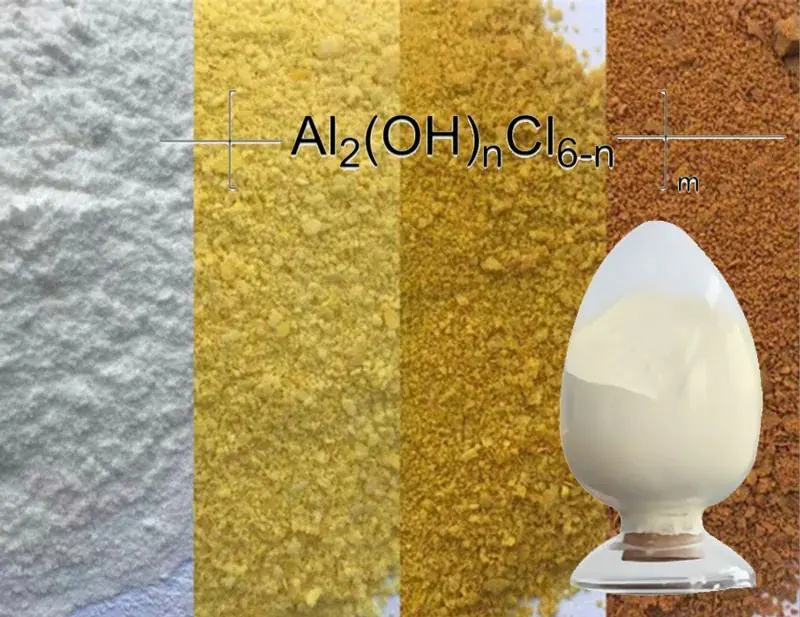
Beyond Grade: What Else to Check When Buying PAC
Al₂O₃ content and basicity are the two most important parameters, but a complete product evaluation should also include:
Heavy metal content. PAC for drinking water applications must comply with NSF/ANSI 60 or local equivalent standards for heavy metals including arsenic, lead, mercury, and cadmium. Request a Certificate of Analysis (COA) showing heavy metal levels for every batch.
pH of 1% solution. Should be between 3.5 and 5.0. Values outside this range may indicate product instability or impurities.
Insoluble content. Low-quality PAC may contain undissolved particles that block dosing lines and reduce effective Al₂O₃ delivery. Insoluble content should be below 0.2% for quality products.
Batch consistency. Request COA documents for multiple batches from your supplier’s production history. Consistent specifications across batches indicate reliable manufacturing quality control.
Cost Analysis: Is Higher Grade Always More Economical?
The economics of PAC grade selection depend on the cost per unit of Al₂O₃ delivered, not the cost per kilogram of product.
Example comparison for equivalent treatment:
- 28% PAC at $X/kg requires dose D to deliver target Al₂O₃
- 31% PAC at $1.1X/kg requires dose 0.9D to deliver the same Al₂O₃
If the 10% higher price is proportional to the 10% higher Al₂O₃ content, the economics are equivalent. In practice, the price premium for higher-grade products varies by supplier and market — comparing cost per kg of Al₂O₃ (not cost per kg of product) is the correct basis for economic comparison.
Additionally, if higher basicity in the 31% product reduces the effective dosage needed beyond what Al₂O₃ content alone predicts, the higher-grade product may be more economical even at a higher unit price.
For related cost guidance: PAC vs Alum: Which Coagulant Is Better?
Frequently Asked Questions
Can I substitute 28% PAC for 30% PAC without changing my dosing system?
Yes, but dosage recalibration is required. To deliver the same Al₂O₃ to the water, the dosing rate must be increased proportionally — approximately 7% more 28% PAC than 30% PAC by weight for equivalent Al₂O₃ delivery. Jar testing after the switch will confirm the adjusted optimal dose.
Does PAC grade affect sludge production?
At equivalent Al₂O₃ dosage, sludge production is similar across grades. However, if a higher-grade product with higher basicity achieves equivalent treatment at a lower Al₂O₃ dose, sludge production may decrease slightly.
How do I verify that a supplier’s PAC product meets its stated grade?
Request the Certificate of Analysis for the specific batch you are purchasing, and periodically send samples to an independent laboratory for verification. Key parameters to verify: Al₂O₃ content, basicity, pH of 1% solution, insoluble content, and heavy metal panel. Our products ship with full COA documentation for every batch.
Conclusion
PAC grade selection is not simply a matter of choosing the highest Al₂O₃ percentage. Basicity, heavy metal compliance, batch consistency, and total cost per unit of Al₂O₃ delivered are equally important factors in making the right selection for your application.
For most industrial and municipal applications, 30% PAC with 65–80% basicity offers the best combination of performance and cost. For drinking water or cold-climate applications, 31% PAC with higher basicity provides the performance margin that demanding applications require.
Contact our technical team today for a free grade recommendation, product samples across our PAC range, and batch COA documentation. We respond within 24 hours.