Skip to content
Written by the HyChron Technical Team — water treatment specialists with over 15 years of field experience in municipal and industrial systems. Last reviewed: April 2026
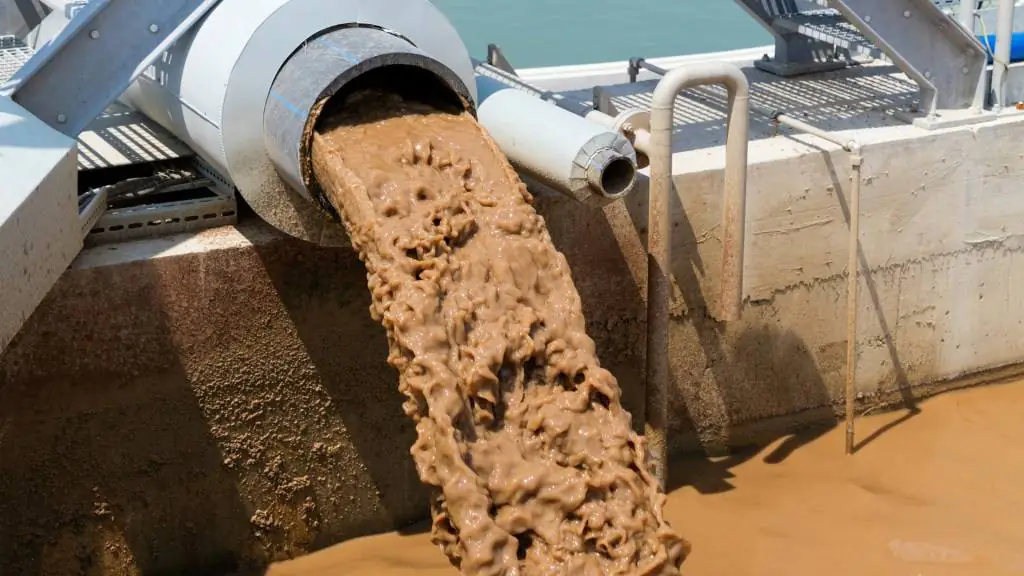
Sludge management is one of the largest and most underestimated operating costs in water treatment. For many plants, sludge handling — dewatering, transport, and disposal — accounts for 30–60% of total chemical treatment operating expenses. The coagulant you choose directly determines how much sludge you generate.
PAC consistently produces 30–50% less sludge than alum at equivalent treatment performance. For high-volume plants, this is not a marginal improvement — it is a significant and immediate reduction in operating costs that compounds across every cubic meter treated.
This article explains why PAC produces less sludge, how to quantify the reduction for your plant, and how to optimize PAC application to minimize sludge volume without compromising effluent quality.
Why PAC Produces Less Sludge Than Alum
The sludge produced in coagulation treatment consists primarily of:
- Coagulant precipitates (aluminum hydroxide from PAC or alum)
- Captured suspended solids and colloidal particles from the raw water
- Co-precipitated natural organic matter
The coagulant precipitate fraction is where PAC delivers the largest sludge reduction. Because PAC requires 30–50% lower dosage than alum for equivalent turbidity removal, it introduces proportionally less aluminum into the treatment process — and less aluminum input means less aluminum hydroxide precipitate in the sludge.
Additionally, PAC’s pre-polymerized chemistry produces denser, more compact flocs than alum’s slower in-situ hydrolysis. These denser flocs compact more efficiently in sludge thickeners and dewater more thoroughly in belt presses and centrifuges — further reducing the volume of dewatered sludge cake that requires disposal.
Quantifying Sludge Reduction: The Calculations
Understanding how much sludge your PAC system produces — and how it compares to alum — requires a straightforward calculation.
Sludge Mass Estimation
From coagulant contribution:
For alum (Al₂(SO₄)₃ · 18H₂O), each mg/L of aluminum sulfate dosed produces approximately 0.26 mg/L of Al₂O₃ equivalent and generates approximately 0.44 mg/L of Al(OH)₃ sludge.
For PAC at 30% Al₂O₃ with 70% basicity, the aluminum hydroxide precipitate generated per mg/L of PAC dosed is approximately 0.26–0.30 mg/L of Al(OH)₃ — similar per unit dose, but PAC is dosed at 30–50% lower rates, producing proportionally less coagulant sludge.
Simplified sludge production estimate:
Sludge production (kg/day) ≈ [Dose (mg/L) × Flow (m³/day) × 2.5] / 1,000,000
The factor 2.5 accounts for coagulant precipitate plus captured suspended solids (assuming raw water TSS of approximately 20–50 mg/L). Adjust this factor based on your actual raw water TSS.
Example comparison:
- Alum system: 40 mg/L dose, 5,000 m³/day flow
- Sludge ≈ (40 × 5,000 × 2.5) / 1,000,000 = 0.5 tonnes/day
- PAC system: 25 mg/L dose (same effluent quality), same flow
- Sludge ≈ (25 × 5,000 × 2.5) / 1,000,000 = 0.31 tonnes/day
- Sludge reduction: 38% less sludge
Translating to Cost Savings
Multiply sludge volume reduction by your actual sludge disposal cost per tonne:
Annual sludge savings = Daily sludge reduction (tonnes) × 365 × Disposal cost ($/tonne)
For a plant paying $150/tonne for sludge disposal and saving 0.19 tonnes/day: Annual saving = 0.19 × 365 × $150 = $10,400/year from sludge reduction alone.
This saving partially or fully offsets the higher unit cost of PAC versus alum, depending on plant scale and local disposal costs.
Step-by-Step Guide to Minimizing PAC Sludge Production
Step 1 — Optimize PAC Dose to the Minimum Effective Level
Every excess milligram per liter of PAC dosed beyond the optimum produces unnecessary sludge without improving effluent quality. Jar test regularly to ensure the operational dose is at the true optimum — not a comfortable overestimate.
For dosage optimization: How to Dose PAC Correctly in Water Treatment
Step 2 — Use Higher Basicity PAC
Higher basicity PAC (70–85%) achieves equivalent turbidity removal at lower effective Al₂O₃ doses than low basicity products. This directly reduces the aluminum hydroxide precipitate fraction of sludge.
For basicity selection: High Basicity PAC vs Low Basicity PAC
Step 3 — Add PAM for Better Floc Compaction
Anionic PAM in the flocculation stage not only improves floc size and settling — it also produces denser, more compact flocs that release water more readily during dewatering. Better-dewatered sludge cake has lower water content and therefore lower disposal volume.
For PAC + PAM combination: Using PAC with PAM: Best Practices
Step 4 — Optimize Sludge Thickening and Dewatering
PAC sludge responds well to mechanical dewatering. Optimize:
- Gravity thickener: target underflow solids concentration of 2–4% before dewatering
- Belt press or filter press: ensure adequate conditioning with cationic PAM before pressing
- Centrifuge: PAC sludge typically dewaters to 18–25% dry solids with optimized cationic PAM conditioning
PAC Sludge Characteristics
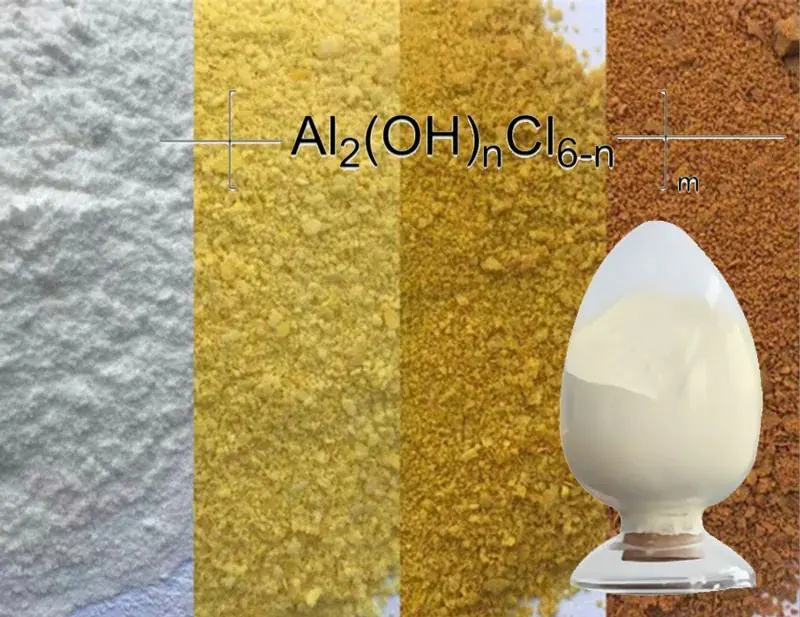
Understanding what PAC sludge contains helps with disposal planning and regulatory compliance:
| Parameter | Typical PAC Sludge (drinking water) | Typical PAC Sludge (industrial WW) |
|---|---|---|
| Total solids | 0.5–3% before thickening | 1–5% |
| After gravity thickening | 2–6% | 3–8% |
| After belt press dewatering | 18–28% dry solids | 20–35% dry solids |
| Aluminum content | 8–15% of dry solids | 5–20% of dry solids |
| Heavy metals | Generally low (drinking water) | Application-dependent |
| Disposal classification | Usually non-hazardous | Application-dependent |
For industrial applications where sludge may contain heavy metals or organic contaminants, characterization testing is required before selecting a disposal route.
Frequently Asked Questions
Is PAC sludge from drinking water treatment safe for land application?
In many jurisdictions, PAC sludge from drinking water treatment is classified as non-hazardous and can be land-applied or used in agricultural applications subject to local regulations. Aluminum content and any co-precipitated organic matter are the key parameters to verify. Confirm classification with your local regulatory authority before selecting a disposal route.
How does PAC sludge compare to alum sludge for agricultural use?
Both PAC and alum sludges contain aluminum hydroxide, which can affect soil pH and phosphorus availability. PAC sludge generally contains less total aluminum per unit of treated water than alum sludge (due to lower dosage), making it somewhat more suitable for land application where aluminum loading is a concern.
Will switching from alum to PAC require changes to our sludge handling equipment?
Generally no. PAC sludge has similar physical characteristics to alum sludge and is compatible with standard thickeners, belt presses, filter presses, and centrifuges. The main operational change is recalibrating cationic PAM conditioning doses for the dewatering stage, as PAC sludge may respond slightly differently to conditioning than alum sludge.
Conclusion
Sludge production is a direct function of coagulant dosage and chemistry. PAC’s 30–50% lower dosage requirement compared to alum translates into proportionally less sludge — and therefore lower dewatering, transport, and disposal costs across the life of the treatment system.
For plants where sludge disposal represents a significant operating cost, the sludge reduction from switching to PAC frequently justifies the transition on its own — independent of any other performance improvement.
Contact our technical team today for a free sludge production assessment and PAC dosage recommendation that minimizes sludge volume for your specific application. We respond within 24 hours.