Skip to content
Written by the HyChron Technical Team — water treatment specialists with over 15 years of field experience in municipal and industrial systems. Last reviewed: April 2026
Textile dyeing and finishing operations are among the most challenging wastewater sources to treat for color discharge compliance. This case study documents a mid-size textile dyeing facility that was facing enforcement action over color discharge and switched to an optimized PAC program to achieve compliance within a regulatory deadline.
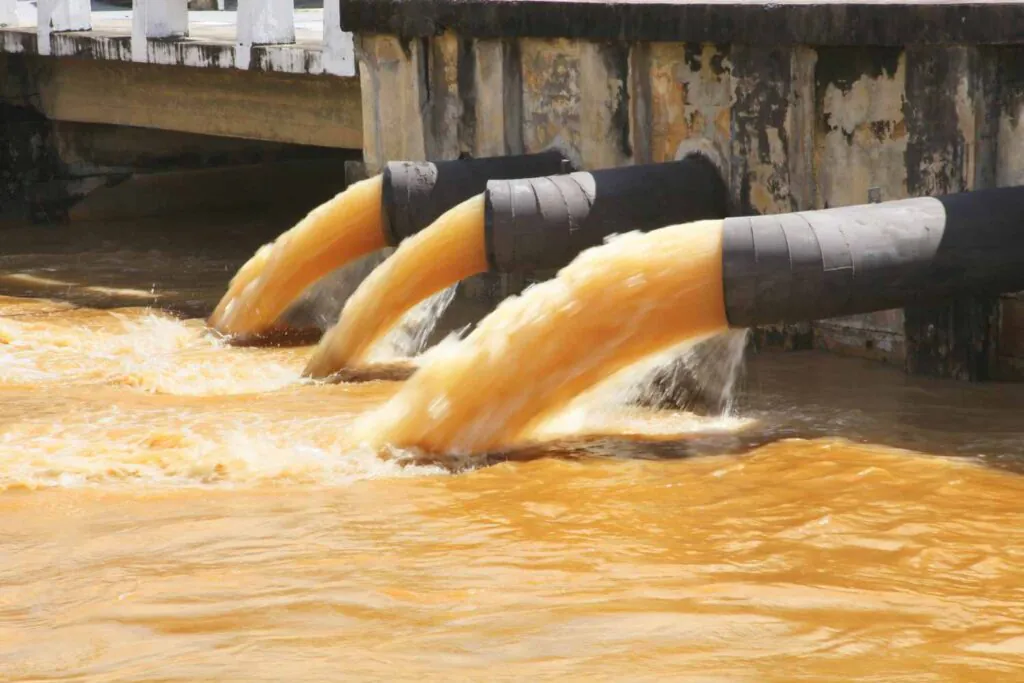
The facility processes approximately 8,000 m³/day of dyehouse effluent containing a mix of reactive dyes, direct dyes, and finishing chemicals. Discharge is to a municipal sewer with color and COD limits.
What the Operator Was Trying to Solve
The facility had been using alum for coagulation with inconsistent color removal results. Three problems were driving the enforcement action:
Problem 1 — Color discharge non-compliance. Discharge color was averaging 280–380 ADMI — exceeding the permit limit of 200 ADMI. The municipal authority had issued a notice requiring compliance within 90 days.
Problem 2 — Variable performance between dye batches. When the production line switched from reactive dyes to direct dyes, the alum coagulation system’s color removal efficiency dropped significantly. The pH sensitivity of alum and the variable pH of different dye bath effluents (ranging from pH 5.5 to pH 9.5) was causing inconsistent performance.
Problem 3 — High sludge volume. The alum-based system was generating approximately 14 m³/day of sludge — a significant disposal cost and a capacity constraint on the sludge handling system.
The PAC Solution and Implementation
Diagnosis
Jar testing with effluent samples from three different production batches (reactive dye, direct dye, and a mixed day) confirmed:
- Alum at current dose (65 mg/L) achieved 45–55% color removal at pH 7.0
- PAC at 90 mg/L achieved 72–81% color removal across the same samples
- At pH 6.0–6.5 (adjusted from the effluent’s typical pH 8.5 with mild acid dosing), PAC at 80 mg/L achieved 82–88% color removal
Product Selected
Liquid PAC at 10% Al₂O₃, basicity 76%. Delivered by road tanker to existing HDPE storage tanks that had previously held alum solution (tanks were compatible with PAC without modification).
System Changes
- Dosing pump recalibrated for new dose and product concentration
- pH dosing system (existing) configured to reduce effluent pH from 8.5 to 6.5 before PAC dosing point — this was the most significant operational change
- Flash mixing G-value verified at 320 s⁻¹ — no mechanical changes needed
- PAM addition introduced at 1.2 mg/L anionic PAM at the flocculation stage inlet — this combination consistently outperformed PAC alone in jar tests
Implementation Timeline
- Days 1–7: Jar testing and system configuration
- Days 8–10: Phased transition with continuous effluent color monitoring
- Days 11–90: Optimization period — monthly jar testing, PAC dose adjustment as production batches changed
Measured Outcomes at 6 Months
Color Removal
- Baseline (alum): 280–380 ADMI in discharge; 45–55% removal
- With PAC + pH control + PAM: 95–145 ADMI in discharge; 78–87% removal
- Compliance: 100% compliance with 200 ADMI limit from Week 3 onward
COD Reduction
- Baseline: Discharged COD averaging 485 mg/L
- With PAC: Discharged COD averaging 310 mg/L (36% reduction)
- Note: COD limit was 400 mg/L — plant achieved compliance as a secondary benefit of the color treatment program
Sludge Volume
- Baseline (alum, 65 mg/L): 14 m³/day average sludge
- With PAC (80 mg/L + 1.2 mg/L PAM): 8.6 m³/day average sludge
- Reduction: 39% sludge volume reduction despite higher PAC dose (reflecting both lower product density of PAC vs alum and denser PAC floc)

Chemical Cost Analysis
| Cost Component | Alum System | PAC System | Change |
|---|---|---|---|
| Coagulant cost/day | $124 | $218 | +$94/day |
| Acid for pH adjustment (new) | $0 | $38/day | +$38/day |
| PAM addition (new) | $0 | $29/day | +$29/day |
| Sludge disposal savings | — | −$245/day | −$245/day |
| Net daily cost | $124 | $40 | −$84/day saving |
Despite higher chemical costs, sludge disposal savings produced a net daily saving of $84/day — approximately $30,660/year — while achieving compliance that alum could not deliver.
Key Lessons from This Case Study
Lesson 1: pH control before PAC dosing was the most impactful single change. Reducing effluent pH from 8.5 to 6.5 before PAC addition improved color removal by 10–15 percentage points compared to dosing at uncontrolled pH.
Lesson 2: PAC + PAM combination significantly outperformed PAC alone. The 1.2 mg/L PAM addition at the flocculation stage reduced carry-over of fine dye flocs and improved color removal consistency between different dye batch compositions.
Lesson 3: Color compliance was achieved within the 90-day enforcement deadline. The speed of implementation — 10 days from jar testing to operational transition — was possible because no capital equipment changes were required.
Lesson 4: Sludge savings dominated the economics. The facility’s sludge disposal cost was high ($35/m³) due to classification as industrial waste; the 5.4 m³/day reduction in sludge was the primary financial driver of the switch.
Frequently Asked Questions
How did the plant handle the variable effluent composition from different dye batches?
Monthly jar testing with fresh effluent samples established dose-response curves for the dominant dye types used at the facility. The production scheduler provided the PAC operator with a 48-hour advance notice of major dye batch changes, allowing the operator to adjust PAC dose proactively rather than reactively. Over 6 months, the operator developed a dye-type-specific dosage reference table that covers 90% of production scenarios without requiring a new jar test.
Was the acid dosing step operationally burdensome?
Less than expected. The facility already had a pH adjustment system for other process purposes. Adding the pre-PAC pH control step required only a new setpoint and a second injection point — no new equipment. The operator treats pH control as a routine monitoring task, checking the dosing point pH twice per shift.
What would have happened if the plant had not met the 90-day compliance deadline?
Based on communications from the municipal authority, failure to achieve compliance within 90 days would have triggered a discharge surcharge equivalent to 3× the normal wastewater treatment fee for the non-compliant period, escalating to potential sewer disconnection for continued non-compliance. The PAC transition prevented both outcomes.
Conclusion
This textile industry case study demonstrates that PAC — when combined with pH control and PAM addition — can achieve color discharge compliance that alum-based systems cannot reliably deliver, within a short implementation timeline and with positive net economics driven by sludge volume reduction.
For textile facilities facing color compliance challenges, this case provides a proven implementation template that can be adapted to specific dye mix, flow, and permit conditions.
Contact our technical team today for a free textile effluent assessment, PAC + PAM product samples, and an implementation plan tailored to your facility’s dye mix and compliance deadline. We respond within 24 hours.