 Skip to content
Written by the HyChron Technical Team — water treatment specialists with over 15 years of field experience in municipal and industrial systems. Last reviewed: April 2026
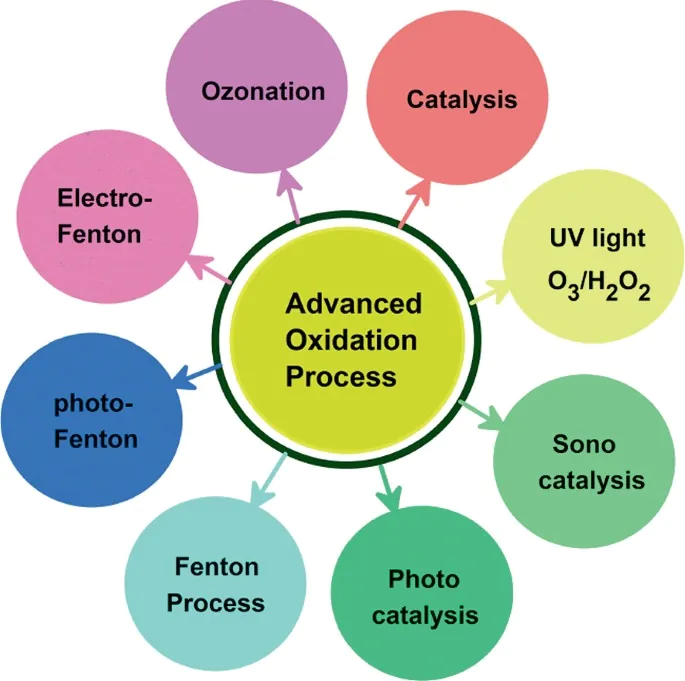
Advanced Oxidation Processes (AOP) — ozone, UV/H₂O₂, Fenton oxidation, and combinations thereof — are increasingly specified for treating micropollutants, refractory organic compounds, and disinfection byproduct precursors that conventional coagulation cannot fully address. For operators considering AOP investment, or already operating AOP systems that are underperforming, the relationship between PAC pre-treatment and AOP efficiency is critical to understand.
The core insight: AOP systems perform significantly better when PAC pre-treatment is optimized. PAC removes the bulk organic and suspended matter that competes with target compounds for oxidant — making AOP more efficient, more economical, and more reliable.
Why AOP Alone Is Rarely the Best Approach
AOP systems are powerful but expensive to operate — ozone generators consume significant electricity, UV lamps have finite service life and replacement cost, and H₂O₂ is a recurring chemical cost. The economics of AOP depend heavily on the water quality entering the system.
The problem with uncoagulated feed to AOP:
- Suspended and colloidal organic matter reacts with ozone and UV/H₂O₂ non-selectively — consuming oxidant without removing the target contaminants (micropollutants, color, pathogens)
- Turbidity above 1 NTU in UV systems creates shadows that shield microorganisms from UV exposure, reducing disinfection efficiency
- High TOC (total organic carbon) in ozone systems consumes ozone rapidly through non-selective reactions, reducing ozone penetration and contact with target compounds
The solution is to remove the bulk organic and suspended matter with PAC coagulation before AOP — so that oxidant is concentrated on the target compounds that AOP is designed to treat.
How PAC Pre-Treatment Improves AOP Performance
For Ozone Systems
PAC coagulation ahead of ozone reduces:
- Suspended solids and turbidity (removed by coagulation + sedimentation)
- Colloidal TOC — the fraction that reacts most rapidly with ozone
- Color (particularly NOM-related color from humic substances)
Result: ozone dose required for equivalent micropollutant removal or color reduction is typically 30–50% lower with PAC pre-treatment than without. This directly reduces ozone generator capacity requirements and operating electricity cost.
Recommended sequence for PAC + ozone: Raw water → PAC coagulation → sedimentation/filtration → ozone contact chamber → biological activated carbon (BAC) → final filtration → disinfection
The BAC stage after ozone is important: ozone converts some refractory organic compounds into more biodegradable forms, and BAC removes these biodegradation products. PAC pre-treatment reduces the TOC load reaching BAC, extending BAC media life.
For UV/H₂O₂ Systems
PAC coagulation before UV/H₂O₂ reduces:
- Turbidity (directly reduces UV shadow effect — every 1 NTU increase reduces UV transmittance by approximately 1–2%)
- Color (humic color absorbs UV at the 254 nm wavelength used for disinfection and AOP, consuming UV dose before it reaches target compounds)
- H₂O₂ scavengers (colloidal NOM reacts with H₂O₂ radicals)
Result: UV transmittance (UVT) of PAC-pre-treated water is typically 85–95% versus 60–80% for uncoagulated surface water — a 20–30% improvement in UV efficiency that allows lower lamp intensity or longer lamp service intervals.
For Fenton Oxidation
Fenton oxidation (H₂O₂ + Fe²⁺ at low pH) generates hydroxyl radicals that attack organic compounds. PAC pre-treatment before Fenton:
- Removes suspended and colloidal organic matter that would consume H₂O₂ non-selectively
- Reduces the iron sludge generated in the Fenton stage (the Fe(OH)₃ precipitate from Fenton neutralization is supplemented by PAC precipitate — but less total metal is introduced if PAC pre-treatment reduces the required Fenton dose)
PAC + AOP in Key Applications
Textile Wastewater — Refractory Dye Removal
PAC achieves 70–90% color removal for reactive and direct dyes. For the remaining 10–30% refractory color (primarily vat, sulfur, and azo dyes resistant to charge neutralization), Fenton oxidation or ozone polishing after PAC coagulation achieves > 95% total color removal.
Recommended sequence: PAC coagulation → DAF → Fenton or ozone → biological treatment or discharge
For textile wastewater details: PAC for Dyeing and Printing Wastewater Treatment
Drinking Water — Micropollutant and DBP Precursor Control
PAC coagulation + ozone is the standard treatment train for drinking water utilities targeting micropollutant removal (pesticides, pharmaceuticals, endocrine disruptors) and DBP precursor control.
PAC removes NOM that forms DBP precursors; ozone then oxidizes the remaining micropollutants and the residual NOM that PAC could not remove. The combination consistently achieves lower THM and HAA formation potential than either treatment alone.
For surface water details: PAC for Surface Water Treatment: A Complete Guide
Industrial Effluent — COD Polishing Before Discharge
For industrial effluents with strict COD discharge limits where biological treatment is insufficient, PAC pre-treatment + AOP polishing achieves the lowest COD levels:
- PAC removes suspended and colloidal COD (30–65% of total)
- Biological treatment addresses biodegradable soluble COD
- AOP polishes remaining refractory soluble COD
For COD reduction details: COD Reduction Using PAC in Wastewater Treatment

Dosing Sequence and Contact Time Requirements
PAC Before Ozone
PAC coagulation, sedimentation, and filtration must be complete before water enters the ozone contact chamber. Ozone preferentially reacts with organic matter — any residual colloidal matter in the ozone feed directly reduces ozone efficiency.
PAC Before UV
PAC coagulation and filtration before UV should achieve turbidity below 1 NTU — ideally below 0.3 NTU. At higher turbidity, UV shadowing significantly reduces disinfection and AOP efficiency.
PAC Before Fenton
PAC coagulation and sedimentation before Fenton reduces the H₂O₂ demand. The Fenton stage operates at low pH (2.5–3.5) — confirm that PAC pre-treatment sludge has been removed before pH reduction for Fenton, as PAC flocs are destabilized at very low pH.
Frequently Asked Questions
Does combining PAC with ozone create any by-products of concern?
PAC itself does not react with ozone to form regulated by-products. The primary concern with ozonation of aluminum-containing water is ensuring adequate post-ozone treatment — particularly biological activated carbon — to remove the biodegradable ozonation products. Residual aluminum from PAC dosing does not interact adversely with ozone chemistry.
How much can PAC pre-treatment reduce our ozone dose requirement?
This depends heavily on the water’s TOC and color before and after PAC coagulation. Typically, PAC coagulation reduces DOC by 25–45% and color by 60–80% before ozone. For every 1 mg/L DOC reduction entering the ozone stage, ozone dose can be reduced by approximately 1–2 mg/L while maintaining equivalent disinfection or oxidation performance. A pilot-scale ozone test with and without PAC pre-treatment is the most reliable way to quantify the benefit for your specific water.
We have an existing AOP system that is not performing as expected — could PAC pre-treatment be the missing piece?
Very likely, if your AOP feed water turbidity exceeds 1 NTU or if TOC/color is high. Measure UV transmittance at 254 nm of your current AOP feed water and compare it to 85%+ that PAC-pre-treated water typically achieves. If UVT is below 75%, PAC pre-treatment will significantly improve UV AOP efficiency. For ozone systems, measure ozone consumption rate against a target compound removal rate — high ozone consumption with low target compound removal indicates non-selective ozone consumption by background organics that PAC would remove.
Conclusion
Combining PAC with advanced oxidation processes is not just additive — it is multiplicative. PAC removes the background organic and suspended matter that reduces AOP efficiency, allowing AOP to concentrate its oxidant capacity on the target compounds it is designed to treat. The result: lower AOP operating costs, better target compound removal, and more reliable compliance with the micropollutant, color, and pathogen limits that drive AOP investment.
For operators designing new systems or troubleshooting underperforming AOP, optimizing PAC pre-treatment is the most impactful and lowest-cost first step.
Contact our technical team today for a free PAC + AOP system assessment, product samples, and a pre-treatment optimization recommendation for your specific AOP configuration. We respond within 24 hours.


