
Cationic polyacrylamide (CPAM) is a water-soluble high molecular polymer. It is usually supplied as a white powder or granule, with a cationic degree ranging from 5% to 80%. CPAM dissolves easily in water and is insoluble in organic solvents.
Due to its strong cationic charge and polymer chain structure, CPAM is especially suitable for wastewater that contains negatively charged particles and high organic content. It is widely used in sludge dewatering and organic wastewater treatment.
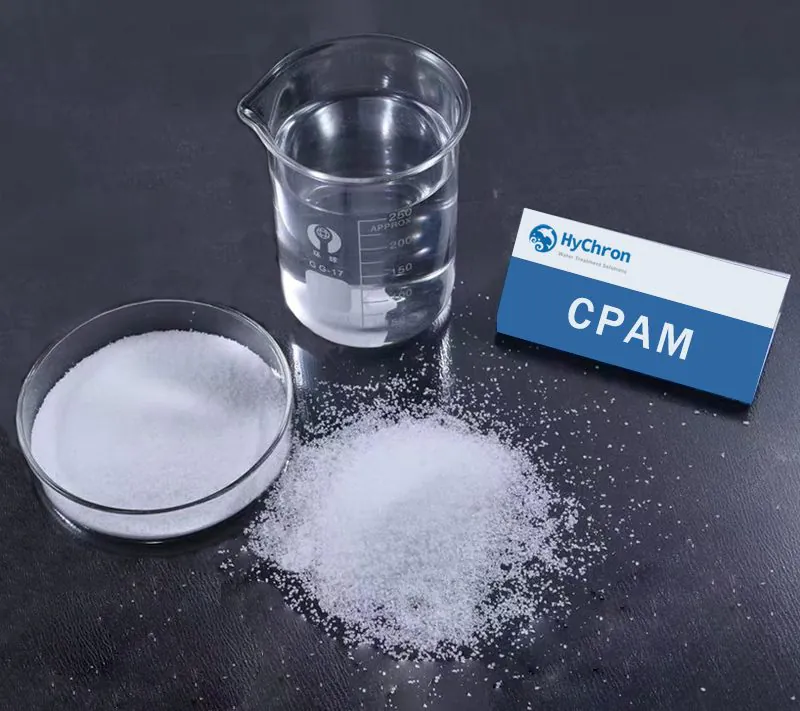
Chemical Characteristics of Cationic Polyacrylamide
Cationic polyacrylamide is a linear polymer with multiple active functional groups. These groups allow CPAM to form hydrogen bonds and electrostatic attraction with negatively charged colloids and suspended solids.
Through adsorption, charge neutralization, and bridging, CPAM can effectively remove turbidity, reduce color, and promote solid–liquid separation. It performs well in wastewater from industries such as dyeing, papermaking, food processing, construction, metallurgy, mineral processing, coal washing, oilfields, aquatic product processing, and fermentation.
It is particularly effective for:
- Municipal wastewater
- Sewage sludge
- Papermaking sludge
- High-organic industrial sludge
Product Specifications
- Appearance: White powder
- Solid content: ≥ 89%
- Molecular weight: 6–14 million
- Insoluble matter: ≤ 0.5%
- Residual monomer: ≤ 0.05%
- Dissolving time: ≤ 60 minutes
Key Characteristics of CPAM
- Excellent solubility, can dissolve in cold water
- Strong flocculation effect at very low dosage
- Typical dosage: 0.01–10 ppm (0.01–10 g/m³)
- Better performance when used together with inorganic coagulants such as:
- Polyaluminum chloride (PAC)
- Polymeric ferric sulfate (PFS)
Application Range of Cationic Polyacrylamide
Sludge Dewatering
The correct CPAM model should be selected according to sludge properties. With proper selection:
- Sludge flocs become larger and more compact
- Sludge does not stick to filter cloth
- Mud cake thickness increases
- Dewatering efficiency improves
- Moisture content of sludge cake can be reduced to below 80%
Organic and Municipal Wastewater Treatment
CPAM shows strong cationic behavior in both acidic and alkaline conditions. It is very effective for wastewater containing negatively charged suspended solids, such as:
- Alcohol wastewater
- Papermaking wastewater
- Domestic sewage
- MSG wastewater
- Sugar industry wastewater
- Livestock and feeding wastewater
- Textile printing and dyeing wastewater
In these applications, CPAM often performs several times better than anionic or nonionic polyacrylamide.
Drinking Water Treatment
CPAM can also be used as a flocculant for river water treatment. It offers:
- Low dosage
- Good clarification effect
- Low operating cost
It is widely applied in water plants using water from rivers such as the Yangtze River and Yellow River, especially when combined with inorganic coagulants.
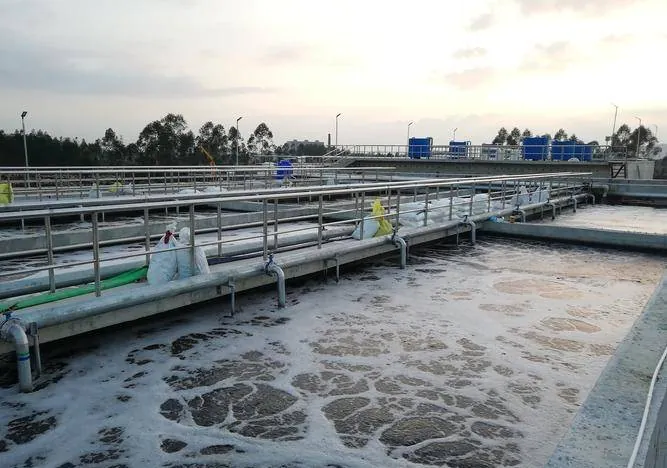
Recommended Using Method
- Select the optimal CPAM model and dosage through laboratory testing
- Prepare a 0.1%–0.2% solution using clean water (neutral water with low salt is preferred)
- Slowly and evenly add CPAM powder into stirred water to avoid clumping
- Water temperature should be below 60°C; higher temperature may damage polymer chains
- Stirring time: about 40 minutes, recommended speed 60–200 rpm
- Prepare solution fresh before use; long storage reduces performance
- Avoid excessive shear after dosing, as it may break formed flocs
Storage and Handling
- Packaged in 25 kg kraft paper bags with inner plastic liner
- Store in a cool, dry, and sealed environment
- Storage temperature should be below 35°C
- Avoid direct contact with the ground to prevent moisture absorption
- Do not scatter on the ground, as CPAM becomes slippery after absorbing moisture
Selection Principle for Sludge Dewatering
- Organic sludge: Cationic polyacrylamide
- Inorganic sludge: Anionic polyacrylamide
- CPAM is not suitable for strongly alkaline sludge
- Anionic PAM is generally not suitable for strongly acidic sludge
Different sludge types require different CPAM models to achieve optimal dewatering results.
Conclusion
Cationic polyacrylamide is an efficient and widely used flocculant for sludge dewatering and organic wastewater treatment. Proper model selection, correct solution preparation, and controlled operating conditions are the key to achieving stable performance, low dosage, and high treatment efficiency.