
Written by the HyChron Technical Team — water treatment specialists with over 15 years of field experience in municipal and industrial systems. Last reviewed: April 2026
pH is the single variable that operators can control most directly — and the one that has the largest impact on PAC coagulation performance when it is outside the optimal range.
Plants that struggle with inconsistent turbidity removal, excessive PAC consumption, or high residual aluminum despite correct dosage almost always find that pH management is the missing piece. Getting pH right before PAC dosing is frequently more impactful than adjusting the PAC dose itself.
This article explains exactly how pH affects PAC performance, what the optimal ranges are for different applications, and how to manage pH practically in your treatment system.
Experiencing pH-related PAC performance issues? Contact our technical team for a free assessment and optimization recommendation.
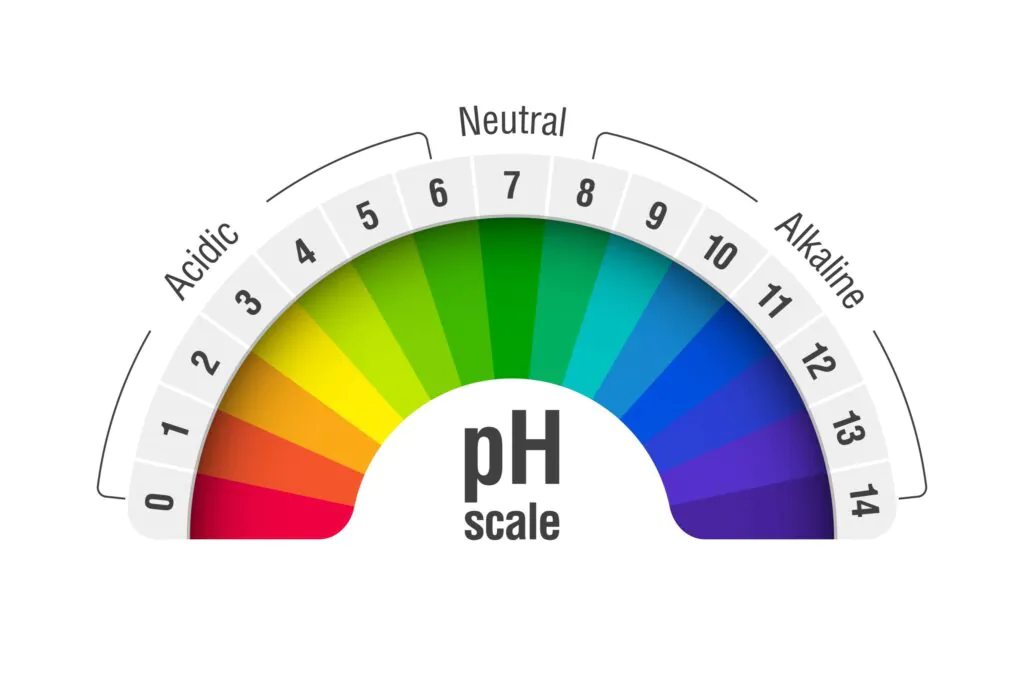
Why pH Controls PAC Coagulation Chemistry
When PAC is added to water, it undergoes hydrolysis — releasing positively charged aluminum species that adsorb onto negatively charged particle surfaces and neutralize their charge. The distribution of these aluminum species is strongly pH-dependent:
Below pH 5.0: Aluminum exists predominantly as the mononuclear Al³⁺ ion and small species like Al(OH)²⁺. These are positively charged and can participate in charge neutralization, but they are less efficient than polynuclear species and require higher doses for equivalent turbidity removal.
pH 6.0–8.0 (optimal zone): The polynuclear Al species — including the Al₁₃O₄(OH)₂₄⁷⁺ polycation — predominate. These large, highly charged polymer species are the most effective for charge neutralization and sweep flocculation. PAC performs at its best in this pH range.
pH 8.0–9.0: Aluminum hydroxide Al(OH)₃ precipitate forms more readily. Sweep flocculation becomes the dominant mechanism. Coagulation is still effective but shifts from charge neutralization to physical entrapment.
Above pH 9.0: Aluminum converts to the aluminate ion Al(OH)₄⁻ — negatively charged and unable to contribute to coagulation. PAC effectiveness drops sharply above pH 9.0 and becomes negligible above pH 10.0.
pH Effects Across Different Water Types
Natural surface water (rivers, reservoirs). Most natural surface water falls in the pH 6.5–8.5 range — comfortably within PAC’s effective zone. For these waters, pH pre-adjustment is rarely necessary. Seasonal pH shifts — algal blooms raising pH above 9 in summer, acid rain events lowering pH toward 5 — are the main cases requiring pH monitoring and occasional adjustment.
Industrial wastewater. Industrial effluent pH is highly variable and often outside PAC’s optimal range without pre-treatment. Textile and food processing effluent from alkaline cleaning cycles may arrive at pH 10–12. Acid pickling and etching operations may produce pH 2–4 effluent. Both require pH adjustment before PAC dosing for effective coagulation.
Mine drainage. Acid mine drainage (AMD) may have pH as low as 2–3 from sulfide oxidation reactions. Lime or caustic soda addition to raise pH to 7.0–8.5 is required before PAC dosing. For AMD specifically, pH adjustment and PAC coagulation work together — pH adjustment precipitates metals as hydroxides, and PAC aggregates the fine precipitates.
For related guidance: PAC for Mining Wastewater Treatment
Optimal pH Ranges by Application
| Application | Recommended pH for PAC Dosing |
|---|---|
| Municipal drinking water | 6.5–7.5 |
| Surface water (rivers, lakes) | 6.5–8.0 |
| Industrial wastewater (general) | 6.0–8.5 |
| Textile and dyeing wastewater | 5.5–7.0 (slightly acidic for best color removal) |
| Heavy metal precipitation | 8.0–9.5 (after metal hydroxide precipitation) |
| Mining and AMD treatment | 7.0–8.5 (after lime neutralization) |
How to Manage pH in PAC Treatment Systems
pH Monitoring
Continuous online pH monitoring at the PAC dosing point is the most reliable way to ensure pH is within the effective range before coagulant addition. Manual grab sampling is acceptable for stable source waters but inadequate for variable industrial effluent.
pH Adjustment Chemicals
- To raise pH: lime (Ca(OH)₂) — cost-effective for large-volume applications; caustic soda (NaOH) — faster dissolving, better for precise control
- To lower pH: sulfuric acid (H₂SO₄) — most common; hydrochloric acid (HCl) — preferred where sulfate addition is a concern
Dosing Sequence
Always adjust pH before dosing PAC — not after. Adding PAC to water outside its effective pH range wastes chemical and may produce poor-quality flocs that break up during flocculation.
Sequence: Raw water → pH adjustment → Flash mixing with PAC → Flocculation → Sedimentation
Automatic pH Control
For industrial systems with variable influent pH, automatic pH control — pH sensor feeding a controller that adjusts acid or alkali dosing — provides the most consistent PAC performance and reduces operator workload significantly.
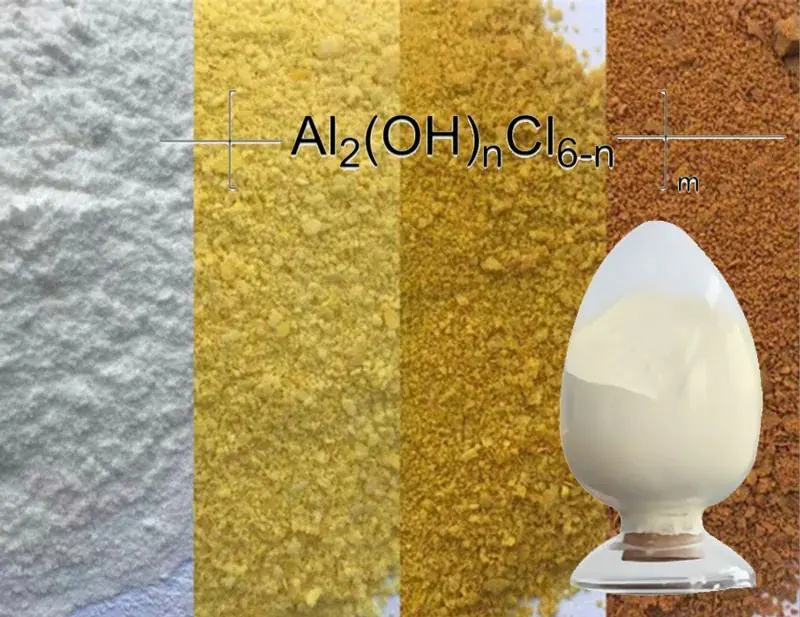
The Relationship Between pH and Residual Aluminum
Residual aluminum in treated water is a regulatory concern in drinking water applications (WHO guideline 0.1–0.2 mg/L) and a sludge quality concern in some industrial applications.
Residual aluminum is lowest when:
- PAC is dosed at the optimal pH range (6.0–8.0) where aluminum hydroxide precipitation is most complete
- PAC is not overdosed (excess aluminum remains in solution as Al³⁺ or Al(OH)₄⁻ depending on pH)
- Sedimentation and filtration are effective at removing aluminum-containing flocs
At pH below 6.0 or above 9.0, aluminum solubility increases and residual aluminum in treated water rises — even if turbidity removal appears acceptable. For drinking water applications, pH control within 6.5–7.5 is the most reliable way to keep residual aluminum within regulatory limits.
For drinking water residual aluminum guidance: PAC in Municipal Drinking Water Treatment
Frequently Asked Questions
My raw water pH is 8.5 — do I need to adjust before dosing PAC?
Not necessarily. PAC is effective up to pH 9.0. At pH 8.5, sweep flocculation is the dominant mechanism, which works well for most turbidity removal applications. Monitor residual aluminum to confirm compliance if this is a drinking water application. If turbidity removal is adequate without pH adjustment, adjustment is not required.
Does PAC itself change the pH of treated water?
Yes. PAC is acidic (pH of 1% solution is 3.5–5.0) and its dosing lowers water pH slightly. At typical dosage rates of 10–50 mg/L, the pH depression is usually 0.1–0.5 pH units — sufficient to be monitored but rarely requiring compensation in well-buffered natural water sources. In low-alkalinity water, pH depression may be more significant.
Can I use PAC to treat water at pH 10 from alkaline cleaning cycles?
Directly dosing PAC into pH 10 effluent is ineffective — aluminum converts to aluminate and coagulation does not occur. Neutralization to pH 8.0–9.0 before PAC addition is required. A simple acid dosing step ahead of the PAC dosing point resolves this.
Conclusion
pH is the most controllable and highest-impact variable in PAC coagulation performance. Operating within the optimal pH range — typically 6.0–8.5 for most applications — maximizes charge neutralization efficiency, minimizes PAC dosage requirements, and controls residual aluminum in treated effluent.
For plants experiencing inconsistent PAC performance, pH management is always the first variable to review — before increasing dose, changing product, or modifying mixing parameters.
Contact our technical team today for a free pH management assessment and PAC optimization recommendation for your specific water treatment system. We respond within 24 hours.