Skip to content
Written by the HyChron Technical Team — water treatment specialists with over 15 years of field experience in municipal and industrial systems. Last reviewed: April 2026
Mining operations that switch from alum to PAC consistently report two immediate results: turbidity removal improves, and sludge volumes drop by 30–50%. For a sector where water recycling efficiency and tailings pond management directly affect operating costs, these are not minor improvements.
This article breaks down exactly how PAC performs in mining wastewater treatment, which applications it is most suited to, and what operators need to know to apply it correctly.
Looking to improve water treatment efficiency at your mining operation? Contact our technical team for a free assessment and PAC recommendation.
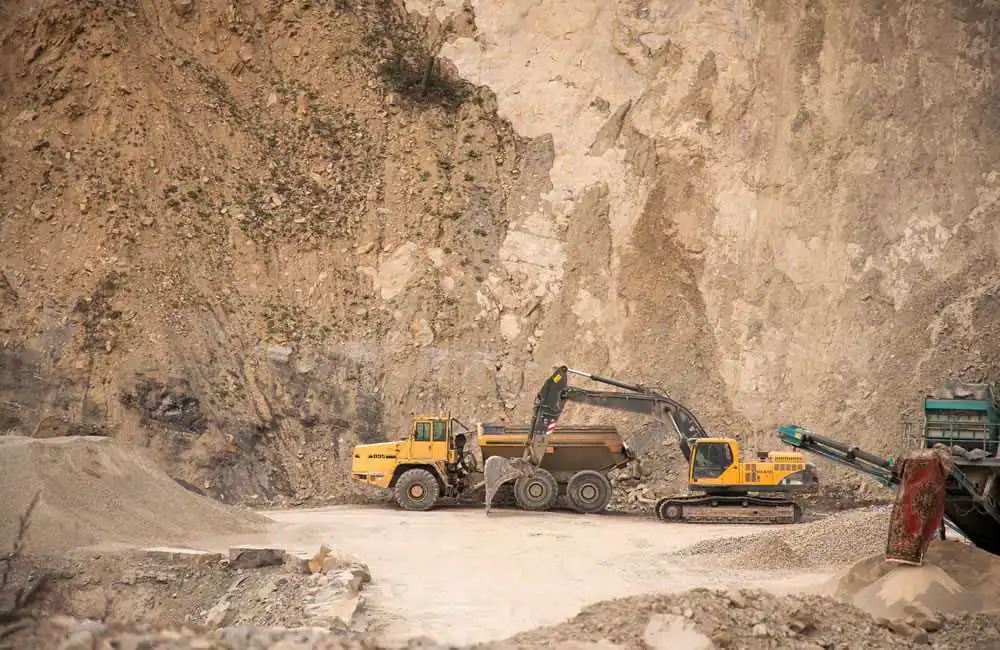
Where PAC Delivers the Most Impact in Mining
Mining wastewater is not a single stream. Different operations produce different effluent types, and PAC performs differently in each.
Tailings Pond and Process Water Clarification
Tailings water contains fine mineral particles — clay, silt, and ultrafine ore residues — that carry strong negative surface charges and remain suspended almost indefinitely without chemical treatment. PAC neutralizes these charges rapidly, causing fine particles to aggregate into settleable flocs.
Result: faster settling in tailings ponds, reduced turbidity in recycled process water, and improved water recovery rates for reuse in grinding and flotation circuits.
Thickener Feed Conditioning
Thickeners are used in mineral processing to concentrate slurry and recover process water. PAC added to the thickener feed improves settling rates and increases underflow density — allowing higher water recovery from the same equipment without capital upgrades.
Mine Drainage Treatment
Acid mine drainage (AMD) and neutral mine drainage both contain suspended solids, heavy metals, and fine mineral particulates. PAC is effective for suspended solids removal and, at controlled pH (7.5–9.0), can co-precipitate certain heavy metals including iron, aluminum, and manganese.
Wash Water and Site Runoff
Surface runoff from mine sites and ore stockpiles is highly turbid and needs treatment before it can be discharged or recycled. PAC’s fast floc formation makes it well suited to the variable, high-turbidity conditions of site runoff treatment.
Common Problems in Mining Water Treatment — and How PAC Solves Them
Problem: Fine clay and silt particles that won’t settle. Many mineral processing operations deal with clay-rich ore bodies that produce ultrafine particles in process water. These particles are too small and too stable to settle by gravity, and conventional alum dosing at narrow pH ranges is ineffective in the variable-pH conditions of mine water.
PAC solution: effective charge neutralization across pH 5.0–9.0 coagulates clay and silt particles regardless of moderate pH fluctuations — without requiring constant pH pre-adjustment.
Problem: Thickener overflow that is too turbid for process reuse. Thickener overflow with high turbidity causes scaling and wear in downstream pumps and process equipment, and reduces flotation efficiency when recycled to the grinding circuit.
PAC solution: PAC addition to the thickener feed improves floc formation and settling rate, producing clearer overflow suitable for process water reuse.
Problem: Seasonal rainfall causing turbidity spikes in site runoff. Storm events wash fine particles from mine sites into runoff collection systems, creating sudden high-turbidity treatment loads that overwhelm settling ponds.
PAC solution: PAC’s fast floc formation — significantly faster than alum — allows treatment systems to respond quickly to turbidity spikes without requiring manual dosage increases that lag behind the event.
Problem: High sludge volumes increasing tailings management costs. Alum-based treatment produces large sludge volumes that increase tailings pond loading and disposal costs.
PAC solution: 30–50% less sludge per cubic meter treated, directly reducing tailings pond loading and the frequency of sludge removal operations.
Dosage Guidelines for Mining Applications
| Mining Application | Typical PAC Dosage |
|---|---|
| Tailings pond clarification | 20–60 mg/L |
| Thickener feed conditioning | 15–40 mg/L |
| Acid mine drainage treatment | 30–80 mg/L |
| Site runoff treatment | 20–50 mg/L |
| Wash water clarification | 25–60 mg/L |
Jar testing (ASTM D2035) is required — mineral type, particle size distribution, and water chemistry all affect the optimal PAC dose.
Dosing Procedure
- Jar test with representative process water before setting dosage rates
- Dose at the high-turbulence mixing point — G-value 200–400 s⁻¹ for 30–60 seconds
- Slow-mix flocculation — G-value 20–60 s⁻¹ for 15–25 minutes before sedimentation or thickener feed
- Combine with PAM for improved settling — anionic PAM added after PAC dosing bridges micro-flocs into larger, faster-settling aggregates, particularly effective for ultrafine clay particles

PAC vs Alum in Mining Applications
For mining-specific performance comparison, PAC’s key advantages over alum are:
- Wider pH range — mine water pH is rarely stable; PAC handles the variability that alum cannot
- Faster floc formation — critical for high-throughput thickener and clarifier operations
- Less sludge — directly reduces tailings pond loading and disposal costs
- Cold-weather reliability — many mining operations in cold climates find alum performance deteriorates in winter; PAC maintains stable coagulation below 10°C
For the complete performance comparison: PAC vs Alum: Which Coagulant Is Better?
Integrating PAC with Existing Mining Treatment Infrastructure
PAC integrates directly into most existing mining water treatment configurations without equipment modifications. The main requirement is dosage recalibration and jar testing before going live.
For operations currently using alum, the transition to PAC typically takes less than one week — including jar testing, dosage setting, and operator training on the new chemical handling procedures.
Our technical team has supported PAC transitions at mining and mineral processing operations across multiple continents. We provide on-site jar testing support, dosage optimization guidance, and ongoing technical assistance as part of our product supply relationship.
For related guidance on sand and gravel applications: PAC for Sand and Gravel Wastewater (publishing soon)
For broader industrial wastewater context: PAC for Industrial Wastewater Treatment
Frequently Asked Questions
Can PAC treat acid mine drainage effectively?
PAC is effective for suspended solids removal in acid mine drainage. For heavy metal removal, pH adjustment to 7.5–9.0 before or after PAC dosing is needed to achieve metal co-precipitation. For AMD streams with complex heavy metal profiles, a combined treatment approach — PAC plus lime neutralization — is typically more effective than PAC alone.
How does PAC perform in high-clay ore processing water?
Very well. Clay particles are negatively charged and respond effectively to PAC’s charge neutralization mechanism. For ultrafine clay fractions (below 2 microns), combining PAC with anionic PAM in a two-stage coagulation-flocculation sequence typically achieves the best settling results.
What is the shelf life of PAC in remote mining locations?
Liquid PAC has a shelf life of 6–12 months when stored correctly in a cool, covered location away from direct sunlight. Powder PAC has a shelf life of 12–24 months in sealed packaging. For remote locations with infrequent supply runs, powder PAC is often the more practical choice due to its longer shelf life and lower transport volume per unit of active ingredient.
Conclusion
PAC delivers immediate, measurable improvements in mining wastewater treatment — faster settling, clearer process water, lower sludge volumes, and reliable performance across the variable pH and temperature conditions that mining operations encounter.
For operations currently using alum or struggling with fine particle settling, turbid thickener overflow, or high sludge disposal costs, switching to PAC is one of the most straightforward operational improvements available.
Contact our technical team today for a free mining water assessment, PAC product samples, and a dosage recommendation for your specific ore type and treatment system. We respond within 24 hours.