Skip to content
Written by the HyChron Technical Team — water treatment specialists with over 15 years of field experience in municipal and industrial systems. Last reviewed: April 2026
Sand and gravel operations that implement PAC-based water recycling systems consistently report the same outcome: freshwater consumption drops, discharge volumes fall, and the settling ponds that previously required constant management begin running themselves.
For an industry where water use is under increasing regulatory scrutiny and operational costs are under constant pressure, this shift from a linear water use model to an efficient recycling circuit is one of the most impactful process improvements available — and PAC is what makes it possible.
Want to reduce freshwater consumption and improve water recycling at your sand and gravel operation? Contact our technical team for a free assessment and PAC recommendation.
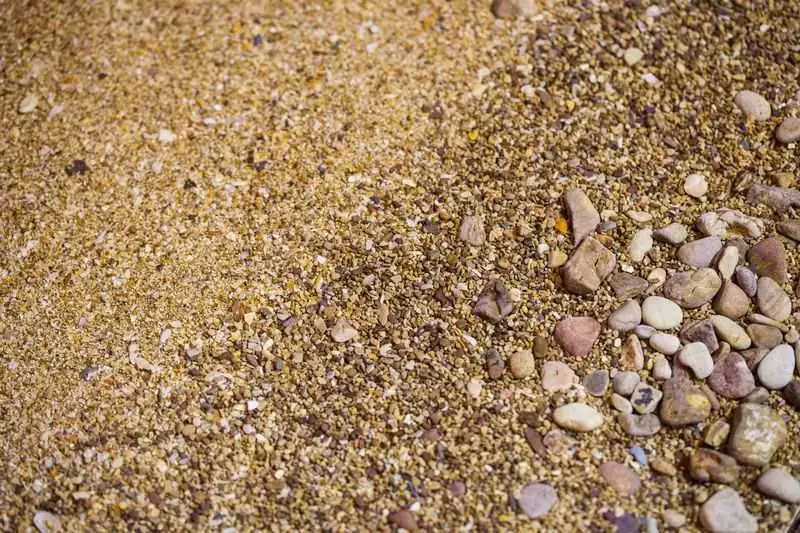
The Water Challenge in Sand and Gravel Processing
Washing and classifying sand and gravel requires large volumes of water. The wash water picks up fine particles — silts, clays, and mineral fines — and becomes highly turbid. This turbid water cannot be discharged directly and is too turbid to recycle efficiently without treatment.
The standard approach — settling ponds — works, but slowly. Fine clay and silt particles can take days or weeks to settle naturally, requiring large pond volumes and frequent dredging. Without chemical coagulation, plants are forced to either consume large volumes of freshwater or maintain oversized settling infrastructure.
PAC changes this equation entirely. By destabilizing the fine particles through charge neutralization, PAC converts slow-settling fines into fast-settling flocs — turning a multi-day natural settling process into a controlled treatment operation that completes in minutes.
How PAC Transforms Sand and Gravel Water Treatment
Settling Pond Efficiency
PAC added to pond inflow destabilizes fine particles, causing them to aggregate and settle rapidly. What previously took 48–72 hours of natural settling can be achieved in 20–40 minutes with optimized PAC coagulation — dramatically reducing the active pond volume required and the frequency of dredging operations.
Wash Water Recycling
With PAC treatment, the clarified overflow from settling ponds or thickeners achieves turbidity levels suitable for reuse in the wash circuit. This closes the water loop — reducing freshwater draw from rivers, boreholes, or municipal supply, and reducing discharge volumes that carry regulatory risk.
Discharge Compliance
Where treated water must be discharged to surface water, PAC-treated effluent can consistently meet turbidity and suspended solids discharge limits that natural settling alone cannot achieve — particularly during high-production periods or wet weather when fine particle loads are elevated.
Common Problems and PAC Solutions
Problem: Settling ponds filling too quickly. Fine clay and silt particles that don’t settle naturally accumulate in ponds, reducing active capacity and requiring expensive dredging. PAC solution: faster, more complete settling reduces the volume of unsettled fines entering ponds, extending service life between dredging operations.
Problem: Recycled water too turbid for effective washing. Turbid process water reduces wash efficiency and may cause scaling and wear in pumps and spray nozzles. PAC solution: PAC-clarified water achieves turbidity below 20–50 NTU — suitable for reuse in most sand and gravel wash circuits.
Problem: Turbidity discharge limit exceedances after rainfall. Rainfall increases fine particle loads in wash water, causing treatment systems to be overwhelmed and discharge turbidity limits to be exceeded. PAC solution: PAC dosage can be increased rapidly in response to turbidity spikes, maintaining compliant effluent quality through high-load events.
Problem: Large freshwater consumption from inability to recycle. Plants that cannot clarify process water efficiently must draw more freshwater — increasing costs and creating dependency on external water sources. PAC solution: effective clarification enables closed-loop water recycling, reducing freshwater consumption by 60–80% in well-designed systems.
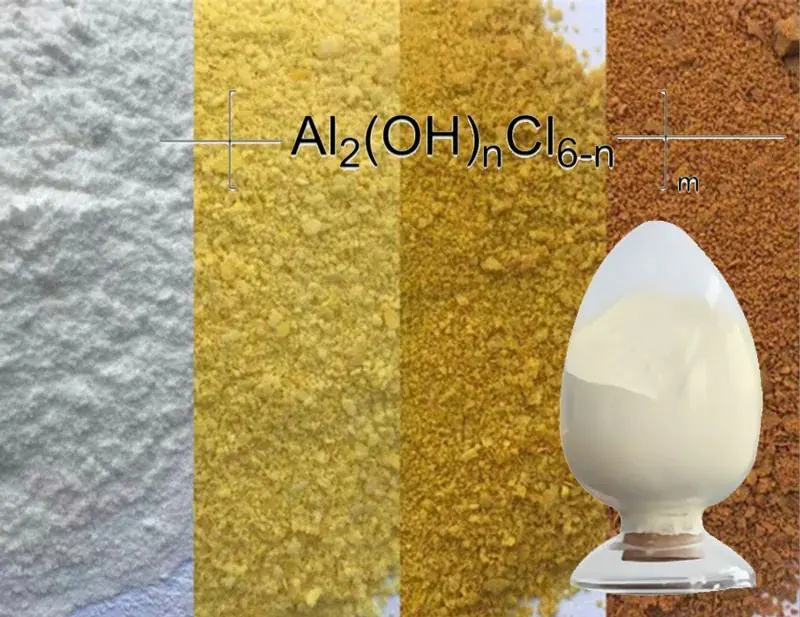
Dosage Guidelines
| Sand and Gravel Application | Typical PAC Dosage |
|---|---|
| Settling pond inflow treatment | 15–40 mg/L |
| Thickener feed conditioning | 10–30 mg/L |
| Wash water recycle clarification | 10–25 mg/L |
| High-turbidity storm event treatment | 30–60 mg/L |
Jar testing (ASTM D2035) is recommended — clay mineral type significantly affects the required PAC dose and achievable turbidity.
PAC + PAM Combination
For fine clay-rich fines, combining PAC with a small dose of anionic PAM after the initial rapid mix stage produces larger, faster-settling flocs that significantly outperform PAC alone. This two-stage approach is particularly effective for operations processing clay-contaminated gravel or fine silica sand.
Integrating PAC into Existing Sand and Gravel Operations
PAC integrates directly into existing treatment configurations — settling ponds, thickeners, or lamella clarifiers — without equipment modification. The key requirement is a dosing pump and mixing point upstream of the settling system.
Installation is straightforward: a chemical dosing pump, a mixing tee or in-line static mixer, and a PAC storage tank. For small operations, a simple gravity-feed dosing system is sufficient.
For related guidance on mining water treatment applications: PAC for Mining Wastewater Treatment
For coal washing applications with similar fine particle challenges: PAC in Coal Washing Water Treatment
For a comparison of PAC with alum across all performance parameters: PAC vs Alum: Which Coagulant Is Better?
Frequently Asked Questions
How much PAC does a typical sand and gravel operation use per day?
This depends entirely on production volume and raw water turbidity. A small operation processing 500 m³/day of wash water at 20 mg/L PAC dosage would consume approximately 10 kg of PAC per day. Our technical team can provide a consumption estimate based on your specific production data.
Can PAC be used in operations with no electricity supply?
Liquid PAC can be dosed using gravity-feed systems that require no electricity — a practical option for remote operations. Powder PAC requires dissolution before dosing, which needs mixing equipment. Contact our team for guidance on low-energy dosing configurations.
Does PAC affect the quality of the sand and gravel product?
PAC is added to the process water, not to the product. Residual aluminum in wash water at PAC dosage levels does not affect sand or gravel product specifications for construction or industrial applications.
Conclusion
PAC is the most practical and cost-effective tool for transforming sand and gravel water management — from an open-loop system dependent on large settling ponds and freshwater supply, to a closed-loop recycling circuit that reduces costs, meets discharge standards, and operates with minimal intervention.
The investment in a PAC dosing system pays back quickly through reduced freshwater costs, lower pond management expenses, and elimination of discharge non-compliance risk.
Contact our technical team today for a free wash water assessment, PAC product samples, and a dosage recommendation for your specific operation. We respond within 24 hours.