
Written by the HyChron Technical Team — water treatment specialists with over 15 years of field experience in municipal and industrial systems. Last reviewed: April 2026
Every water treatment operator eventually faces a choice not just between PAC and alum, but between an entirely different category of coagulant chemistry: organic versus inorganic. Understanding this distinction — what it means chemically, how it affects performance, and when each category is appropriate — is fundamental to making informed coagulant selection decisions.
This article compares organic and inorganic coagulants on the criteria that matter most for water treatment applications, and explains where PAC (an inorganic coagulant) fits in the broader coagulant landscape.
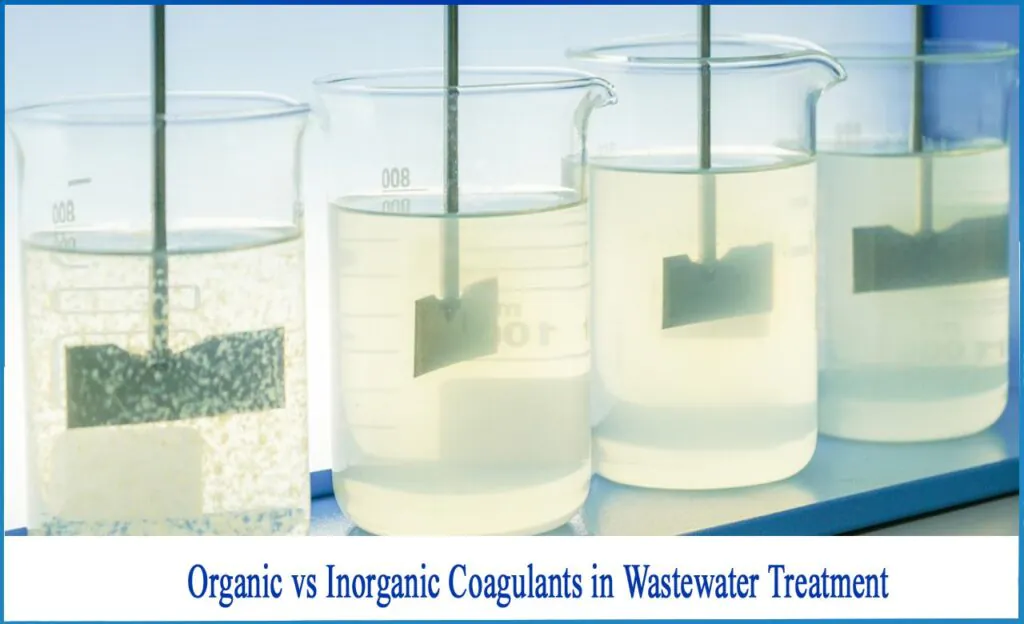
What Organic and Inorganic Coagulants Actually Are
Inorganic coagulants are metal salt compounds that work by releasing metal cations (aluminum or iron) that directly neutralize particle surface charges. The most common are:
- Poly Aluminum Chloride (PAC)
- Aluminum sulfate (alum)
- Ferric chloride (FeCl₃)
- Ferric sulfate (Fe₂(SO₄)₃)
Organic coagulants are synthetic polymer compounds that work through a combination of charge neutralization (for cationic organic coagulants) and physical bridging between particles. The most common are:
- Polyamines (low to medium molecular weight cationic polymers)
- Poly-DADMAC (polydiallyldimethylammonium chloride)
- Tannin-based coagulants (natural organic origin)
- Chitosan-based coagulants (natural organic origin)
Note: Polyacrylamide (PAM) is a flocculant, not a coagulant — it is used in combination with coagulants, not as a standalone coagulant.
Head-to-Head Comparison
| Parameter | Inorganic (PAC) | Organic Coagulants |
|---|---|---|
| Primary mechanism | Charge neutralization + sweep flocculation | Charge neutralization + bridging (cationic types) |
| Effective particle types | Wide range — colloids, inorganics, organics | Best for negatively charged colloidal organics |
| Turbidity removal | Excellent | Good–Excellent for specific particle types |
| Color removal | Good–Excellent | Good for some applications |
| NOM removal | Good | Variable — depends on NOM type |
| Sludge production | Moderate (less than alum) | Lower — no metal hydroxide precipitate |
| pH sensitivity | Low (PAC: pH 5–9) | Low–Moderate |
| Residual in treated water | Aluminum | Carbon-based organic |
| Drinking water approval | Widely approved | Varies by compound and jurisdiction |
| Cost per kg | Moderate | High |
| Cost per m³ | Low–Moderate | Moderate–High |
| Regulatory status | Well-established | Variable — some compounds face restrictions |
| Temperature sensitivity | Low (PAC) | Low |
Parameter-by-Parameter Analysis
Sludge Production
Organic coagulants have a genuine advantage here. Because they do not produce metal hydroxide precipitate, organic coagulant sludge contains only the captured suspended solids and organic matter from the raw water — with no added coagulant precipitate mass.
PAC produces less sludge than alum (30–50% less) but still generates aluminum hydroxide precipitate. For plants where sludge disposal is extremely cost-sensitive, organic coagulants may produce meaningfully less sludge volume.
Winner: Organic coagulants for minimum sludge. PAC for best sludge reduction among inorganic options.
Performance Consistency and Versatility
Organic coagulants work well for specific water types — particularly high-color, high-NOM waters where cationic polymers effectively neutralize the strongly negative organic colloids. However, they are less versatile than PAC across the full range of water treatment applications. For inorganic turbidity (clay, silt, mineral fines), organic coagulants are typically less effective than PAC.
Winner: PAC for versatility across water types.
Residual Compliance
PAC leaves residual aluminum — regulated in most drinking water standards. Organic coagulants leave organic carbon-based residuals. Both are regulated, but the regulatory frameworks differ. Some organic coagulants face acrylamide monomer concerns (where applicable) or are not approved for all drinking water applications in all jurisdictions.
Winner: Depends on local regulatory framework. PAC is widely approved globally; organic coagulant approvals vary.
Cost Per m³
Organic coagulants are typically significantly more expensive per kilogram than PAC, and their cost advantage from lower sludge volume must overcome this premium. In most high-volume applications, the total cost per m³ with organic coagulants exceeds that of PAC.
Winner: PAC for most applications on total cost per m³.

When to Choose Inorganic (PAC)
PAC is the better choice when:
- Treating a wide range of water types (both organic and inorganic turbidity)
- Cost per m³ is the primary decision criterion
- Drinking water applications requiring globally approved chemistry
- Variable water quality requiring a versatile, forgiving coagulant
- Combined turbidity and color removal is needed
For PAC performance details: Key Advantages of PAC in Water Treatment
When to Consider Organic Coagulants
Organic coagulants are worth evaluating when:
- Sludge disposal is extremely expensive and volume reduction is the top priority
- The water type is predominantly high-color, high-NOM with low inorganic turbidity
- Regulatory approvals for the specific organic coagulant are confirmed for your application
- A pilot test demonstrates superior performance over PAC for your specific water
Can PAC and Organic Coagulants Be Combined?
Yes. In some applications — particularly highly colored or high-NOM surface water treatment — a small dose of cationic organic coagulant followed by PAC can outperform either chemical alone. The organic coagulant addresses the NOM fraction specifically, allowing PAC to operate at a lower dose for the remaining turbidity.
This approach is used in some advanced drinking water treatment plants but requires careful optimization through jar testing. Combined programs should always be evaluated on total chemical cost versus single-coagulant alternatives before implementation.
Practical Dosage Reference
| Application | PAC Dose | Typical Organic Coagulant Dose |
|---|---|---|
| Drinking water (low turbidity) | 5–20 mg/L | 2–10 mg/L (polyamine) |
| High-color surface water | 20–50 mg/L | 5–20 mg/L (polyamine) |
| Industrial wastewater | 20–100 mg/L | 10–50 mg/L (application-specific) |
Organic coagulant dosages vary significantly by product type and water chemistry. Always confirm by jar test.
Frequently Asked Questions
Are organic coagulants safe for drinking water use?
Some are approved for drinking water use in specific jurisdictions; others are not. Approval status varies by compound type, country, and application. Polyamines and poly-DADMAC have established drinking water approvals in many markets. Tannin and chitosan-based products have approvals in some jurisdictions. Always verify local regulatory status before use in drinking water applications.
Do organic coagulants work in industrial wastewater applications?
Yes, for specific waste streams — particularly emulsified organics, suspended organic matter, and colored industrial effluent. Organic coagulants are less effective for inorganic suspended solids (clay, mineral fines) compared to PAC. For mixed industrial effluent containing both organic and inorganic contaminants, PAC is typically more versatile.
Is the sludge from organic coagulants easier to dispose of than PAC sludge?
For drinking water applications, organic coagulant sludge contains fewer inorganic compounds than PAC sludge and may be easier to land-apply. However, for industrial applications where the raw water contains organic contaminants, the sludge from both inorganic and organic coagulants may require characterization before disposal regardless.
Conclusion
Organic and inorganic coagulants address the same fundamental problem — colloidal particle stabilization — through related but distinct mechanisms. For most water treatment applications, inorganic PAC delivers the best combination of versatility, regulatory acceptance, and total cost per cubic meter.
Organic coagulants offer advantages in specific niche applications where sludge volume minimization is paramount or where the water matrix is specifically suited to polymer bridging chemistry. They are best evaluated as an alternative or supplement to PAC on a case-by-case basis through systematic jar testing.
Contact our technical team today for a free comparison of PAC versus organic coagulant options for your specific application, with jar testing support and product samples. We respond within 24 hours.

