
Agricultural wastewater is consistently harder to treat than domestic sewage — not because the chemistry is exotic, but because the pollutant load is higher, more variable, and combines organic, inorganic, and biological fractions that interact in ways that challenge single-treatment approaches. Livestock and poultry operations, aquaculture farms, and agricultural processing plants each generate distinct wastewater profiles, but PAC addresses the core challenge common to all of them: destabilizing the colloidal and suspended fraction that carries the majority of COD, phosphorus, and turbidity load.
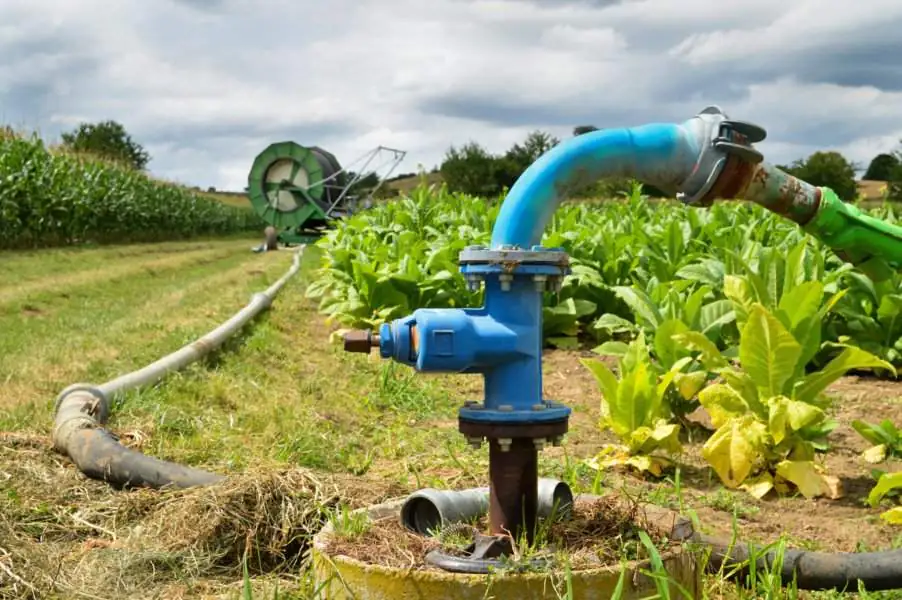
What Makes Agricultural Wastewater Difficult to Treat
The treatment challenge in agricultural wastewater comes from four characteristics that appear together more often than in industrial or municipal streams:
High COD with poor biodegradability: Manure-derived organics, feed residues, and processing wastewater often contain humic substances, proteins, and lipids that resist biological degradation without pretreatment. COD in livestock wastewater commonly ranges 3,000–20,000 mg/L — well above the threshold where biological treatment alone can achieve discharge compliance.
High phosphorus load: Phosphorus from feed additives, fertilizers, and animal waste typically runs at 50–300 mg/L total phosphorus in untreated livestock effluent — an order of magnitude above the discharge limits of 0.5–1.0 mg/L TP applied in most agricultural discharge standards. Biological phosphorus removal alone is rarely sufficient at these concentrations.
Variable flow and load: Agricultural operations generate wastewater in pulses — feeding schedules, cleaning cycles, seasonal processing — that create hydraulic and organic load variation that destabilizes continuous treatment systems.
Colloidal suspended solids: Fine organic particles and colloidal matter from manure and processing residues carry strong negative surface charge, resist gravitational settling, and pass through conventional screening. These are the particles PAC addresses most directly.
How PAC Works in Agricultural Wastewater
PAC forms polynuclear aluminum hydroxide species during hydrolysis that act through two simultaneous mechanisms on agricultural wastewater suspended matter.
Charge neutralization collapses the electrical double layer on negatively charged colloidal particles — fine manure solids, protein aggregates, algal cells in aquaculture discharge — allowing them to approach each other closely enough for van der Waals forces to cause aggregation. This is the primary mechanism for turbidity and suspended COD removal.
Sweep flocculation entraps fine colloidal particles — including those too small to be effectively neutralized by charge alone — in the aluminum hydroxide precipitate matrix as it forms throughout the water volume. This mechanism is particularly important for agricultural wastewater where colloidal particle size distribution extends well below 1 µm.
Unlike traditional aluminum sulfate, PAC maintains effective coagulation across pH 5.0–9.0 without the sharp pH depression that alum causes at higher dosages. This pH stability is operationally important in agricultural wastewater where influent pH varies significantly with production cycle and season.
Pollutant Removal Performance
COD and Turbidity PAC coagulation removes the suspended and colloidal COD fraction effectively. For livestock and poultry wastewater, PAC at 100–300 mg/L combined with anionic PAM at 2–5 mg/L typically achieves 50–70% COD removal in the coagulation-sedimentation stage — reducing the organic load entering downstream biological treatment to manageable levels and improving biological system stability.
Phosphorus Removal PAC is highly effective for chemical phosphorus removal. Aluminum ions react with orthophosphate to form insoluble aluminum phosphate (AlPO₄) at pH 6.0–7.5. The stoichiometric Al:P molar ratio for complete phosphate precipitation is 1.5:1 to 2.0:1, but practical dosing in agricultural wastewater typically requires 2.0–3.0:1 due to competing reactions with organic matter and other anions. Well-optimized PAC dosing achieves effluent TP below 1.0 mg/L from raw livestock wastewater with TP above 100 mg/L — a removal efficiency exceeding 99%.
Suspended Solids and Ammonia Nitrogen PAC removes suspended solids directly through flocculation, typically achieving TSS removal above 85% at optimized dosage. Ammonia nitrogen removal by PAC alone is limited — PAC does not oxidize or volatilize ammonia. However, removing suspended organics through PAC pretreatment significantly improves the biodegradability index (BOD/COD ratio) of the effluent entering biological treatment, which is where ammonia nitrogen removal actually occurs. Better pretreatment consistently improves biological system performance and nitrification efficiency.
PAC Dosage Reference for Agricultural Wastewater
| Wastewater Type | PAC Dosage | Notes |
|---|---|---|
| Livestock / poultry breeding | 150–300 mg/L | High SS and phosphorus load |
| Aquaculture farm discharge | 50–150 mg/L | Lower organic load, variable algae content |
| Agricultural processing (fruit, vegetable) | 80–200 mg/L | High seasonal variation |
| Fertilizer / pesticide runoff | 100–250 mg/L | Complex organic fraction, variable pH |
| Combined with PAM flocculant | Reduce PAC by 20–30% | Add anionic PAM at 2–5 mg/L after PAC |
Confirm optimal dosage through jar testing on your specific wastewater — agricultural effluent composition varies significantly with animal species, feed type, season, and processing operation. These ranges provide starting points, not fixed targets.

Integration With Other Treatment Technologies
PAC functions most effectively as a pretreatment chemical that stabilizes influent quality for downstream biological systems rather than as a standalone solution for complete treatment.
PAC pretreatment → Anaerobic digestion: Removing suspended solids and a significant portion of COD before anaerobic digestion reduces digester loading, improves biogas production efficiency, and reduces the risk of digester instability from toxic or inhibitory compounds in raw agricultural wastewater.
PAC pretreatment → Aerobic biological treatment: Reducing influent COD and suspended solids through PAC coagulation protects the activated sludge community from shock loads, improves sludge settleability, and creates more consistent conditions for nitrification — which is critical for ammonia nitrogen compliance.
PAC + micro-electrolysis: For high-concentration, poorly biodegradable agricultural processing wastewater — pesticide rinse water, certain food processing effluent — combining iron-carbon micro-electrolysis with PAC coagulation improves B/C ratio before biological treatment. Micro-electrolysis breaks refractory organics into more biodegradable fragments; PAC then removes the resulting suspended matter.
What to Look for When Sourcing PAC for Agricultural Applications
Industrial-grade PAC is appropriate for agricultural wastewater treatment — drinking water-grade certification is not required for non-potable applications. However, several product quality factors directly affect treatment performance and operating cost:
Al₂O₃ content: Higher content (target 28–30% for powder, 10–12% for liquid) means more active coagulant per kilogram. Lower-content product requires proportionally higher dosage volume, increasing pumping and storage costs.
Basicity: Medium-to-high basicity (60–80%) provides better performance stability across the pH range of agricultural wastewater and in cooler seasonal temperatures.
Batch consistency: Al₂O₃ content and basicity variation between batches causes treatment performance to shift without process changes. Require a certificate of analysis with each delivery and specify allowable variance — ±1% on Al₂O₃ content is a reasonable contractual requirement.
Iron content: Lower iron content PAC produces cleaner floc and less color contribution to treated water. For aquaculture discharge where treated water may re-enter water bodies, specify iron content below 100 mg/kg.
FAQ
Q: How do I determine the optimal PAC dosage for my specific agricultural wastewater without expensive lab equipment?
A: A basic jar test requires only graduated cylinders, a stirrer, and a turbidity comparison. Fill cylinders with your wastewater, dose at 100, 200, and 300 mg/L PAC with rapid stirring for 60 seconds, then gentle stirring for 5 minutes, then settle for 20 minutes. Compare supernatant clarity visually and measure settled sludge volume. The dose producing the clearest supernatant with the most compact sludge is your starting point. Adjust in 50 mg/L increments from there. Retest at the start of each season as wastewater composition changes.
Q: What is the difference between using PAC alone versus PAC combined with lime for phosphorus removal in livestock wastewater?
A: PAC alone achieves chemical phosphorus precipitation as AlPO₄ at pH 6.0–7.5. Lime alone precipitates phosphorus as calcium hydroxyapatite at pH above 9.5. PAC + lime combination first uses PAC at lower dose for primary phosphorus removal, then lime to raise pH and precipitate residual phosphorus — achieving effluent TP below 0.5 mg/L more reliably than either chemical alone on high-phosphorus livestock wastewater. The combination also reduces total chemical cost compared to achieving the same effluent quality with PAC alone at higher dosage.
Q: Can PAC-treated agricultural wastewater sludge be used as fertilizer or soil amendment?
A: PAC-treated sludge from livestock wastewater contains aluminum compounds, plant nutrients (nitrogen, phosphorus, potassium), and organic matter. Whether it qualifies for land application depends on local regulations governing sludge composition and heavy metal limits for agricultural land. In many jurisdictions, PAC sludge from livestock operations can be land-applied after adequate stabilization, subject to aluminum loading limits per hectare. Check local agricultural and environmental regulations before land application — aluminum accumulation in soil can affect soil pH and phosphorus availability at high application rates.
PAC Makes Agricultural Wastewater Treatable at Scale
The core value of PAC in agricultural wastewater treatment is that it converts a highly variable, difficult-to-treat influent into a more consistent, biodegradable stream that downstream biological systems can handle reliably. Phosphorus removal, suspended solids reduction, and COD pretreatment all happen in the coagulation stage at relatively low chemical cost — protecting the biological investment downstream and making discharge compliance achievable without oversizing biological treatment capacity.
HyChron supplies industrial-grade PAC for agricultural wastewater applications with batch-specific quality documentation and technical support for dosage optimization. Contact our team for product specifications or jar testing guidance for your specific wastewater type.