
Written by the HyChron Technical Team — water treatment specialists with over 15 years of field experience in municipal and industrial systems. Last reviewed: April 2026
Filters are the final barrier before treated water leaves a plant — and they only work well when the water entering them has been properly prepared. Coagulation with PAC before filtration is not optional in most systems: it is what determines whether filters achieve sub-0.5 NTU effluent or struggle to reach 2 NTU, and whether filter runs last 24 hours or 8.
The relationship between PAC pre-treatment and filter performance is direct and quantifiable. Get PAC pre-treatment right, and downstream filters operate at designed capacity with acceptable run times. Get it wrong, and filters become the most expensive and maintenance-intensive component in the treatment train.
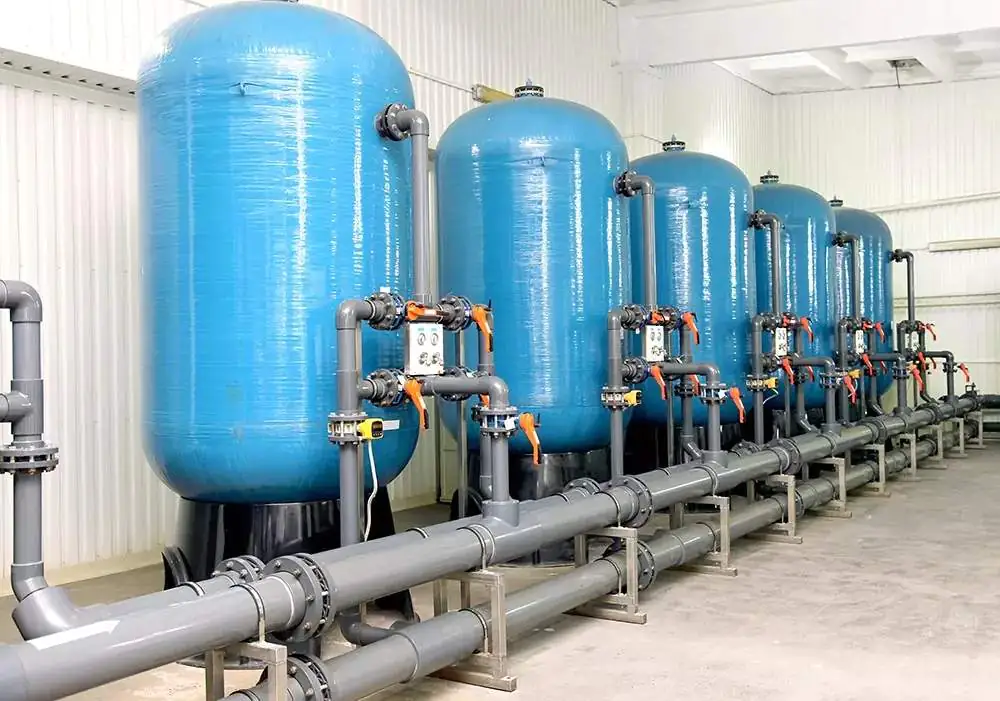
Why Filters Need PAC Pre-Treatment
Sand filters, dual-media filters, and membrane systems all have the same fundamental limitation: they are designed to remove particles that are already destabilized and partially aggregated. They are not designed to perform coagulation.
Without PAC pre-treatment, stable colloidal particles pass through filter media without being captured — for the same reason they do not settle in clarifiers. Their negative surface charges repel media surfaces, and their small size allows them to navigate through filter pore spaces without interception.
PAC destabilizes these particles before filtration:
- Charge neutralization produces particles with near-zero zeta potential that attach readily to filter media surfaces
- Micro-floc formation aggregates fine particles into larger units that are physically intercepted by filter media
- Sweep flocculation captures ultrafine particles (<0.1 micron) that charge neutralization alone misses
The result: filter effluent turbidity below 0.1 NTU is routinely achievable with properly pre-treated water — versus 1–5 NTU without chemical pre-treatment.
PAC vs Alum for Filter Pre-Treatment: Comparison
| Parameter | PAC | Alum |
|---|---|---|
| Particle destabilization speed | Fast — complete before filter inlet | Slower — may be incomplete at filter inlet |
| Micro-floc quality for filtration | Dense, well-formed | Variable — fragile in cold water |
| Filter run time | Longer (denser flocs load filters more slowly) | Shorter |
| Backwash frequency | Lower | Higher |
| Backwash water volume | Less | More |
| Cold-water filter performance | Stable | Degrades significantly |
| Filter effluent turbidity | Lower | Higher at equivalent dose |
For the complete PAC vs alum comparison: PAC vs Aluminum Sulfate (Alum): Complete Comparison
Three Filter Pre-Treatment Configurations with PAC
Configuration 1 — Direct Filtration (No Clarification)
PAC is dosed, flash mixed, and gently flocculated before water enters directly into the filter — without a prior sedimentation or DAF step.
When appropriate: Low-turbidity source water (below 5 NTU under most conditions) with low suspended solids loading. Water enters the filter after 5–15 minutes of flocculation.
PAC dose for direct filtration: typically 5–20 mg/L — lower than for clarification systems, since only micro-floc formation is needed rather than full floc growth for settling.
Filter run time impact: Direct filtration filters with PAC pre-treatment typically run 12–36 hours between backwashes at low-turbidity loading.
Configuration 2 — Conventional Treatment (Clarification + Filtration)
PAC is dosed for clarification (sedimentation or DAF) with a second, lower PAC dose applied as a filter aid before the filter. The filter polishes the clarifier effluent.
When appropriate: Moderate to high turbidity source water where clarification handles the bulk of solids removal and filtration provides the final polishing step.
Filter aid PAC dose: typically 1–5 mg/L — small dose applied 2–3 minutes before the filter to ensure remaining particles are destabilized before entering the filter bed.
Filter run time impact: Properly pre-treated clarifier effluent with filter aid PAC typically achieves 24–48 hour filter runs.
Configuration 3 — Inline Coagulation Before Membrane Filtration
PAC is dosed immediately before ultrafiltration (UF) or microfiltration (MF) membrane systems to reduce membrane fouling.
When appropriate: Membrane systems treating surface water, secondary effluent, or other water with colloidal fouling potential.
PAC dose for membrane pre-treatment: typically 2–10 mg/L — low doses that destabilize colloids without forming large flocs that could block membrane pores.
Membrane performance impact: PAC pre-treatment before UF/MF typically reduces transmembrane pressure increase rate by 40–70%, extending membrane cleaning intervals and improving permeate quality.

Optimizing PAC for Filter Pre-Treatment
Dose Optimization
Filter pre-treatment requires a different dosage target than clarification. For filtration, the goal is micro-floc formation with optimal surface properties for media attachment — not large flocs for gravity settling.
The optimal filter aid dose is typically confirmed by:
- Jar testing to establish the dose that achieves the lowest zeta potential (closest to 0 mV)
- Pilot filter column testing to confirm filter run time and effluent quality at that dose
Monitoring Filter Performance
Key indicators that PAC pre-treatment is correctly optimized:
- Filter effluent turbidity consistently below 0.3 NTU (for drinking water)
- Headloss development rate consistent with design — not accelerating over successive filter runs
- Backwash turbidity clearing rapidly — indicating good floc release during backwash
- Filter run times meeting design duration (not shortening over weeks of operation)
Signs that PAC pre-treatment needs adjustment:
- Filter effluent turbidity above target despite good clarifier performance
- Headloss developing too rapidly — filter blinding (usually indicates overdosing or floc too large)
- Poor backwash recovery — residual floc remaining in filter bed after backwash
For PAC dosage optimization tools: How to Dose PAC Correctly in Water Treatment
Expected Filter Performance with PAC Pre-Treatment
| Source Water | Pre-treatment Configuration | Expected Filter Effluent Turbidity |
|---|---|---|
| Low turbidity (< 5 NTU) | Direct filtration with PAC | < 0.3 NTU |
| Moderate turbidity (5–50 NTU) | Clarification + PAC filter aid | < 0.1–0.3 NTU |
| High turbidity (> 50 NTU) | Full treatment + PAC filter aid | < 0.1–0.5 NTU |
| Secondary effluent polishing | PAC inline + UF membrane | < 0.05 NTU |
Frequently Asked Questions
How does PAC dose for filter pre-treatment differ from clarifier dosing?
Filter pre-treatment doses are lower — typically 1–10 mg/L versus 20–80 mg/L for clarification. The objective is micro-floc formation and particle destabilization for filter attachment, not large floc growth for gravity settling. Overdosing for filter pre-treatment causes filter blinding (excessive headloss buildup) rather than the charge reversal problem seen in clarifier overdosing.
Can PAC pre-treatment extend membrane life in UF systems?
Yes. Colloidal fouling is the primary cause of irreversible membrane fouling and shortened membrane life. PAC pre-treatment removes the colloidal fraction that causes fouling, reducing the frequency of chemical cleaning cycles (CIPs) and the rate of irreversible permeability decline. Well-documented case studies show membrane life extension of 30–50% with optimized PAC pre-treatment versus uncoagulated feed.
Should I add PAM for filter pre-treatment as well as clarification?
Not typically. PAM is used to improve floc size for gravity settling or DAF flotation. For filter pre-treatment, micro-flocs are preferred over large flocs. PAM addition before direct filtration can produce oversized flocs that blind filters rapidly. If PAM is used in the clarification stage, do not add additional PAM as a filter aid.
Conclusion
PAC pre-treatment is the foundation of effective filter performance — determining filter effluent quality, run time, backwash frequency, and membrane life in filtration-based treatment systems. The correct PAC configuration for filter pre-treatment depends on the treatment train: direct filtration requires low-dose micro-floc formation; conventional treatment uses a small filter aid dose after clarification; membrane systems use minimal inline doses for fouling control.
Getting filter pre-treatment right with PAC produces consistent sub-0.3 NTU effluent, extended filter run times, reduced backwash water consumption, and longer membrane life — measurable operational improvements at every level of the treatment process.
Contact our technical team today for a free filter pre-treatment assessment, PAC product samples, and a dosage recommendation optimized for your filter configuration. We respond within 24 hours.

