Skip to content
Written by the HyChron Technical Team — water treatment specialists with over 15 years of field experience in municipal and industrial systems. Last reviewed: April 2026
Odor complaints are among the most sensitive public relations issues a water utility or industrial facility can face. A drinking water supply that smells musty or earthy — even when it is chemically safe — generates immediate public concern and erodes trust. Industrial discharges that produce odor in receiving waterways attract regulatory attention and community objections that operational data alone cannot address.
PAC (poly aluminum chloride) plays a supporting role in odor control — primarily through the removal of odor-causing particles, algal cells, and organic matter that contribute to taste and odor events. However, PAC is not the primary tool for dissolved odor compound removal, and understanding what PAC can and cannot achieve is essential for designing an effective odor control strategy.
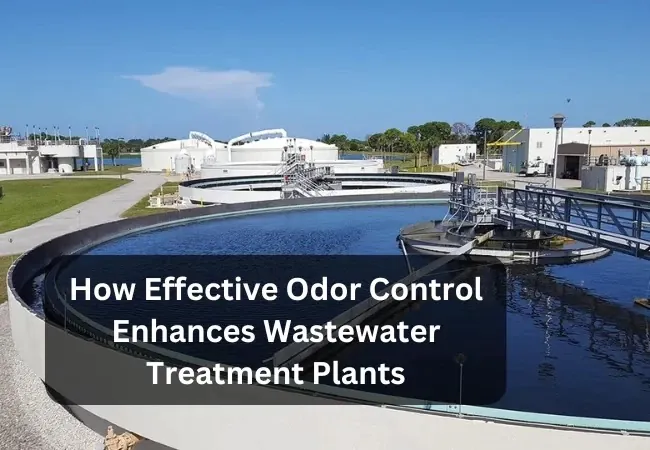
What Causes Odor in Water Treatment Contexts
Biological metabolites (geosmin and MIB): The most common cause of musty, earthy taste and odor in drinking water. Produced by cyanobacteria (blue-green algae) and certain actinomycetes bacteria. Dissolved compounds — PAC coagulation has limited direct effect on these. Requires activated carbon or ozone for effective removal.
Hydrogen sulfide (H₂S): Produced by anaerobic bacterial activity in sediments, groundwater, and wastewater. Characteristic rotten egg odor at very low concentrations (detectable below 0.5 µg/L). Requires oxidation (aeration, chlorination, or ozone) for removal — PAC has no direct effect on dissolved H₂S.
Volatile organic compounds (VOCs): From industrial sources, chlorination byproducts, and biological degradation. Require air stripping or activated carbon — PAC is not effective for dissolved VOCs.
Odor from suspended and colloidal organic matter: Organic particles and colloids can carry adsorbed odor compounds. PAC effectively removes this fraction through coagulation, indirectly reducing odor associated with suspended organics.
Algal cells: Intact algal cells carry intracellular odor compounds. PAC removes algal cells through coagulation — preventing further metabolite release and reducing overall odor precursor load. For algae-specific guidance: PAC in Algae Control for Water Treatment Systems
PAC vs Other Odor Control Methods
| Method | Target Odor Compounds | Effectiveness | Application |
|---|---|---|---|
| PAC coagulation | Suspended/colloidal organics, algal cells | Moderate (indirect) | Primary clarification |
| Powdered activated carbon (PAC-C) | Geosmin, MIB, dissolved organics | Excellent | Drinking water — direct adsorption |
| Granular activated carbon (GAC) | Dissolved organics, VOCs | Excellent | Continuous polishing |
| Ozone oxidation | Geosmin, MIB, H₂S, organics | Excellent | Advanced treatment |
| Aeration | H₂S, CO₂, volatile compounds | Good | Groundwater, anaerobic effluent |
| Pre-chlorination | Biological odors, H₂S | Good | Pre-treatment — caution with DBP formation |
| pH adjustment | Some pH-dependent odors | Limited | Specific applications |
PAC (poly aluminum chloride) is most accurately described as a supporting treatment for odor control — it removes the particles and algal cells that carry or produce odor precursors, reducing the load on downstream odor-specific treatments rather than directly removing dissolved odor compounds.
Where PAC Contributes to Odor Reduction
Algal Cell Removal
The most impactful odor-related application of PAC. Algal cells that are not removed in clarification carry intracellular geosmin and MIB into the treatment train. If cells are lysed by disinfection before these compounds are adsorbed by activated carbon, dissolved odor compounds increase dramatically.
PAC’s role: remove algal cells as intact units before they lyse. This prevents intracellular odor compound release and reduces the activated carbon demand needed for final taste/odor control.
Colloidal Organic Matter Removal
Humic and fulvic acids — and other dissolved and colloidal NOM — can carry adsorbed odor compounds and serve as precursors for odor-forming reactions during chlorination. PAC removes the colloidal NOM fraction effectively, reducing the organic matter that contributes to odor formation downstream.
For NOM removal performance: PAC for Color Removal in Industrial Wastewater
Industrial Effluent Pre-Treatment
In industrial wastewater contexts, PAC coagulation removes the suspended and colloidal organic fraction that contributes to odor in effluent. While dissolved odor compounds (H₂S, VOCs) require additional treatment, PAC-treated effluent typically has significantly lower organic loading than untreated effluent — reducing the substrate available for downstream biological odor production.

PAC vs Powdered Activated Carbon for Taste and Odor
This comparison is frequently relevant in drinking water applications where both products are available:
| Parameter | PAC (poly aluminum chloride) | PAC-C (powdered activated carbon) |
|---|---|---|
| Target | Particles, colloids, algal cells | Dissolved organics, geosmin, MIB |
| Mechanism | Coagulation/flocculation | Adsorption |
| Geosmin/MIB removal | Limited (indirect via algal cell removal) | Excellent — direct adsorption |
| Turbidity removal | Excellent | None |
| Sludge production | Moderate | Adds carbon to sludge |
| Cost per unit of odor removal | Lower (supporting role) | Higher — justified for direct odor removal |
The practical answer: use PAC (poly aluminum chloride) for turbidity and algal cell removal, and add PAC-C (powdered activated carbon) when dissolved taste and odor complaints require direct intervention. The two products work together — PAC reduces the load entering downstream treatment, and PAC-C handles the dissolved compounds that PAC cannot remove.
Operational Guidance for Odor-Affected Source Water
Step 1 — Identify the Odor Source
Measure dissolved geosmin/MIB (laboratory analysis), algal cell counts, H₂S, and dissolved organic carbon. The dominant odor source determines the primary treatment response.
Step 2 — Optimize PAC for Particle and Cell Removal
Conduct a jar test under current source water conditions. During algal bloom periods, increase PAC dose by 25–50% above normal turbidity-based dose to improve algal cell capture. Monitor pH — algal blooms raise source water pH and may require PAC dose adjustment.
Step 3 — Add Activated Carbon Where Dissolved Odors Persist
If PAC-optimized clarification does not resolve taste and odor complaints, add powdered activated carbon (PAC-C) at the rapid mix stage. Typical PAC-C dose for geosmin/MIB control: 5–20 mg/L depending on compound concentration.
Step 4 — Consider Pre-Oxidation for Severe Events
For severe cyanobacterial blooms, pre-ozonation or pre-chlorination upstream of PAC dosing disrupts algal cells and oxidizes metabolites. Caution: cell lysis releases intracellular compounds — ensure downstream activated carbon capacity is adequate before applying pre-oxidation.
For PAC phosphorus removal to prevent future blooms: PAC for Phosphorus Removal in Water Treatment
Frequently Asked Questions
Can increasing PAC dose resolve musty taste and odor complaints?
Rarely as a standalone action. If the odor is caused by dissolved geosmin or MIB, increased PAC dose improves algal cell removal but does not remove dissolved compounds. If the odor is associated with colloidal organic matter, increased PAC may help by removing more NOM. The most reliable action is activated carbon addition alongside optimized PAC dosing.
Does PAC prevent odor from forming in distribution systems?
PAC reduces the dissolved organic carbon and colloidal organic matter that can serve as substrates for biological activity and chlorination byproduct formation in distribution. Lower organic matter loading after PAC coagulation reduces (but does not eliminate) the potential for odor formation in distribution. Maintaining adequate disinfectant residual in distribution is the primary control for distribution system odors.
Is there an interaction between PAC and activated carbon dosing?
PAC and powdered activated carbon can be dosed simultaneously or in close sequence without adverse interaction. PAC should be dosed before or simultaneously with activated carbon at the flash mixing zone. The two chemicals address different fractions of the treatment problem and do not interfere with each other’s mechanisms.
Conclusion
PAC’s role in odor control is primarily indirect — removing the algal cells, colloidal organic matter, and suspended particles that carry, produce, or serve as precursors to odor compounds. For drinking water applications, this makes PAC a valuable supporting treatment that reduces the load on downstream taste and odor-specific treatments such as activated carbon and ozone.
For applications where dissolved odor compounds (geosmin, MIB, H₂S) are the primary complaint, PAC should be combined with activated carbon or oxidation to address the dissolved fraction that coagulation alone cannot remove.
Contact our technical team today for a free odor control assessment, PAC product samples, and a treatment recommendation for your specific source water and odor complaint profile. We respond within 24 hours.