
Written by the HyChron Technical Team — water treatment specialists with over 15 years of field experience in municipal and industrial systems. Last reviewed: April 2026
Algal blooms in source water reservoirs are one of the most operationally disruptive events a water treatment plant can face. Dense algal growth increases turbidity and color, clogs filters rapidly, and — in the case of cyanobacteria (blue-green algae) — produces taste, odor, and potentially toxic compounds that standard treatment must address before water reaches consumers.
PAC plays a key role in algae control at two levels: as a treatment chemical for algae removal in the clarification process, and as part of a broader strategy for reducing the phosphorus loads that drive algal bloom conditions in the first place.
This article compares PAC against alternative approaches for algae control, establishes when PAC is the right tool, and provides operational guidance for algae-affected water treatment.
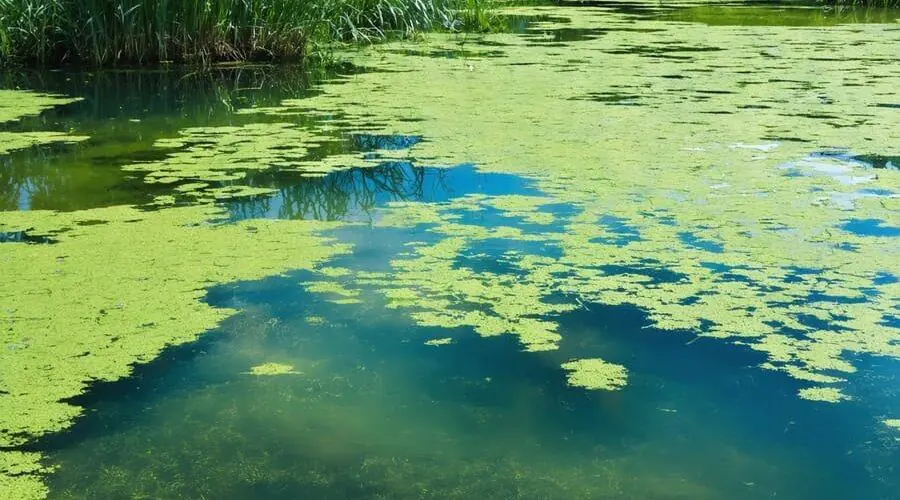
The Algae Problem in Source Water Treatment
Algae create multiple simultaneous treatment challenges:
- Physical clogging: Algal cells are poorly shaped for conventional coagulation — their buoyancy, mucilaginous coatings, and surface chemistry reduce settling efficiency
- Filter loading: Algal cells that carry over from clarification rapidly blind sand filters, shortening run times dramatically
- Organic matter release: Algae release extracellular organic matter (EOM) and intracellular organic matter (IOM) that increases dissolved organic carbon, consumes disinfectant, and can form disinfection byproducts
- Taste and odor: Algal metabolites including geosmin and MIB cause musty, earthy odors at concentrations below 10 ng/L — well below any turbidity-based treatment indicator
- Cyanotoxins: Cyanobacteria produce microcystin, cylindrospermopsin, and anatoxin — regulated toxins that require specific treatment attention beyond standard coagulation
PAC vs Alternative Algae Control Approaches
| Approach | Algae Cell Removal | Taste/Odor | Cyanotoxin | Best Use Case |
|---|---|---|---|---|
| PAC coagulation (optimized) | Good (60–85%) | Limited | Limited | Primary clarification of algal cells |
| PAC + dissolved air flotation (DAF) | Excellent (85–95%) | Limited | Limited | Algal cell removal from low-density blooms |
| Pre-oxidation (chlorine/ozone) + PAC | Excellent | Good | Good | Dense blooms with taste/odor concerns |
| Activated carbon (PAC-C) adsorption | N/A | Excellent | Excellent | Dissolved taste/odor and cyanotoxin removal |
| Copper sulfate (algaecide) | Limited | Moderate | Risk of release | Reservoir pre-treatment — limited application |
| Phosphorus reduction (PAC P removal) | Preventive | N/A | N/A | Long-term bloom prevention |
The most effective algae management strategy combines: PAC for algal cell removal in clarification + PAC-C (powdered activated carbon, different product) for dissolved taste/odor/cyanotoxin adsorption + phosphorus control to prevent future blooms.
Note: PAC-C (powdered activated carbon) is a completely different product from PAC (poly aluminum chloride) despite similar abbreviation — the context always makes clear which is meant.
How PAC Removes Algal Cells
Algal cells present a more challenging coagulation target than clay or mineral particles because:
- They are less dense than water — some species are positively buoyant and resist settling
- Their surface chemistry is complex — cell walls and mucilaginous coatings interact differently with aluminum species than mineral surfaces
- EOM released by algae consumes PAC’s active aluminum species before they contact cells — increasing effective dosage requirements
PAC removes algal cells through charge neutralization and sweep flocculation — the same mechanisms used for turbidity removal — but both mechanisms are less efficient per unit of PAC dose than for mineral turbidity. Higher doses and longer flocculation times are typically required.
Dissolved Air Flotation (DAF) significantly outperforms conventional sedimentation for algal removal. Algal cells’ positive buoyancy means they rise to the surface more readily than they settle — DAF’s upward bubble stream is ideally suited to capturing algal cells destabilized by PAC coagulation. For plants treating algae-affected source water, PAC + DAF is the preferred combination.

Dosage and Operational Guidance for Algae-Affected Water
PAC Dosage Adjustment During Bloom Periods
| Bloom Intensity | Algal Cell Count | PAC Dose Adjustment vs Normal |
|---|---|---|
| Early bloom | < 5,000 cells/mL | +10–20% above normal turbidity dose |
| Moderate bloom | 5,000–50,000 cells/mL | +25–50% above normal turbidity dose |
| Dense bloom | > 50,000 cells/mL | +50–100% above normal turbidity dose; consider pre-oxidation |
Jar testing during bloom conditions is essential — algal species composition significantly affects required dose.
pH Considerations
Algal photosynthesis during daytime raises reservoir pH — sometimes above 9.0 in dense bloom conditions. PAC’s effective range tops out at pH 9.0, and coagulation efficiency drops significantly above pH 8.5. Monitor source water pH continuously during bloom periods and consider acid pre-dosing if pH consistently exceeds 8.5 at the treatment plant intake.
Pre-Oxidation Before PAC Dosing
For dense cyanobacterial blooms, pre-oxidation with chlorine or ozone before PAC dosing:
- Disrupts algal cell membranes, improving PAC penetration and charge neutralization
- Oxidizes taste and odor compounds at the source
- Reduces EOM that would otherwise consume PAC
Caution: Pre-oxidation of intact cyanobacteria can lyse cells, releasing intracellular cyanotoxins that require downstream treatment (activated carbon). Pre-oxidation should only be applied when downstream cyanotoxin treatment is in place.
Long-Term Algae Prevention Through Phosphorus Control
Algal blooms are driven by phosphorus availability. PAC’s phosphorus removal capability (see PAC for Phosphorus Removal in Water Treatment) addresses the root cause — reducing the phosphorus load from treatment plant effluent and other managed sources that feeds reservoir algal growth. Long-term phosphorus management is more effective than reactive bloom treatment.
Frequently Asked Questions
Can PAC remove cyanotoxins from drinking water?
PAC coagulation has limited direct effectiveness against dissolved cyanotoxins — these are small molecules that do not coagulate efficiently. Powdered activated carbon (PAC-C, not poly aluminum chloride) is the standard treatment for cyanotoxin removal. PAC (poly aluminum chloride) removes algal cells that contain toxins, preventing cell lysis from releasing intracellular toxins — but cells that lyse before or during treatment release dissolved toxins that require activated carbon or ozone for removal.
How do I know when to increase PAC dose during a bloom?
Monitor source water chlorophyll-a concentration and algal cell counts alongside turbidity. Turbidity alone is a poor indicator of algal loading during bloom conditions. When chlorophyll-a rises above 10–15 µg/L, begin increasing PAC dose incrementally and conduct jar tests under current source water conditions to establish the new optimal dose.
Should I switch from sedimentation to DAF during bloom periods?
If your plant has DAF capability, activating it during bloom periods significantly improves algal cell removal compared to sedimentation. The buoyancy of algal cells makes DAF inherently more suitable for algae removal than gravity settling. If your plant is sedimentation-only, the most effective compensating action is higher PAC dose and longer flocculation time.
Conclusion
PAC is an effective tool for algal cell removal in water treatment — particularly when combined with DAF, pre-oxidation where appropriate, and downstream activated carbon for dissolved metabolite removal. It also addresses the root cause of algal blooms through its phosphorus removal capability, making it a versatile chemical in a comprehensive algae management strategy.
For plants experiencing increasing frequency or intensity of algal blooms, the combination of optimized PAC coagulation and proactive phosphorus reduction in the catchment delivers the most durable long-term solution.
Contact our technical team today for a free algae management assessment, PAC product samples, and dosage guidance for your bloom season conditions. We respond within 24 hours.