Skip to content
Written by the HyChron Technical Team — water treatment specialists with over 15 years of field experience in municipal and industrial systems. Last reviewed: April 2026
Phosphorus discharge limits are tightening globally. Eutrophication of lakes, reservoirs, and coastal waters — driven by phosphorus runoff from municipal and industrial discharges — has placed phosphorus firmly at the top of regulatory agendas in most regions. Plants that previously operated without phosphorus limits are increasingly receiving new permit conditions. Those already under phosphorus regulation are often facing tighter targets.
PAC (Poly Aluminum Chloride) is one of the most effective and widely used chemicals for chemical phosphorus removal — capable of achieving total phosphorus below 1 mg/L in most applications, and below 0.5 mg/L when combined with appropriate sedimentation and filtration.
This article compares PAC against alternative phosphorus removal approaches, establishes selection criteria, and provides operational guidance for achieving target phosphorus levels at minimum chemical cost.
Phosphorus in Wastewater: What You Are Removing
Phosphorus in wastewater exists in several forms:
- Orthophosphate (PO₄³⁻): The most common form — directly removable by chemical precipitation with aluminum or iron
- Polyphosphates: Chain phosphate compounds from detergents — hydrolyze to orthophosphate under acidic conditions or with time
- Organic phosphorus: Phosphorus bound to organic matter — removed with organic matter through coagulation or biological treatment
Chemical phosphorus removal with PAC targets orthophosphate directly. Polyphosphates and organic phosphorus are partially removed through coagulation of the associated organic matter.
PAC vs Alternative Phosphorus Removal Methods
| Method | P Removal Level | Achievable TP | Key Advantage | Key Limitation |
|---|---|---|---|---|
| PAC chemical precipitation | High | < 0.5–1 mg/L | Cost-effective, flexible | Less effective than ferric for very low limits |
| Ferric chloride precipitation | High | < 0.2–0.5 mg/L | Excellent for very low TP | Highly corrosive, higher handling cost |
| Alum precipitation | High | < 0.5–1 mg/L | Established chemistry | Higher dosage, more sludge than PAC |
| Biological Enhanced P Removal (BEPR) | High | < 0.5–1 mg/L | No chemical cost | Sensitive to operating conditions |
| PAC + biological (combined) | Very high | < 0.1–0.3 mg/L | Reliable compliance | Requires both treatment stages |
| Adsorption/ion exchange | Very high | < 0.05 mg/L | Polishing stage | High cost, regeneration required |
For most municipal and industrial phosphorus removal applications where the target is total phosphorus below 1 mg/L, PAC chemical precipitation is the most cost-effective first-line approach.
How PAC Removes Phosphorus
The primary mechanism is chemical precipitation. When PAC is dosed into water containing orthophosphate:
- PAC releases aluminum ions (Al³⁺ and aluminum hydroxide species)
- Aluminum reacts with orthophosphate to form insoluble aluminum phosphate: Al³⁺ + PO₄³⁻ → AlPO₄↓
- AlPO₄ precipitates are captured in the coagulated floc
- PAC simultaneously coagulates suspended solids and colloidal matter, co-removing particulate phosphorus
The stoichiometric ratio for complete orthophosphate precipitation requires approximately 1 mole of aluminum per mole of phosphorus. In practice, excess aluminum is needed because:
- Some aluminum reacts with hydroxide rather than phosphate
- Natural organic matter and suspended solids compete for aluminum
- Operating conditions rarely achieve theoretical stoichiometry
Practical aluminum-to-phosphorus (Al:P) molar ratio for effective removal: 1.5:1 to 3:1 depending on target effluent TP.
Judgment Framework: When to Choose PAC for Phosphorus Removal
Choose PAC when:
- Total phosphorus target is 0.5–2 mg/L — PAC achieves this range reliably and cost-effectively
- Simultaneous turbidity and phosphorus removal is needed — PAC addresses both in a single dosing step
- Plant already uses PAC for coagulation — adding phosphorus removal requires only dosage adjustment, no new chemical system
- Ferric chloride is being considered but corrosion and handling costs are a concern — PAC is less corrosive with comparable removal at moderate P targets
Consider ferric chloride instead when:
- Total phosphorus target is below 0.2 mg/L — ferric forms less soluble phosphate precipitates and achieves lower residual P
- Existing chemical system is already ferric-based
Consider biological P removal instead when:
- Phosphorus load is consistently high and chemical consumption would be very large
- The biological treatment system can be designed for enhanced biological phosphorus removal (EBPR) without instability risk
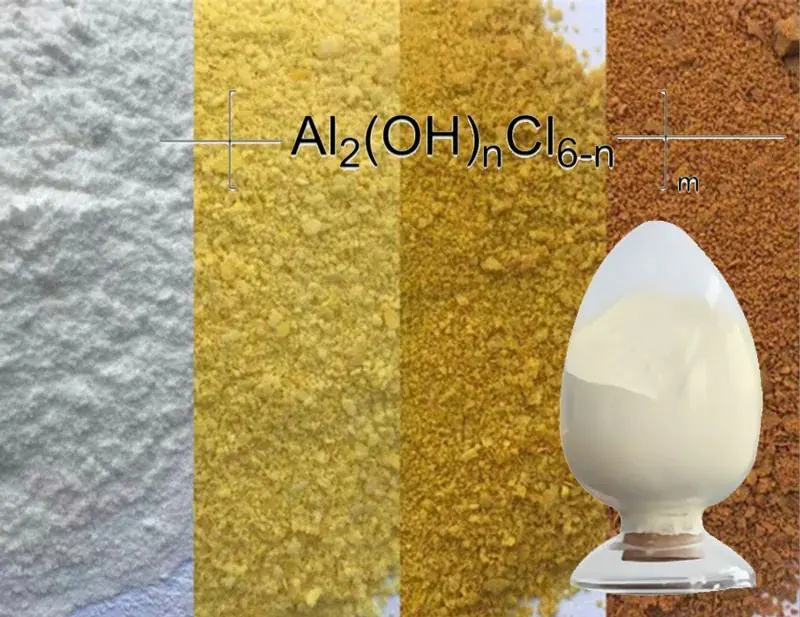
Dosage Guidelines for Phosphorus Removal
Theoretical Basis
Al:P molar ratio for complete precipitation = 1 mol Al : 1 mol PO₄ At Al:P = 1.5–2.0, typical orthophosphate removal > 90% At Al:P = 2.5–3.0, effluent TP typically below 0.5 mg/L
Practical Dosage Calculation
PAC dose (mg/L as Al₂O₃) = Influent TP (mg/L as P) × Al:P ratio × 1.27
Where 1.27 converts from P to Al₂O₃ equivalent
Example:
- Influent TP = 5 mg/L, target effluent TP < 1 mg/L, Al:P ratio = 2.0
- PAC dose = 5 × 2.0 × 1.27 = 12.7 mg/L as Al₂O₃
- For 30% Al₂O₃ powder PAC: 12.7 / 0.30 = 42 mg/L product dose
| Influent TP | Target Effluent TP | Approximate Al:P Ratio | PAC Dose (30% product) |
|---|---|---|---|
| 5 mg/L | < 2 mg/L | 1.5:1 | ~32 mg/L |
| 5 mg/L | < 1 mg/L | 2.0:1 | ~42 mg/L |
| 5 mg/L | < 0.5 mg/L | 2.5–3.0:1 | ~53–64 mg/L |
| 10 mg/L | < 1 mg/L | 2.0:1 | ~85 mg/L |
Always confirm by jar test — actual dose depends on influent phosphorus speciation, pH, and organic matter content.
pH Optimization for Phosphorus Removal
Aluminum phosphate precipitation is most complete in the pH range of 6.0–7.5. Outside this range:
- Below pH 6.0: aluminum exists as soluble Al³⁺ — phosphate precipitation is incomplete
- Above pH 8.0: aluminum preferentially forms Al(OH)₃ rather than AlPO₄ — reducing P removal efficiency
For maximum phosphorus removal with PAC, target pH 6.5–7.0 at the dosing point.
For PAC pH management: Impact of pH on PAC Performance
Dosing Points in the Treatment Train
Pre-precipitation (before primary clarification): PAC is dosed before the primary clarifier. Phosphorus is removed with primary sludge — reducing the load entering biological treatment. Suitable for plants with secondary biological treatment where reducing biological P load is the objective.
Co-precipitation (in biological treatment): PAC is dosed directly into the aeration basin or at the inlet to secondary clarification. Phosphorus precipitates are removed with biological sludge in the secondary clarifier.
Post-precipitation (after secondary treatment): PAC is dosed in a tertiary treatment stage for final polishing. This approach achieves the lowest effluent TP and is required for targets below 0.5 mg/L.
Frequently Asked Questions
Can PAC achieve total phosphorus below 0.1 mg/L?
PAC alone rarely achieves TP below 0.2–0.3 mg/L consistently. For targets below 0.1 mg/L, PAC post-precipitation followed by filtration (sand or membrane) is typically needed to remove residual aluminum phosphate particulates that carry through clarification. Alternatively, ferric chloride at controlled dosage achieves lower residual TP than PAC for equivalent Al/Fe dose.
How does PAC phosphorus removal affect sludge management?
Aluminum phosphate precipitate adds to sludge mass. At typical PAC doses for P removal, sludge production increases by approximately 20–40% compared to turbidity-only coagulation at equivalent dose. This is still significantly less sludge than equivalent alum doses. Factor the additional sludge volume into disposal cost calculations when evaluating the economics of chemical P removal.
Does PAC phosphorus removal interfere with biological treatment?
When PAC is used in pre-precipitation, the reduced phosphorus load entering biological treatment may affect biological phosphorus metabolism if the system is designed for EBPR. Biological P removal requires adequate P in the influent for bacterial uptake. If a combined chemical + biological P removal approach is planned, consult our technical team for guidance on optimizing the interaction between chemical and biological stages.
Conclusion
PAC is a practical, cost-effective solution for chemical phosphorus removal in municipal and industrial wastewater treatment. It achieves total phosphorus below 1 mg/L in most applications and below 0.5 mg/L with optimized dosage and pH control — covering the majority of current regulatory requirements.
For plants already using PAC for coagulation, adding phosphorus removal requires only dosage recalibration — no new chemical system, no new equipment. For plants evaluating chemical P removal for the first time, PAC offers a reliable, lower-corrosivity alternative to ferric chloride for most moderate-target applications.
Contact our technical team today for a free phosphorus removal assessment, PAC product samples, and a dosage recommendation based on your influent phosphorus data. We respond within 24 hours.