
Dissolved air flotation is one of the most effective separation technologies available for wastewater streams that gravity settlement handles poorly. Where conventional clarifiers struggle with low-density particles, emulsified oils, algae, and fine organic solids, DAF systems achieve rapid, high-efficiency separation — but only when the chemistry upstream of the flotation unit is correctly optimized.
Polyacrylamide plays a specific and often misunderstood role in DAF systems. It is not used the same way as in gravity settling applications — the physics of flotation change what the polymer needs to do, which grades perform best, and how dosage should be optimized. Operators who apply clarifier-based polymer programs directly to DAF systems without adjustment consistently achieve below-potential performance.
This guide explains how PAM works in DAF applications, what makes DAF chemistry different from gravity settling, and how to select and optimize polymer for flotation-based treatment.
How DAF Works and Where PAM Fits
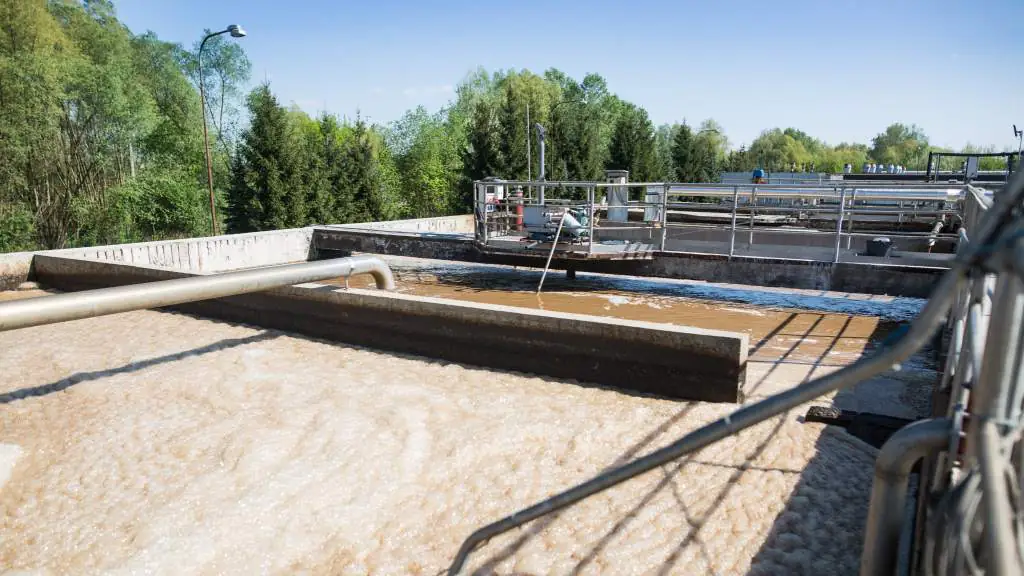
In a dissolved air flotation system, water is saturated with air under pressure and then released into the flotation tank at atmospheric pressure. The pressure drop causes microscopic air bubbles to form throughout the water. These bubbles attach to suspended particles and low-density contaminants, reducing their effective density until they float to the surface as a foam layer that is mechanically skimmed off.
The efficiency of bubble-particle attachment — and therefore the overall separation efficiency of the DAF system — depends critically on the physical and chemical condition of the particles entering the flotation zone. This is where chemical conditioning, including PAM, determines performance.
In a typical DAF treatment train, chemicals are added in sequence upstream of the flotation tank:
- Coagulant (alum, ferric, or PAC) — neutralizes particle charge and initiates micro-floc formation
- PAM flocculant — bridges micro-flocs into larger aggregates with improved bubble attachment characteristics
- DAF contact zone — pressurized recycle water releases microbubbles that attach to conditioned flocs
- Flotation zone — floc-bubble aggregates rise to surface for skimming
PAM’s role in this sequence is to produce flocs that are large enough for efficient bubble attachment, but not so large or dense that they sink rather than float. This is a fundamentally different requirement from gravity settling applications, where maximum floc size and density are desirable.
How DAF Chemistry Differs From Gravity Settling
Understanding the difference between flotation and settling chemistry prevents the most common PAM selection and dosage mistakes in DAF applications.
In gravity settling: Large, dense flocs are optimal. High molecular weight PAM with strong bridging produces the fastest settling rates. Overdosing risk exists but the primary failure mode is underdosing — insufficient floc size for gravity removal.
In DAF flotation: Floc size must be optimized within a narrower range. Flocs that are too small have insufficient surface area for bubble attachment. Flocs that are too large and dense are too heavy for the attached bubbles to lift — they sink rather than float, passing through the system and appearing in the effluent.
This means:
- Molecular weight selection is more critical in DAF than in settling. Very high MW grades that produce large, dense flocs for settling may actually reduce DAF performance.
- Overdosing is more consequential in DAF. Excess PAM can produce over-flocculated, dense aggregates that sink, or can coat air bubble surfaces and reduce their attachment efficiency.
- Coagulant-PAM sequencing and contact time must be more precisely controlled — inadequate coagulation before PAM addition produces fine, weakly structured flocs with poor bubble attachment characteristics.
PAM Grade Selection for DAF Systems
For Flotation of Organic Solids and Oily Wastewater
Cationic PAM at medium molecular weight (6–12 million Daltons) and medium-high charge density (40–70%) is the standard choice for DAF systems treating:
- Food and beverage processing wastewater (dairy, meat, vegetable processing)
- Oil and grease-containing industrial effluent
- Municipal primary treatment with high organic load
- Paper and pulp white water treatment
The cationic charge neutralizes the negative surface charge on organic particles and oil droplets, improving coagulation efficiency and producing flocs with good bubble attachment characteristics. Medium molecular weight limits floc density, keeping conditioned aggregates in the optimal size range for flotation.
For Flotation of Inorganic Solids
Where DAF is used to float fine inorganic particles — in some mineral processing applications or industrial water recycling — anionic PAM at low to medium molecular weight (6–10 million Daltons) is typically more appropriate. The lower MW limits floc density and prevents the over-flocculation that causes sinking in flotation systems.
Avoiding Common Grade Mistakes
Using high MW anionic PAM — the standard choice for gravity settling of inorganic solids — in a DAF system treating organic wastewater is one of the most common chemistry errors in DAF operation. The resulting flocs are too dense for efficient flotation, performance appears poor, operators increase dose, floc density increases further, and performance continues to decline.
For broader guidance on PAM grade selection, see: Choosing the Right PAM Grade for Your Industry
Dosage Optimization for DAF Systems
Starting Point Dosage Ranges
| DAF Application | Coagulant Dose | PAM Type | PAM Dose |
|---|---|---|---|
| Food processing (dairy, meat) | 50–150 mg/L | Cationic, medium MW | 1–5 mg/L |
| Oil and grease removal | 30–100 mg/L | Cationic, medium MW | 0.5–3 mg/L |
| Municipal primary DAF | 30–80 mg/L | Cationic, low-medium MW | 0.5–2 mg/L |
| Paper mill white water | 20–60 mg/L | Cationic, medium MW | 1–4 mg/L |
| Industrial water recycling | 20–80 mg/L | Anionic, low-medium MW | 1–3 mg/L |
These are starting points only. Jar testing — adapted for flotation conditions — is essential to confirm optimal dosage for your specific wastewater.
Adapting Jar Testing for DAF
Standard jar testing simulates gravity settling and does not replicate flotation conditions. For DAF applications, modified testing procedures give more relevant results:
The most practical field test for DAF optimization is the floatability test: after adding coagulant and PAM at the test dosage, introduce air bubbles into the sample (using a dissolved air saturator or by agitation) and observe whether conditioned material floats cleanly to the surface or sinks. The optimal dosage produces rapid, complete flotation with clear subnatant.
Contact our technical team today for DAF-specific PAM grade recommendations and jar testing guidance for your wastewater type. → Contact our technical team today
Common DAF Performance Problems and Solutions
Problem: Conditioned solids sinking rather than floating
Likely causes: PAM molecular weight too high producing dense flocs; overdosing causing over-flocculation; coagulant overdose producing heavy metal hydroxide precipitate
Solutions: Switch to lower MW PAM grade; reduce PAM dosage in steps; reduce coagulant dosage and retest
Problem: Foam layer unstable or breaking down quickly
Likely causes: Insufficient coagulant — flocs too fine for stable foam; surfactants in wastewater destabilizing foam; air-to-solids ratio too low for current solids loading
Solutions: Increase coagulant dose; trial defoamer-compatible PAM grade; increase recycle ratio to raise air bubble concentration
Problem: Turbid subnatant despite visible flotation
Likely causes: Fine colloidal particles not captured by flocculation passing through without bubble attachment; short-circuit flow in flotation tank bypassing contact zone
Solutions: Add coagulant pre-treatment step if absent; trial higher charge density cationic PAM for better colloidal capture; review flotation tank hydraulics for short-circuit flow
Problem: High chemical consumption with inconsistent results
Likely causes: Influent oil and grease concentration varying significantly; coagulant-PAM contact time insufficient before flotation zone; preparation quality inconsistent
Solutions: Install online oil/grease or turbidity monitoring at DAF inlet; increase mixing contact time between coagulant and PAM addition points; standardize polymer preparation procedure
Frequently Asked Questions
Can I use the same PAM grade for both my DAF unit and my gravity clarifier?
Generally not recommended. DAF applications typically require medium MW cationic PAM, while gravity clarifiers treating inorganic solids typically perform best with high MW anionic PAM. Using a single grade across both is a common compromise that produces below-optimal performance at both units. Using the correct grade for each delivers better overall treatment at lower total polymer cost.
How does water temperature affect DAF performance with PAM?
Cold water affects DAF in two ways: it reduces polymer dissolution and chain extension efficiency, and it increases water viscosity, which slows bubble rise rates and reduces flotation efficiency. In cold-climate operations, extend polymer preparation mixing time, use warmer preparation water, and expect that optimal dosage may be higher in winter than summer. Conduct seasonal jar testing to reconfirm optimal dosage.
Does PAM affect the quality of DAF float for disposal or recovery?
PAM conditions the float solids, improving their dewatering characteristics. Better-conditioned DAF float typically has higher solids content and dewaters more effectively on belt presses or in dewatering screws than poorly conditioned float. For applications where DAF float is recovered for beneficial use — in food processing, for example — confirm that PAM grades used are approved for the relevant regulatory category.
Conclusion
PAM improves DAF performance significantly when the right grade is selected and dosage is optimized for flotation conditions rather than gravity settling. The key differences — lower MW requirements, tighter dosage optimization window, and the critical importance of coagulant sequencing — mean that DAF polymer programs require specific attention rather than direct adaptation from settling applications.
Facilities that optimize their DAF chemistry consistently achieve higher separation efficiency, lower chemical consumption, and more stable float removal than those operating with settling-optimized polymer programs.
If your DAF system is underperforming or consuming more chemical than expected, contact our technical team today for a free DAF-specific program assessment and grade recommendation. → Get in touch today