Skip to content
Environmental discharge regulations are becoming stricter every year. For industrial facilities and municipal wastewater treatment plants, failure to meet effluent quality standards is no longer just a compliance risk—it can mean production shutdowns, heavy fines, and lasting damage to operating licenses.
The challenge for most plant operators is achieving consistent compliance without dramatically increasing treatment costs. Many facilities find themselves caught between tightening discharge limits and pressure to keep operating expenses under control.
Polyacrylamide (PAM) offers one of the most cost-effective paths to reliable discharge compliance. When the right grade is correctly applied, it removes suspended solids, reduces turbidity, and improves overall effluent quality to levels that meet even the most stringent discharge standards—at a fraction of the cost of physical treatment upgrades.
This guide explains how PAM helps industrial and municipal facilities meet discharge regulations, which parameters it addresses most effectively, and how to build a compliant, cost-efficient treatment program.
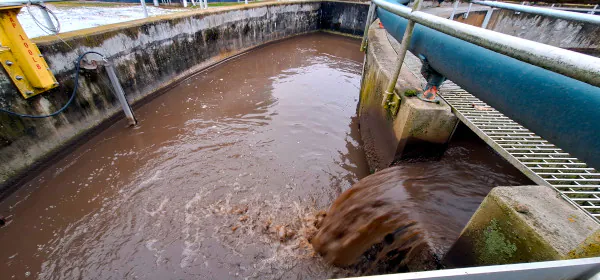
What Discharge Regulations Typically Require
While specific limits vary by country and regulatory body, most industrial and municipal discharge regulations share common parameters that PAM directly addresses:
| Parameter | Typical Discharge Limit | Untreated Industrial Wastewater | PAM-Treated Effluent |
|---|---|---|---|
| Suspended solids (SS) | 30–150 mg/L | 1,000–50,000 mg/L | 20–80 mg/L |
| Turbidity | 5–50 NTU | 200–5,000 NTU | 5–30 NTU |
| BOD (biological oxygen demand) | 20–60 mg/L | 100–2,000 mg/L | Partial reduction |
| COD (chemical oxygen demand) | 100–300 mg/L | 500–10,000 mg/L | Partial reduction |
| Total dissolved solids | 500–2,000 mg/L | Variable | Minimal effect |
PAM is most effective at reducing suspended solids and turbidity—the two parameters most commonly cited in regulatory violations for industrial facilities. For BOD and COD reduction, PAM works best as part of a combined treatment program alongside biological treatment.
Regulatory frameworks that commonly apply to PAM users include:
- ISO 14001 environmental management standards
- EU Industrial Emissions Directive (IED) for European facilities
- US Clean Water Act effluent guidelines for industrial dischargers
- China GB 8978 integrated wastewater discharge standard
- Local environmental protection bureau (EPB) permits in Asia and the Middle East
Regardless of which framework applies to your facility, the core challenge is the same: achieving consistent effluent quality that stays within permitted limits under varying production conditions.
How PAM Removes the Contaminants That Cause Violations
The suspended solids and turbidity that trigger most discharge violations come from fine particles that resist natural settlement. These particles—typically below 100 microns in size—carry surface charges that keep them dispersed in water indefinitely without chemical intervention.
Polyacrylamide addresses this through two mechanisms:
Charge neutralization: Ionic PAM groups interact with charged particle surfaces, reducing the repulsive forces that keep particles suspended.
Polymer bridging: High molecular weight PAM chains physically connect multiple particles simultaneously, forming large, dense flocs that settle rapidly under gravity—removing suspended solids from the water column within minutes.
The practical result is effluent quality that consistently meets SS and turbidity discharge limits, even during peak production periods when untreated wastewater quality is at its worst.
Contact our technical team today for a free assessment of how PAM can help your facility meet its specific discharge requirements. → Contact our technical team today
PAM Performance Across Different Regulatory Scenarios
Scenario 1: Seasonal Compliance Challenges
Many facilities meet discharge limits comfortably during normal operations but struggle during peak production seasons, heavy rainfall events, or periods of high raw material variability.
PAM provides a flexible, scalable response to these challenges. Dosage can be increased rapidly when influent quality deteriorates, and reduced again when conditions normalize—maintaining consistent effluent quality without permanent infrastructure changes.
Scenario 2: Tightening Permit Limits
Regulatory agencies in most markets are progressively tightening discharge limits as environmental standards improve. Facilities that currently comply may find their existing treatment insufficient within 1–3 permit renewal cycles.
Optimizing a PAM program is typically the most cost-effective first step before considering capital-intensive physical treatment upgrades. In many cases, grade optimization and dosage adjustment can achieve the new limits without any additional infrastructure investment.
Scenario 3: New Facility Permitting
For new industrial facilities, demonstrating an effective treatment plan is a prerequisite for obtaining discharge permits in most jurisdictions. A well-documented PAM program—with jar test data showing achievable effluent quality—provides regulatory agencies with the evidence needed to approve discharge permits.
Scenario 4: Post-Violation Remediation
Facilities that have received regulatory notices of violation face pressure to demonstrate immediate improvement. PAM optimization can achieve measurable effluent quality improvement within days of implementation—providing documented evidence of corrective action for regulatory submissions.
Choosing the Right PAM Grade for Regulatory Compliance
Achieving consistent compliance requires selecting a PAM grade that performs reliably across the full range of your facility’s operating conditions—not just under ideal circumstances.
| Wastewater Type | Recommended PAM Grade | Key Selection Criteria |
|---|---|---|
| Mineral processing / mining | Anionic, high MW (15–20M Da) | High TSS, coarse to fine particle mix |
| Municipal sewage (primary) | Cationic, medium MW (8–12M Da) | Organic solids, variable pH |
| Construction site runoff | Anionic, high MW (12–18M Da) | Fine silica, clay, variable flow |
| Food processing effluent | Cationic, medium-high MW | Organic solids, oils, high BOD |
| Chemical manufacturing | Grade depends on contaminant type | Requires site-specific jar testing |
| Paper and pulp effluent | Anionic, medium MW (10–15M Da) | Fiber fines, fillers |
For facilities with complex or variable wastewater streams, combining PAM with a coagulant (such as polyaluminum chloride or ferric sulfate) often achieves more consistent compliance than PAM alone. The coagulant neutralizes fine colloids that PAM cannot bridge effectively, while PAM provides the floc growth needed for rapid settlement.
For a detailed guide to grade selection, see: Choosing the Right PAM Grade for Your Industry
Dosage Optimization: The Key to Cost-Effective Compliance
Many facilities that struggle with discharge compliance are not using the wrong PAM grade—they are using the wrong dosage. Both underdosing and overdosing create compliance problems:
Underdosing:
- Insufficient floc formation leaves fine particles in suspension
- Effluent SS and turbidity remain above discharge limits
- Compliance violations occur despite chemical treatment being in place
Overdosing:
- Excess polymer restabilizes fine particles, reducing settlement efficiency
- Effluent quality may actually worsen compared to lower dosage
- Chemical costs increase without compliance benefit
The solution is jar testing to identify the minimum effective dose—the lowest dosage that achieves target effluent quality under representative conditions.
Typical PAM dosage ranges for discharge compliance applications:
| Application | PAM Type | Dosage Range |
|---|---|---|
| Primary clarifier (municipal) | Cationic | 1–5 mg/L |
| Industrial settling pond | Anionic, high MW | 5–30 g/tonne dry solids |
| Construction site runoff | Anionic, high MW | 2–10 mg/L |
| Mining process water | Anionic, high MW | 10–40 g/tonne dry solids |
For a complete jar testing procedure to determine your optimal dosage, see: Calculating PAM Dosage Accurately
Documentation: Proving Compliance to Regulators
Regulatory agencies do not just require compliance—they require evidence of compliance. A well-managed PAM program includes documentation that supports regulatory reporting and demonstrates due diligence in treatment operations.
Key records to maintain:
- Daily polymer consumption log (grade, batch, quantity used)
- Polymer preparation records (concentration, mixing time, water temperature)
- Effluent quality monitoring data (SS, turbidity, pH — minimum daily)
- Jar test records showing dosage optimization basis
- Supplier product documentation (TDS, safety data sheets, certificates of analysis)
This documentation serves two purposes: it enables internal process control, and it provides the evidence base needed if regulatory agencies conduct inspections or request compliance records.
Our products come with full technical documentation including certificates of analysis, safety data sheets, and product specifications—giving your compliance team the supplier documentation needed for regulatory submissions.
Troubleshooting Compliance Failures
Problem: Effluent SS consistently above discharge limit despite PAM treatment
Likely causes:
- PAM grade not matched to particle type (charge density too low)
- Dosage insufficient for peak solids loading
- Poor mixing at dosing point preventing adequate polymer-particle contact
- Polymer solution incompletely dissolved
Solutions: Run jar test with current effluent sample, verify dosing point location, review preparation procedure, trial higher charge density grade.
Problem: Compliance achieved under normal conditions but violated during peak production
Likely causes:
- Fixed dosage not adjusted for higher solids loading during peak periods
- Hydraulic overload reducing residence time in settling zone
- Increased fine particle content from different raw material source
Solutions: Install online turbidity monitoring with automatic dosage control, increase dosage during known peak periods, conduct jar testing with peak-period wastewater samples.
Problem: Effluent quality deteriorating over time despite consistent dosing
Likely causes:
- Gradual accumulation of fine colloidal particles in recycled water
- Increasing conductivity from dissolved salts reducing anionic PAM performance
- Biological growth in preparation or dosing system degrading polymer
Solutions: Increase blowdown rate to prevent colloidal accumulation, switch to nonionic grade for high-conductivity conditions, clean dosing system and enforce 24-hour solution replacement schedule.
Frequently Asked Questions
Can PAM alone guarantee discharge compliance?
For suspended solids and turbidity limits, properly optimized PAM treatment can achieve compliance in most industrial applications. For BOD, COD, and nutrient limits, PAM works best as part of a combined treatment program including biological treatment or chemical precipitation. Our technical team can assess which parameters your facility needs to address and recommend the appropriate treatment combination.
Is polyacrylamide itself safe to discharge?
PAM polymer is considered non-toxic at typical treatment concentrations. Regulatory concern focuses on residual acrylamide monomer content—a known neurotoxin. High-quality industrial PAM products maintain residual acrylamide below 0.05%, well within limits set by most environmental regulations. Always confirm regulatory limits for your specific jurisdiction and request certificates of analysis from your supplier.
How quickly can PAM optimization improve compliance after a violation?
In most cases, measurable effluent quality improvement is achievable within 24–48 hours of implementing an optimized PAM program. This speed of response makes PAM particularly valuable for facilities that need to demonstrate immediate corrective action following a regulatory notice of violation.
What documentation should we keep for regulatory purposes?
Maintain daily records of polymer type, batch number, quantity used, preparation conditions, and effluent quality measurements. Keep supplier technical data sheets and certificates of analysis on file. This documentation supports regulatory reporting and demonstrates due diligence in treatment operations.
Do you provide technical support for facilities facing compliance challenges?
Yes. Our technical team works directly with plant operators to assess current treatment performance, identify the root cause of compliance failures, and recommend specific PAM grades and dosage programs to achieve target effluent quality. Contact us to arrange a technical consultation.
Why Consistent PAM Quality Is Essential for Reliable Compliance
Discharge compliance is not a one-time achievement—it is a daily operational requirement. Inconsistent polymer performance creates unpredictable effluent quality and makes reliable compliance difficult to maintain.
Low-quality PAM products with variable molecular weight, inconsistent charge density, or poor dissolution characteristics force operators into constant manual adjustment—and still produce unpredictable results that increase compliance risk.
Our industrial-grade polyacrylamide is manufactured to tight quality specifications and batch-tested before shipment, delivering:
- Consistent molecular weight for predictable flocculation performance every day
- Stable charge density ensuring dosage requirements remain consistent across batches
- Complete technical documentation supporting your regulatory compliance records
- Dedicated application support from engineers experienced in compliance-driven treatment programs
We supply industrial and municipal treatment facilities across Asia, the Middle East, Africa, and Southeast Asia, with reliable delivery and full technical support.
Contact us today to request product samples, certificates of analysis, and a technical consultation for your compliance program. → Request a free consultation
Conclusion
Meeting wastewater discharge regulations consistently is one of the most important operational challenges facing industrial facilities today. Polyacrylamide offers a proven, cost-effective path to reliable compliance—removing suspended solids and reducing turbidity to levels that meet even the most stringent discharge standards.
The key to compliance-driven PAM performance is grade selection matched to your specific wastewater type, dosage optimized through jar testing, and consistent preparation and monitoring procedures that maintain effluent quality across all operating conditions.
Facilities that invest in proper PAM optimization consistently achieve more reliable compliance, lower chemical costs, and reduced regulatory risk compared to those relying on fixed dosing programs without ongoing optimization.
If your facility is struggling to meet discharge limits, or preparing for tighter regulatory requirements, speak to our technical team today. We will assess your current treatment program and recommend the most cost-effective PAM solution for your compliance needs.→ Get in touch today