
This case study describes a polymer program optimization conducted at a municipal wastewater treatment plant serving a mid-size urban population. The facility was experiencing recurring discharge compliance failures and rising polymer costs despite operating the same treatment program for several years. The optimization process identified three distinct problems, each addressable through targeted adjustments, and achieved significant performance and cost improvements within 90 days.
Note: Facility details have been generalized to protect client confidentiality. Performance data reflects actual measured results.
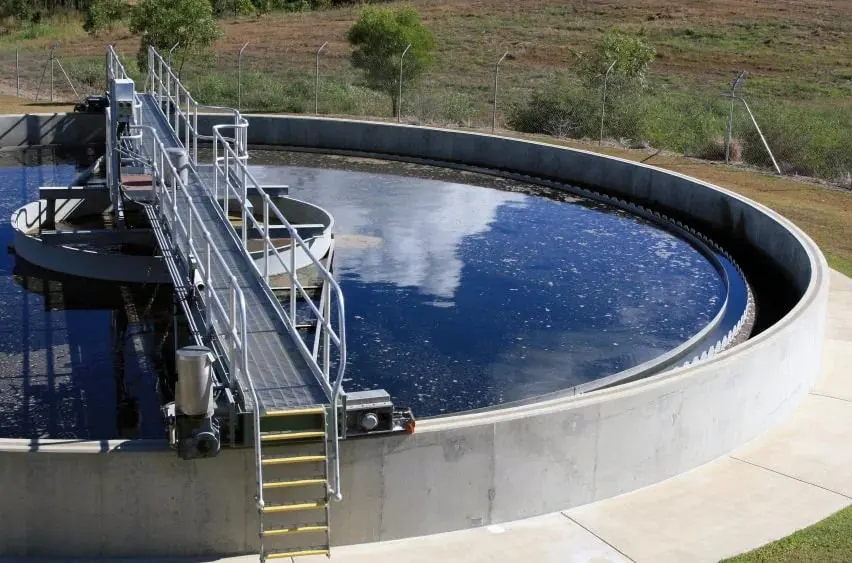
Facility Background
Facility type: Municipal wastewater treatment plant Design capacity: 45,000 m³/day Operating load: 38,000–42,000 m³/day (dry weather), up to 58,000 m³/day (wet weather events) Treatment train: Primary clarification → Activated sludge → Secondary clarification → UV disinfection → Discharge Sludge handling: Gravity thickening → Belt press dewatering → Landfill disposal PAM applications: Secondary clarifier (cationic, sludge settling aid) and belt press conditioning (cationic) Discharge permit limits: TSS ≤ 30 mg/L, BOD ≤ 25 mg/L (monthly average)
The Problem
Recurring Compliance Violations
Over the 18 months preceding the optimization, the plant had recorded 11 discharge limit exceedances for TSS — nine during wet weather events and two during dry weather periods. Each violation triggered regulatory notification requirements and contributed to an escalating relationship with the local environmental authority.
The plant operator had responded to each violation by increasing polymer dosage. Over 18 months, the operating dose at the secondary clarifier had increased from 1.8 mg/L to 3.4 mg/L — an 89% increase with no measurable improvement in compliance reliability.
Rising Chemical Costs
Polymer spend had increased from $118,000 to $187,000 per year over the same period — driven by dosage increases that had not resolved the underlying performance problem. The polymer cost per cubic meter of treated water had increased by 51%.
Poor Sludge Dewatering Performance
Belt press cake moisture had deteriorated from 76% to 82% over the same period, increasing wet sludge disposal volume by approximately 27% and adding $43,000 to annual landfill disposal costs.
Contact our technical team today to conduct a systematic PAM program assessment for your municipal treatment facility. → Contact our technical team today
Investigation and Diagnosis
A systematic investigation identified three separate root causes — each contributing to the observed problems independently.
Finding 1: Wrong Grade at the Secondary Clarifier
The cationic PAM being used at the secondary clarifier had a charge density of 20% — appropriate for some industrial applications but insufficient for the negatively charged biological solids in municipal activated sludge. A jar test on secondary clarifier influent with three alternative grades demonstrated that a 40% charge density cationic grade produced significantly larger, faster-settling flocs at half the dosage of the 20% grade currently in use.
The original grade selection had been made at plant commissioning six years earlier, based on a supplier recommendation that had not been revisited as the plant’s sludge characteristics evolved with changing influent population and industrial contribution.
Finding 2: Overdosing Masking Restabilization
The progressive dosage increase made in response to compliance violations had pushed the secondary clarifier dosage significantly above the optimal range for the original 20% grade. At 3.4 mg/L, restabilization was occurring — fine particles were being re-dispersed rather than flocculated. The treatment was actually worse at 3.4 mg/L than it had been at the original 1.8 mg/L, though the difference was being partially masked by other variables.
This finding explained why increasing dosage had not improved performance — and why compliance violations had continued despite higher polymer spend.
Finding 3: Belt Press Grade Mismatch
The belt press polymer was the same 20% charge density cationic grade used at the secondary clarifier — a supply simplification that made procurement easier but was suboptimal for dewatering. Belt press applications with biological sludge typically require 40–70% charge density for effective cake drainage. The low charge density grade was producing poorly structured flocs with high water retention, explaining the progressive cake moisture deterioration.
Solution Implementation
Phase 1: Grade Switch at Secondary Clarifier (Weeks 1–4)
A trial quantity of a 40% charge density cationic PAM was procured and jar tested against the current influent. The jar test confirmed the grade produced equivalent settling quality at 1.6 mg/L — compared to the current 3.4 mg/L of the 20% grade.
Full-scale implementation was phased over two weeks:
- Week 1: Reduced 20% grade dosage to 2.0 mg/L while monitoring turbidity
- Week 2: Transitioned to 40% grade at 1.8 mg/L, confirmed equivalent performance
- Week 3–4: Optimized 40% grade dosage to 1.5 mg/L through step reductions, confirming stable effluent turbidity at each step
Phase 2: Belt Press Grade Switch (Weeks 3–6)
A separate 55% charge density cationic grade was trialed for belt press conditioning using a dewatering jar test. The trial grade achieved cake moisture of 74% compared to 82% with the current grade at equivalent dosage.
Full-scale implementation followed the same phased approach. Within three weeks, belt press cake moisture had stabilized at 73–75%.
Phase 3: Wet Weather Protocol (Weeks 6–10)
With the grade issues resolved, a wet weather protocol was developed based on the optimization findings:
- Trigger: influent flow exceeding 48,000 m³/day (wet weather onset)
- Initial response: increase secondary clarifier dose from 1.5 mg/L to 2.2 mg/L
- Escalation: if turbidity exceeds 25 NTU after 30 minutes at 2.2 mg/L, increase to 2.8 mg/L
- Hydraulic limit: if flow exceeds 55,000 m³/day, activate secondary clarifier parallel unit
The protocol was documented, briefed to all shift operators, and posted at the secondary clarifier dosing control panel.
Results After 90 Days
| Metric | Before Optimization | After Optimization | Improvement |
|---|---|---|---|
| Secondary clarifier dosage | 3.4 mg/L | 1.5 mg/L (dry weather) | −56% |
| Annual polymer cost | $187,000 | $134,000 | −$53,000 (−28%) |
| Compliance violations (annualized) | 7.3/year | 0 in 90 days | Eliminated |
| Belt press cake moisture | 82% | 74% | −8 percentage points |
| Annual sludge disposal cost | $156,000 | $112,000 | −$44,000 (−28%) |
| Total annual saving | $97,000 |
The combined polymer and disposal cost saving of $97,000 per year was achieved with no capital expenditure — only a grade change, dosage optimization, and operator protocol improvement.
Key Lessons
Wrong grade selection persists longer than it should. The original grade choice had been suboptimal for six years without being identified as the root cause of performance problems. Annual grade review — with jar testing on current influent — would have identified the mismatch much earlier.
Dosage increases in response to compliance failures frequently make things worse. The overdosing restabilization that had developed over 18 months of reactive dosage increases was directly contributing to the compliance failures it was intended to solve. Systematic jar testing before each dosage increase would have identified the restabilization threshold and prevented the dosage escalation.
Separate dewatering and clarification applications benefit from separate grade selection. Using a single grade for operational simplicity is rarely optimal for performance. The cost saving from using the correct grade at each application — $97,000 annually — far exceeds any procurement simplification benefit from a single-grade approach.
For guidance on grade selection principles, see: Cationic vs Anionic PAM: Key Differences Explained
Frequently Asked Questions
How long does a PAM program optimization typically take for a municipal plant?
The investigation and diagnosis phase — including jar testing and data analysis — typically takes 2–4 weeks for a standard municipal application. Implementation is phased over 4–8 weeks to allow performance confirmation at each step before proceeding. Total time from initial assessment to stable optimized operation is typically 8–12 weeks.
Will switching PAM grades require changes to our dosing equipment?
In most cases, no. Grade changes between cationic grades of different charge density use the same dosing equipment, preparation procedure, and infrastructure. The only adjustment is the product and the dosage protocol. Equipment changes are required if switching between dry powder and emulsion form, or if preparation tank capacity is insufficient for the new grade’s dissolution requirements.
How do we justify the cost of an optimization assessment to our management?
The most effective justification is a preliminary calculation of the saving potential. For a facility spending $150,000 per year on polymer with 20% overdosing and suboptimal grade, the expected saving is $30,000–$50,000 annually — typically a 5–10x return on the cost of a professional assessment. The case study results above provide a reference point for comparable facilities.
Conclusion
This case study demonstrates that significant performance and cost improvements are achievable in municipal wastewater treatment through systematic PAM program optimization — without capital investment in new infrastructure. The three problems identified — grade mismatch, overdosing restabilization, and separate application grade mismatch — are common in facilities that have not conducted a systematic polymer program review in several years.
The $97,000 annual saving, elimination of compliance violations, and 8-point improvement in cake moisture were achieved entirely through product selection, dosage optimization, and operator protocol improvement.
If your municipal treatment facility is experiencing compliance challenges, rising polymer costs, or deteriorating sludge dewatering performance, contact us today for a free initial assessment. → Get in touch today