 Skip to content
Polyacrylamide is available in two primary physical forms: dry powder and liquid emulsion. Both contain the same active polymer. Both flocculate suspended solids through the same bridging mechanism. But in terms of handling, dissolution, dosing equipment, storage, and total cost, the two forms are meaningfully different — and choosing the wrong one for your operation adds unnecessary cost and complexity.
This guide compares powder and emulsion PAM across the factors that matter most to plant operators and procurement teams, and gives a clear framework for making the right choice.
What Each Form Is
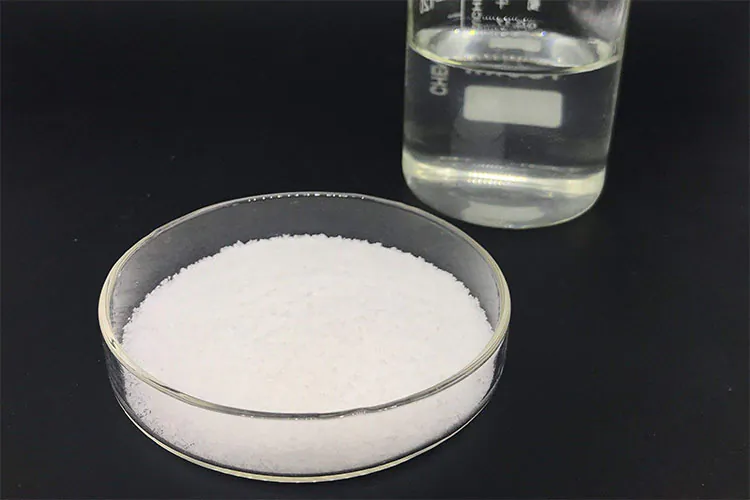
Dry powder PAM is produced by polymerizing acrylamide monomer and drying the resulting gel into granular or fine powder form. It typically contains 88–92% active polymer by weight, with moisture content below 10%. It is supplied in 25 kg bags or bulk containers and requires dissolution in water before use.
Emulsion PAM (also called liquid polymer or inverse emulsion) is produced by suspending fine polymer droplets in a hydrocarbon oil carrier, stabilized by surfactants. It typically contains 25–50% active polymer by weight and is supplied in drums, IBCs, or bulk tankers. It disperses into water rapidly when an activator is applied, requiring minimal mixing time before dosing.
Both forms are available in anionic, cationic, and nonionic grades across a wide range of molecular weights and charge densities.
Head-to-Head Comparison
| Dry Powder PAM | Emulsion PAM | |
|---|---|---|
| Active polymer content | 88–92% | 25–50% |
| Dissolution time | 30–60 minutes | 2–5 minutes |
| Dosing equipment | Dry feeder + mix tank required | Inline activator or simple mix tank |
| Storage space | Lower (high active content) | Higher (lower active content) |
| Shelf life | 18–24 months | 6–12 months |
| Cold weather handling | No issues | Can thicken or gel below 5°C |
| Cost per kg active polymer | Lower | Higher |
| Operator skill required | Moderate | Lower |
| Risk of fish eyes | Yes, if dissolved incorrectly | Minimal |
| Bulk supply flexibility | High | Moderate |
The Case for Dry Powder PAM
Lower Cost Per Unit of Active Polymer
The most significant advantage of powder PAM is economics. Because powder contains 88–92% active polymer compared to 25–50% in emulsion, the cost per kilogram of active polymer is substantially lower — typically 30–60% less depending on grade and market conditions.
For large treatment facilities consuming significant polymer quantities, this difference compounds quickly. A plant using 500 kg of active polymer per day pays dramatically less over a year using powder than emulsion, even after accounting for additional preparation equipment and labor.
Longer Shelf Life and Simpler Storage
Powder PAM stored in cool, dry conditions away from direct sunlight maintains full activity for 18–24 months. Emulsion PAM has a shelf life of 6–12 months and is sensitive to temperature extremes — freezing causes irreversible phase separation, while prolonged high temperatures accelerate degradation.
For facilities in remote locations, those with infrequent delivery schedules, or operations in regions with significant temperature variation, powder’s storage stability is a practical advantage.
Higher Active Polymer Content Reduces Logistics
Transporting and storing 1 tonne of powder PAM delivers 880–920 kg of active polymer. The same logistics effort for emulsion delivers only 250–500 kg of active polymer. For facilities that import polymer or manage complex supply chains, the higher active content of powder reduces freight cost per unit of treatment capacity.
Request product specifications and pricing for both powder and emulsion grades. → Get in touch today
The Case for Emulsion PAM
Fast Activation — Minimal Equipment
Emulsion PAM disperses into water within seconds when an activator solution is applied, reaching doseable concentration within 2–5 minutes. This eliminates the need for a large dissolution tank, slow agitator, and 30–60 minute preparation cycle required for powder.
For facilities with limited space, minimal operator availability, or operations requiring rapid startup, emulsion’s fast activation is a genuine operational advantage.
Lower Risk of Preparation Problems
Fish eyes, incomplete dissolution, and concentration inconsistency — the most common powder preparation problems — are essentially eliminated with emulsion. The polymer is already in a dispersed state within the emulsion; activation simply transfers it into the water phase.
This makes emulsion PAM particularly well suited to operations where consistent preparation quality is difficult to maintain — remote sites, facilities with high operator turnover, or systems that run unattended for extended periods.
Better Performance in Some Dewatering Applications
In certain sludge dewatering applications — particularly high-speed centrifuges — emulsion PAM can outperform powder grades of nominally equivalent molecular weight. The rapid dispersion of emulsion polymer allows faster polymer-sludge contact before the mechanical dewatering force is applied, improving capture efficiency and cake dryness.
For a complete guide on optimizing sludge dewatering performance, see: Optimizing Sludge Dewatering with Cationic PAM
Total Cost of Ownership: The Complete Picture
Comparing powder and emulsion on purchase price per kilogram alone gives a misleading picture. The true cost comparison must include:
Equipment investment: Powder requires a dry feeder, dissolution tank, agitator, and transfer pump — capital investment that emulsion systems do not need (or need in simpler form). For a new installation, this equipment cost should be amortized over the system lifetime and included in the per-unit cost calculation.
Labor: Powder preparation requires more operator attention — monitoring dissolution, cleaning preparation tanks, managing dry material handling. Emulsion systems require less daily labor. In high-labor-cost environments, this difference is financially significant.
Waste and losses: Powder PAM that absorbs moisture during storage or handling may dissolve poorly and perform below specification. Emulsion that freezes or exceeds its shelf life must be disposed of. Both forms have waste risks that should be accounted for in procurement planning.
Freight: Powder’s higher active content means lower freight cost per unit of active polymer, particularly for international shipments. Emulsion’s liquid form may face additional handling and classification requirements for certain shipping routes.
Which Should You Choose?
The decision comes down to four primary factors:
Choose dry powder if:
- You have adequate space and equipment for a dissolution system
- Polymer consumption is high enough that cost per unit of active polymer is a primary concern
- Your supply chain supports reliable delivery of dry goods
- You operate in a climate without extreme cold weather
Choose emulsion if:
- Space or equipment constraints make a dissolution system impractical
- Operator availability or skill level makes consistent powder preparation difficult
- You need rapid startup capability or operate in remote locations
- You are dosing into high-speed centrifuges where rapid polymer dispersion improves performance
Many large treatment facilities use both: powder for high-volume thickener and clarifier applications where cost is the priority, and emulsion for centrifuge dewatering where fast activation and consistent dosing justify the premium.
For guidance on selecting the right grade within your chosen form, see: Choosing the Right PAM Grade for Your Industry
Frequently Asked Questions
Is the performance of powder and emulsion PAM equivalent at the same active polymer dose?
For most clarifier and settling applications, yes — when powder is correctly dissolved and dosed at equivalent active polymer concentration, performance is comparable. In high-speed centrifuge dewatering, emulsion can outperform powder due to faster dispersion kinetics. Always compare on an active polymer basis, not total product weight.
Can I switch from powder to emulsion using my existing dosing equipment?
Partial reuse is possible — storage tanks, transfer lines, and injection points can often be adapted. However, the dry feeder and dissolution agitator used for powder are not needed for emulsion, and an inline activator or simpler mix tank is typically required. Consult your equipment supplier before switching forms.
What happens if emulsion PAM freezes during storage or transport?
Freezing causes irreversible phase separation in most emulsion PAM products — the polymer separates from the oil carrier and cannot be re-homogenized effectively. Frozen emulsion should not be used, as dosing behavior and performance will be unpredictable. Store emulsion above 5°C at all times and ensure transport conditions are temperature-controlled in cold climates.
Conclusion
Powder and emulsion PAM each have a clear place in industrial wastewater treatment. Powder wins on cost per unit of active polymer, shelf life, and supply chain flexibility. Emulsion wins on ease of use, preparation speed, and suitability for space-constrained or remotely operated facilities.
The right choice depends on your facility’s scale, equipment, operational context, and cost priorities — not on a general preference for one form over the other. For many facilities, using both forms at different treatment stages is the most cost-effective approach overall.
Not sure which form is right for your operation? Contact our technical team today for a free recommendation based on your facility size, dosing requirements, and budget. → Contact our technical team today


