
Polymer preparation is where treatment performance is won or lost before a single drop of PAM reaches the wastewater. A correctly prepared solution delivers fully extended polymer chains ready to bridge particles on contact. A poorly prepared solution — regardless of grade or dosage — delivers partially hydrated chains with a fraction of their rated flocculation capacity.
The gap between correct and incorrect preparation is not subtle. Facilities that switch from informal preparation habits to a documented procedure consistently report improved settling performance, lower polymer consumption, and fewer operational problems — without changing their PAM grade or dosage.
This guide provides a complete, step-by-step preparation procedure for dry powder PAM, covering equipment setup, concentration, mixing sequence, timing, and the most common mistakes to avoid.
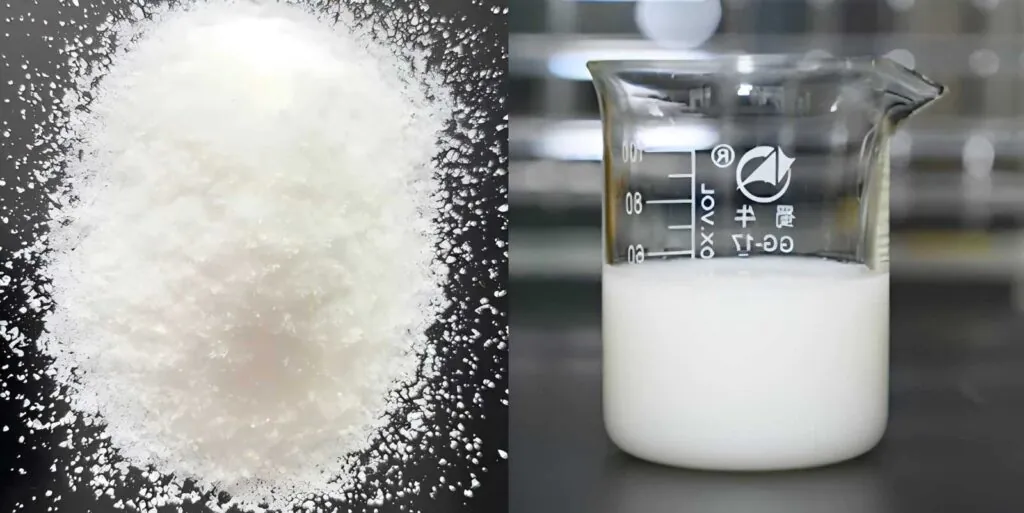
Why Preparation Quality Affects Treatment Performance
Polyacrylamide is a long-chain polymer. In dry powder form, the chains are compressed and folded. Dissolution in water is not simply a matter of the powder disappearing — it is a process of progressive hydration in which water molecules penetrate the polymer matrix, causing chains to unfold and extend outward into the solution.
Full extension of polymer chains is what makes bridging possible. A chain that has not fully extended cannot reach across the distance between particles to form the links that create flocs. The longer and more fully extended the chain, the more particles it can bridge simultaneously and the larger and stronger the resulting floc.
This means that two solutions prepared from identical product at identical concentration can perform very differently — if one was prepared correctly and the other was not.
Equipment Requirements
Before preparing polymer solution, confirm the following equipment is in place and functioning:
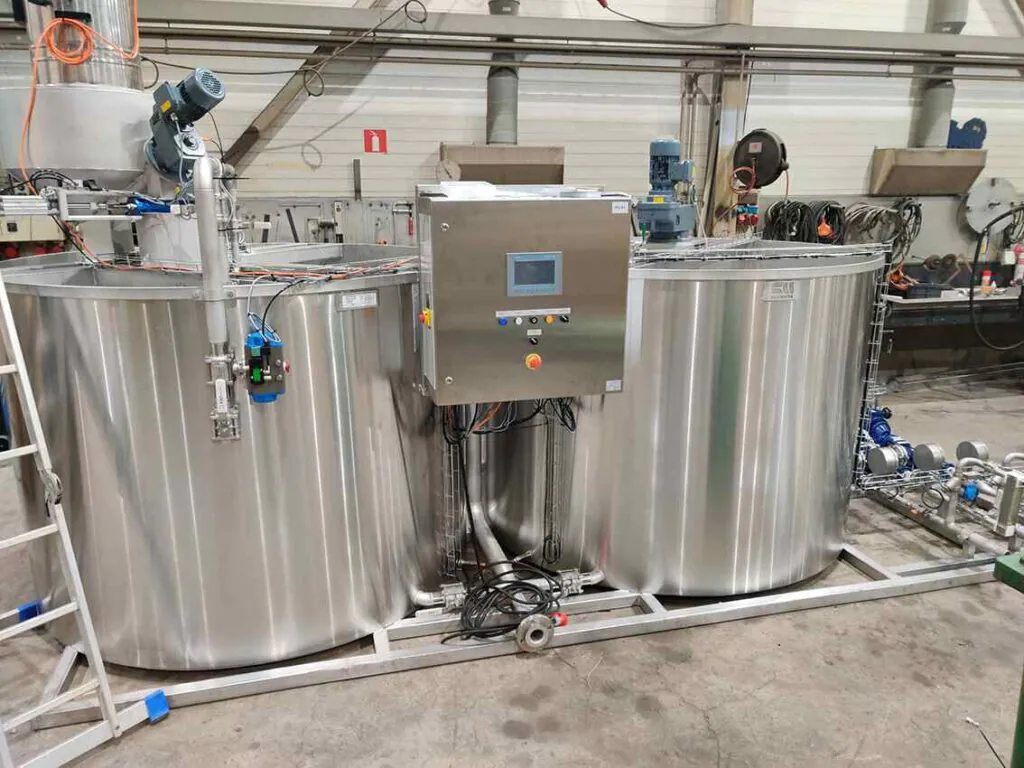
Mixing tank: Dedicated dissolution tank sized for your required batch volume. Two-tank or three-tank systems — where Tank 1 handles initial dissolution, Tank 2 completes aging, and Tank 3 holds mature solution ready for dosing — provide the most consistent supply. Single-tank systems are acceptable for lower-volume applications with adequate batch turnaround time.
Agitator: Variable-speed agitator capable of both high-speed dispersion (200–400 RPM) for initial powder addition and moderate-speed hydration (60–120 RPM) for the main mixing period. Fixed-speed agitators running at a single speed compromise either dispersion quality or polymer chain integrity — both matter.
Water supply: Clean water supply at controlled temperature. Process water is preferred over chlorinated municipal water — residual chlorine can degrade polymer chains over time. Confirm water temperature is within 20°C–35°C before starting preparation.
Dosing pump: Peristaltic or progressive cavity pump for transferring mature solution to the dosing point. Avoid centrifugal pumps, which apply shear that can damage polymer chains in the solution after preparation.
Request product-specific preparation guidelines and technical data sheets for your current PAM grade. → Get in touch today
Step-by-Step Preparation Procedure
Step 1: Fill the tank and start the agitator
Fill the mixing tank to approximately 80% of target volume with clean water at 20°C–35°C. Start the agitator at high speed (200–400 RPM) before adding any polymer. The agitator must be running before powder contacts the water — this is not optional. Powder added to still water clumps immediately and cannot be dispersed after the fact.
Step 2: Calculate the correct powder quantity
For a 0.1% solution: add 1 kg of powder per 1,000 litres of water. For a 0.2% solution: add 2 kg of powder per 1,000 litres of water.
Most wastewater treatment applications use 0.1%–0.2% solution concentration. Do not exceed 0.3% — higher concentrations increase viscosity to the point where complete dissolution becomes impractical and dosing accuracy deteriorates.
Step 3: Add powder slowly and steadily
Feed powder into the vortex created by the agitator at a slow, steady rate over 3–5 minutes. The target is continuous, gradual introduction — not a single addition. Use a screw feeder, venturi eductor, or manual slow-pour from a container. Never tip an entire bag into the tank at once.
The reason is physical: when powder contacts water, the outer surface of each particle hydrates instantly. If too much powder is added at once, particles clump together before individual surfaces can be wetted, trapping dry material inside gel-coated aggregates. These become fish eyes that cannot be dissolved by continued mixing.
Step 4: Reduce mixing speed and allow hydration
Once all powder has been added and dispersed, reduce agitator speed to moderate (60–120 RPM). Maintain this speed for the full hydration period. Do not reduce speed further or stop the agitator during hydration — gentle continuous movement keeps polymer chains extending uniformly through the solution.
Step 5: Allow full hydration time
Minimum hydration time: 30 minutes at 20°C–35°C.
At water temperatures below 20°C, extend hydration time:
- 15–20°C: allow 45–60 minutes
- 10–15°C: allow 60–90 minutes
- Below 10°C: dissolution may be incomplete regardless of mixing time — use warmer water
Do not dose the solution before the minimum hydration time has elapsed. Solution dosed prematurely contains partially extended chains with significantly reduced bridging capacity.
Step 6: Transfer to dosing or aging tank
After the hydration period, the solution is ready for transfer to the dosing tank or directly to the dosing point. Use a peristaltic or progressive cavity pump. Keep transfer lines short and minimize bends to reduce shear exposure.
Step 7: Use within 24 hours
Prepared PAM solution should be used within 24 hours of preparation. Beyond this period, bacterial activity and continued hydrolysis progressively reduce polymer activity. Establish a preparation schedule aligned with your operational cycle to ensure solution is always within the 24-hour window at the dosing point.
Concentration Reference Table
| Target Concentration | Powder per 1,000 L Water | Typical Application |
|---|---|---|
| 0.05% | 0.5 kg | High-MW grades, dilute suspensions |
| 0.10% | 1.0 kg | Standard clarifier and thickener use |
| 0.15% | 1.5 kg | General purpose, most applications |
| 0.20% | 2.0 kg | Higher-dose applications, sludge conditioning |
| 0.25% | 2.5 kg | Maximum recommended for most grades |
For high molecular weight grades (above 18 million Daltons), stay at or below 0.15% to ensure complete chain extension during hydration.
For a detailed guide on how dissolution conditions affect polymer performance, see: Factors Affecting Polymer Dissolution Speed
Most Common Preparation Mistakes
Adding powder before starting the agitator Powder contacts still water, immediately clumps at the surface, and cannot be dispersed. The resulting fish eyes flow through the dosing system undissolved.
Adding powder too quickly Even with the agitator running, adding powder faster than it can be wetted and dispersed creates clumps. Three to five minutes of slow addition prevents this entirely.
Using water that is too cold Cold water dramatically slows hydration. Solution prepared at 10°C may appear dissolved after 30 minutes but contains chains that have not fully extended — performing well below specification.
Dosing too soon after preparation Partially hydrated solution dosed before the minimum 30-minute hydration time underperforms predictably. Building the hydration wait into the preparation schedule — rather than treating it as optional — is the single change that most consistently improves treatment performance.
Preparing solution at too high a concentration Concentration above 0.3% increases viscosity to the point where water cannot penetrate to undissolved particles effectively. Higher concentration does not mean more concentrated performance — it means less complete dissolution.
Frequently Asked Questions
Can I use hot water to speed up dissolution?
Warm water (up to 40°C) speeds dissolution effectively. Water above 45°C risks thermal degradation of polymer chains, permanently reducing molecular weight and flocculation performance. Stay within 20°C–40°C for optimal results.
How do I know when the solution is fully dissolved?
Fully dissolved PAM solution is clear to slightly hazy, with a uniform viscosity throughout. Visible lumps, stringy gel fragments, or a surface film of undissolved material indicate incomplete dissolution. If in doubt, extend mixing time by 15 minutes and check again.
Should I adjust preparation procedure for different PAM grades?
Yes. Higher molecular weight grades require longer hydration times and lower preparation concentrations than lower MW grades. Cationic grades generally dissolve faster than high-MW anionic grades. Always refer to the product-specific technical data sheet for grade-specific preparation recommendations.
Conclusion
Polymer preparation is a procedural discipline, not a technical complexity. The steps are straightforward — correct water temperature, slow powder addition, adequate mixing time, appropriate concentration, and use within 24 hours. Applied consistently across every batch and every shift, they ensure that the PAM program performs to its rated capability day after day.
Facilities that document and enforce a standard preparation procedure eliminate one of the most common sources of variable treatment performance — and often reduce polymer consumption in the process, as correctly prepared solution achieves target flocculation at lower dose than poorly prepared solution of the same product.
If your current preparation procedure is not delivering consistent results, contact our technical team today for a free review and recommendations. → Contact our technical team today