
Sand and gravel processing plants generate some of the most challenging wastewater in the construction materials industry. Every washing cycle releases high concentrations of fine silica particles, clay, and silt into process water—particles so small they can remain suspended for days without chemical treatment.
The consequences are immediate and costly: settling ponds overflow, recycled water carries fine particles back into the washing circuit, product quality drops, and environmental discharge limits are breached.
Polyacrylamide (PAM) is the most effective and widely used solution for sand and gravel wastewater treatment. Applied correctly, it transforms slow-settling, turbid process water into clear, reusable water within minutes—reducing fresh water consumption, improving product quality, and cutting settlement pond maintenance costs significantly.
This guide covers how PAM works in sand and gravel applications, which grades deliver the best results, and how to optimize your dosing program for maximum performance and lowest cost.
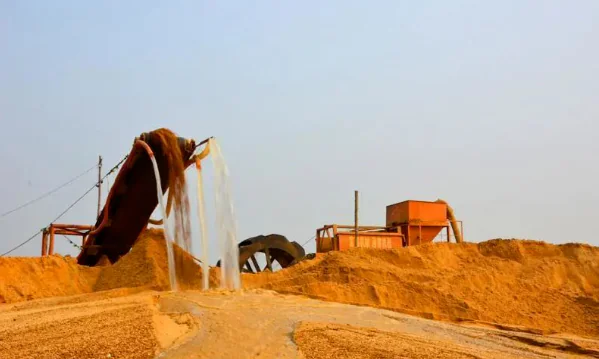
The Wastewater Challenge in Sand and Gravel Processing
Sand and gravel washing generates process water with characteristics that make natural settlement extremely slow:
| Parameter | Typical Range | Treatment Implication |
|---|---|---|
| Total suspended solids | 5,000–40,000 mg/L | High polymer demand |
| Fine particles (<75 micron) | 60–85% of total solids | Very slow natural settlement |
| Clay content | Variable, up to 30% | Strong colloidal stability |
| pH | 7.0–8.5 | Suitable for anionic PAM |
| Turbidity (untreated) | 500–5,000 NTU | Unsuitable for direct reuse |
Fine silica and clay particles carry strong negative surface charges that create electrostatic repulsion between particles. This keeps them uniformly dispersed in water and makes natural gravity settlement impractically slow for continuous plant operation.
Without effective flocculation, plants face a difficult choice: build larger settling ponds to compensate for slow settlement, or continuously draw fresh water because recycled water is too turbid to reuse. Both options significantly increase operating costs.
How PAM Solves Sand and Gravel Wastewater Problems
Polyacrylamide works by bridging fine suspended particles together into large, dense flocs that settle rapidly under gravity.
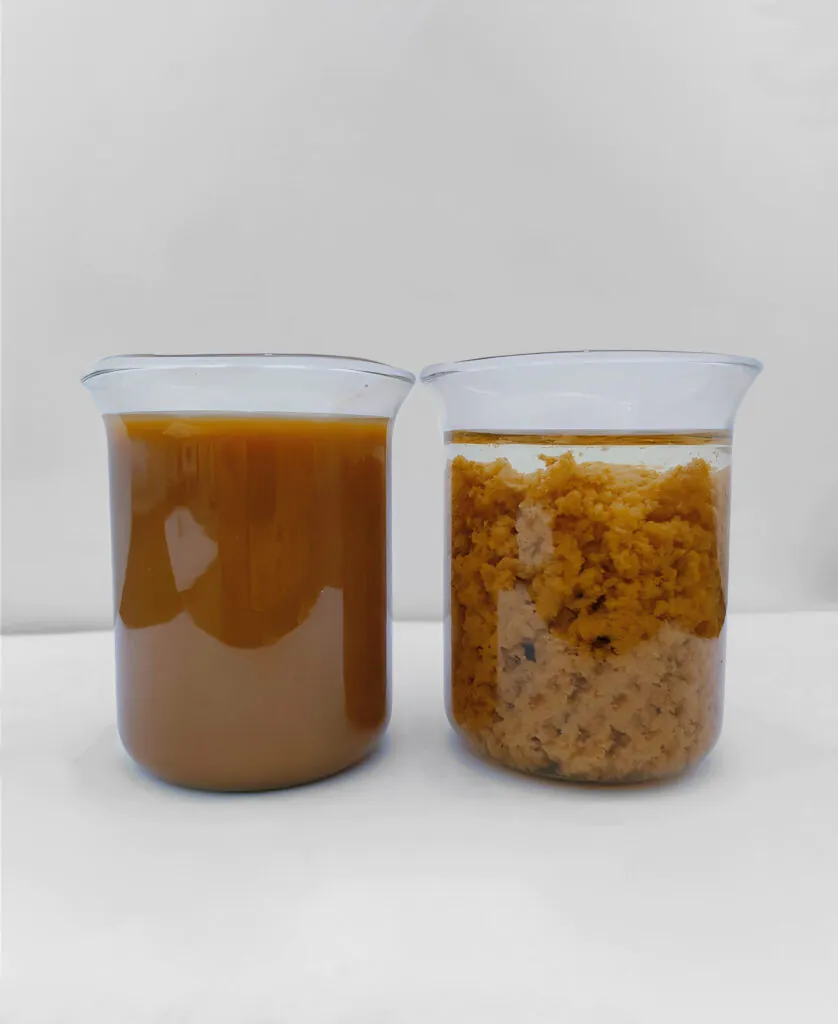
When high molecular weight anionic PAM is introduced into sand washing process water, the polymer chains adsorb onto multiple particle surfaces simultaneously. This physical bridging overcomes the electrostatic repulsion between particles, causing them to aggregate into flocs large enough to settle within minutes rather than days.
Typical performance results with optimized PAM dosing:
- Settled water turbidity reduced from 2,000+ NTU to below 50 NTU
- Settlement time reduced from hours to 10–20 minutes
- Recycled water recovery rate of 80–90%
- Settled sludge solids content of 40–60%
- Filter press cake moisture below 28%
These results translate directly into lower fresh water costs, smaller required pond capacity, and more stable plant operation.
Want to know which PAM grade is right for your sand washing operation? Contact our technical team today for a free recommendation based on your process water characteristics. → [Get Free Recommendation]
Choosing the Right PAM Grade for Sand and Gravel
Grade selection is the single most important factor in achieving good flocculation performance in sand and gravel applications.
High Molecular Weight Anionic PAM — Primary Choice
For most sand and gravel settling and clarification applications, high molecular weight anionic PAM delivers the best combination of flocculation speed and settled water clarity.
Recommended specifications:
- Molecular weight: 15–20 million Daltons
- Charge density: 20–35% anionic
- Form: Dry powder or emulsion
Why this grade works: The long polymer chains of high-MW anionic PAM create strong bridging between fine silica and clay particles. The anionic charge density is matched to the natural negative charge on sand and clay particle surfaces, optimizing adsorption efficiency.
Cationic PAM — For Dewatering Stages
When sand washing plants use filter presses or centrifuges to dewater settled sludge, cationic PAM typically outperforms anionic grades at the dewatering stage.
Recommended for:
- Filter press feed conditioning
- Centrifuge dewatering of fine silt sludge
- Belt press applications
For a complete guide to selecting the right polymer grade for your specific application, see: Choosing the Right PAM Grade for Your Industry
PAM Dosage Guidelines for Sand and Gravel Processing
Optimal dosage depends on suspended solids concentration, particle size distribution, and clay content. The following table provides practical starting points:
| Application | PAM Type | Dosage Range |
|---|---|---|
| Primary settling pond / thickener | Anionic, high MW | 10–30 g/tonne dry solids |
| Clarifier (recycled water polishing) | Anionic, medium-high MW | 5–15 g/tonne dry solids |
| Filter press conditioning | Cationic, medium MW | 20–45 g/tonne dry solids |
| Emergency turbidity reduction | Anionic, high MW | Up to 50 g/tonne dry solids |
These are reference ranges. Jar testing on representative process water samples from your plant is the most reliable method to determine your site-specific optimal dosage.
Overdosing is a common and costly mistake in sand and gravel applications. Excess polymer can restabilize fine particles, reducing rather than improving settlement performance while increasing chemical costs. For a detailed jar testing procedure, see: Calculating PAM Dosage Accurately
Economic Benefits of PAM in Sand and Gravel Plants
The financial case for PAM optimization in sand and gravel processing is straightforward:
Water recycling savings: A plant recovering 85% of process water instead of 50% can reduce fresh water intake by hundreds of cubic meters per day. At typical industrial water costs, this alone can justify the entire polymer program cost.
Pond maintenance reduction: Faster, more complete settlement reduces the rate of pond siltation. Plants with optimized PAM programs typically extend pond desludging intervals by 30–50%, significantly reducing excavation and disposal costs.
Product quality improvement: Cleaner recycled water means fewer fine particles re-entering the washing circuit, resulting in cleaner final product with lower clay contamination—often allowing plants to meet stricter product specifications and command better prices.
Regulatory compliance: Discharge limits for suspended solids are tightening in most markets. PAM-treated settling pond overflow typically achieves SS below 100 mg/L, well within standard discharge requirements, protecting plants from compliance risk and potential fines.
Request a cost-benefit analysis for your plant today. Our team will calculate your potential savings based on current water consumption and disposal costs. → [Request Cost Analysis]
Preparation and Dosing Best Practices
Correct polymer preparation is essential to achieving the performance results described above. Poorly dissolved PAM—regardless of product quality—will underperform significantly.
Solution preparation guidelines:
- Target concentration: 0.1%–0.2%
- Water temperature: 20°C–35°C
- Mixing time: 30–45 minutes minimum before dosing
- Add powder slowly with agitator running at high speed
- Reduce to moderate mixing speed after powder addition
- Use prepared solution within 24 hours
Dosing point recommendations: For settling pond applications, dose PAM into the inlet launder or feed pipe where natural turbulence ensures rapid mixing. Avoid dosing directly into still pond water—insufficient mixing prevents proper floc formation.
For thickener applications, dose at the feed well where mixing energy is highest before the slurry enters the settling zone.
Troubleshooting Common Problems
Problem: Settling pond overflow remains turbid after PAM addition
Likely causes:
- PAM molecular weight too low for particle size distribution
- Dosage insufficient for current solids loading
- Poor mixing at dosing point
- Polymer solution incompletely dissolved
Solutions: Upgrade to higher MW grade, increase dosage in controlled steps, relocate dosing point to higher-turbulence zone, review preparation procedure.
Problem: Fine clay particles not flocculating
Likely causes:
- Clay content requiring higher charge density
- pH outside optimal range for current PAM grade
- Organic contamination interfering with polymer adsorption
Solutions: Trial higher charge density anionic grade, check and adjust pH if below 6.5, consider coagulant pre-treatment before PAM addition.
Problem: Flocs forming but breaking apart before settling
Likely causes:
- Excessive flow velocity in settling zone
- High-shear pumping after PAM addition breaking flocs
- PAM molecular weight too low for robust floc formation
Solutions: Reduce inlet velocity, minimize pumping after dosing point, switch to higher MW grade.
Problem: High polymer consumption with inconsistent results
Likely causes:
- Variable feed solids not matched by dosage adjustment
- Polymer solution degraded beyond 24-hour limit
- Overdosing causing restabilization
Solutions: Install online turbidity monitoring, establish fixed preparation schedule, reduce dosage in steps to find true optimum.
Frequently Asked Questions
What PAM grade is best for sand washing wastewater?
High molecular weight anionic PAM (15–20 million Daltons, 20–35% charge density) is the standard choice for sand and gravel settling applications. The specific grade should be confirmed by jar testing on your process water.
How quickly does PAM work in sand washing applications?
With the correct grade and dosage, visible floc formation begins within 30–60 seconds of polymer addition. Complete settlement of treated water typically occurs within 10–20 minutes, compared to several hours without treatment.
Can I use the same PAM for both settling and filter press dewatering?
Generally no. Settling applications perform best with high-MW anionic PAM, while filter press dewatering typically requires cationic PAM. Using the correct grade for each stage improves overall performance and reduces total polymer consumption.
How much can PAM reduce my fresh water consumption?
Well-optimized PAM programs typically achieve 80–90% water recycling rates in sand and gravel plants. For a plant using 500 m³/day of fresh water, this can reduce intake to 50–100 m³/day—a significant cost saving depending on local water costs.
Do you supply PAM suitable for sand and gravel processing?
Yes. We supply high molecular weight anionic and cationic PAM grades proven in sand and gravel applications across multiple markets. All products come with full technical data sheets and application support. Contact us to request samples and pricing.
Why Choose High-Quality PAM for Sand and Gravel Processing
Sand and gravel plants operate continuously, and polymer performance directly affects daily production efficiency. Batch-to-batch inconsistency in low-quality PAM products forces constant manual adjustment and leads to unpredictable treatment results.
Our industrial-grade polyacrylamide delivers:
- Consistent molecular weight across every production batch
- Fast dissolution — reducing preparation time and improving dosing accuracy
- Stable charge density — predictable performance regardless of batch
- Full technical support — our application engineers work with your team to optimize dosage and preparation procedures on-site
We supply sand and gravel processing plants across Asia, the Middle East, Africa, and Southeast Asia, with reliable delivery schedules and competitive pricing for both small and large volume requirements.
Contact us today to request product samples, technical data sheets, and a price quote tailored to your plant’s requirements. → [Contact Us Now]
Conclusion
Polyacrylamide is the most cost-effective solution available for sand and gravel process water treatment. By accelerating settlement, improving recycled water clarity, and reducing sludge volume, the right PAM program directly reduces operating costs while helping plants meet environmental discharge requirements.
The key to maximizing PAM performance in sand and gravel applications is grade selection matched to your specific process water, dosage optimized through jar testing, and consistent preparation procedures followed at every shift.
If your settling ponds are overflowing, your recycled water is too turbid for reuse, or your filter press is producing wet cake, a properly optimized polymer program can resolve all three problems simultaneously.
Speak to our technical team today. Tell us your process water characteristics and current challenges, and we will provide a specific PAM recommendation with full technical and commercial support.