 Skip to content
Every polyacrylamide product comes with two essential documents: a Safety Data Sheet (SDS, formerly called MSDS) and a Technical Data Sheet (TDS). Together, these documents contain everything a procurement manager, plant operator, or safety officer needs to know about the product — but only if you know how to read them.
In practice, most facilities file these documents without reviewing them carefully. The SDS goes to the safety officer. The TDS goes to the treatment team. Neither is read critically against the questions that matter most: Is this product safe to handle and store? Does it meet our regulatory requirements? Will it perform as claimed in our application?
This guide walks through both documents section by section, explains what each part means in practical terms, and highlights the specific information that should be verified before purchase and before use.
Part 1: The Safety Data Sheet (SDS)
The SDS is a standardized document required by chemical safety regulations in most countries. Under the GHS (Globally Harmonized System) format — now the international standard — an SDS has 16 mandatory sections. Not all sections are equally relevant for PAM, but several contain information critical for procurement and operational decisions.
Section 1: Identification
Lists the product name, supplier details, recommended uses, and emergency contact information.
What to check:
- Does the product name on the SDS match exactly what you ordered? Mismatches between SDS and delivered product can create regulatory problems.
- Is the supplier’s emergency contact number operational 24/7? This matters if a spill or exposure incident occurs outside business hours.
- Does the SDS identify the product as polyacrylamide specifically, or use a vague description? Vague identification can complicate regulatory reporting.
Ready to compare our documentation quality against your current supplier? Get in touch today. → Get in touch today
Section 2: Hazard Identification
Classifies the product’s hazards under GHS and lists required warning labels.
What to check for PAM: Polyacrylamide polymer itself has low acute toxicity and is not classified as hazardous under most GHS frameworks. However, Section 2 should reference the hazards associated with residual acrylamide monomer — classified as a Category 1B carcinogen and reproductive toxicant under EU CLP Regulation.
If a PAM SDS Section 2 shows no hazard classification at all and makes no mention of acrylamide monomer, this may indicate either very low residual acrylamide content (acceptable) or that the supplier has not assessed the hazard correctly (a red flag). Request clarification and batch-specific residual acrylamide data to distinguish between the two.
Section 3: Composition and Information on Ingredients
Lists the chemical components of the product and their concentrations.
What to check: This section should identify:
- Polyacrylamide as the primary component (CAS number: 9003-05-8)
- Acrylamide monomer (CAS number: 79-06-1) as a residual component, with its concentration range
The concentration of acrylamide monomer listed in Section 3 should be consistent with the residual acrylamide value on the Certificate of Analysis. Significant discrepancies between the SDS composition data and the CoA test results warrant supplier clarification.
Section 8: Exposure Controls and Personal Protection
Specifies workplace exposure limits for acrylamide and recommended personal protective equipment (PPE) for handling PAM.
What to check:
- Occupational exposure limit (OEL) for acrylamide monomer — typically 0.03–0.1 mg/m³ in most jurisdictions. The SDS should cite the applicable limit for your country.
- Recommended PPE: gloves (nitrile or similar), eye protection, and dust mask for dry powder handling. For emulsion PAM, skin and eye protection is particularly important due to the oil carrier.
- Engineering controls: ventilation requirements for enclosed preparation areas where acrylamide vapor exposure is possible during dissolution.
This section is the basis for your facility’s PAM handling procedure. If your current handling procedure does not align with Section 8 recommendations, it should be updated.
Section 9: Physical and Chemical Properties
Lists physical characteristics of the product — appearance, odor, pH, viscosity, solubility, and stability.
What to check for PAM:
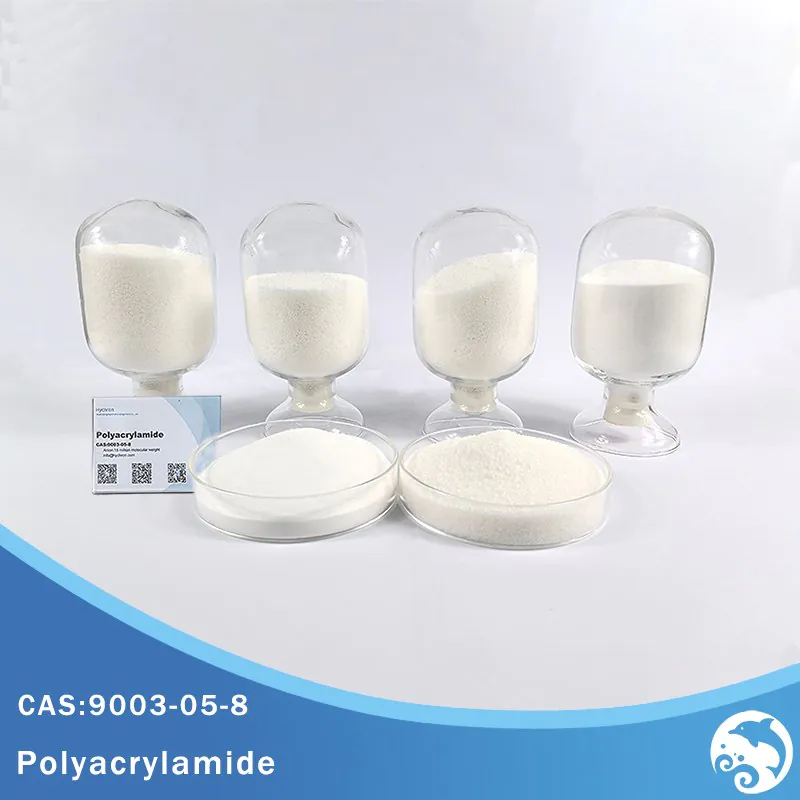
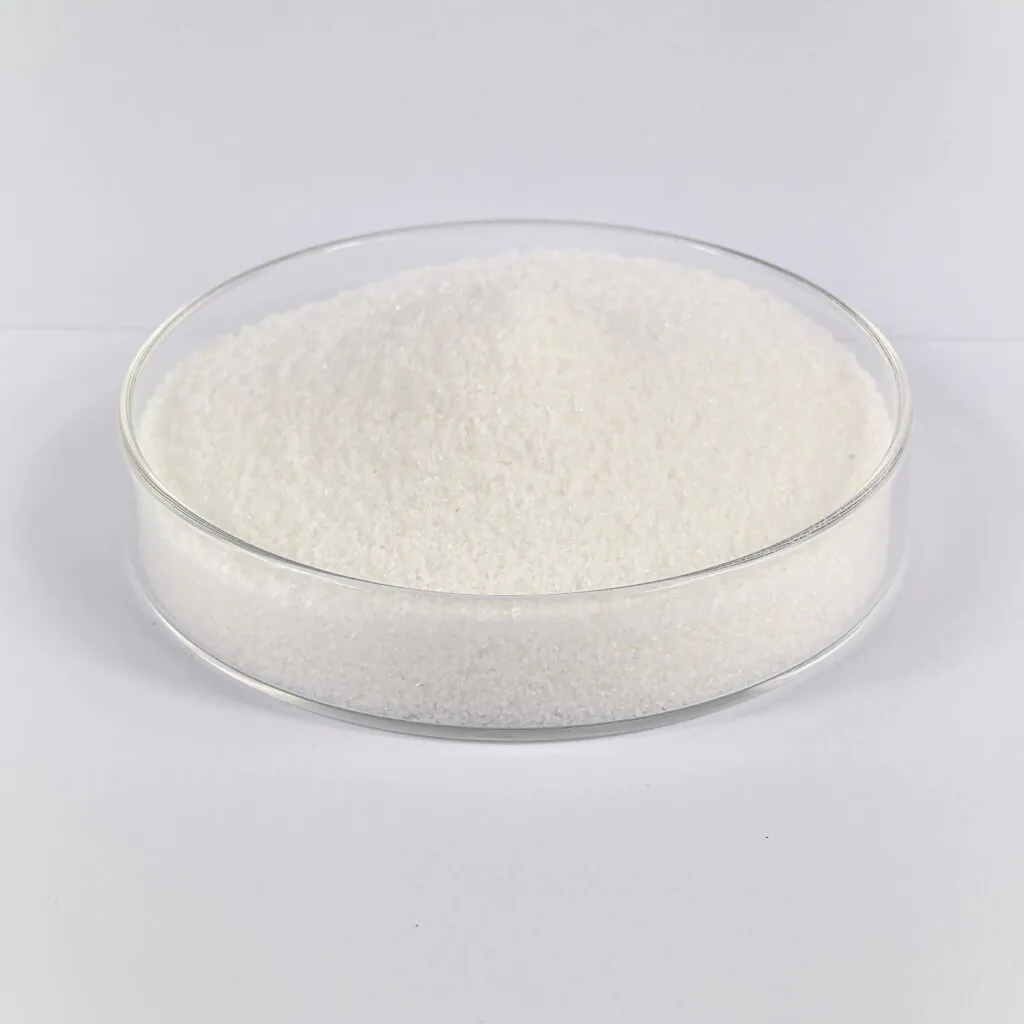
- Appearance: Dry powder grades should be described as white to off-white powder or granules. Yellowing or unusual color may indicate thermal degradation.
- pH (1% solution): Anionic grades typically produce slightly alkaline solutions (pH 7–9). Cationic grades are typically slightly acidic (pH 3–6). Check that the stated pH is consistent with the grade type you ordered.
- Solubility: Should confirm complete solubility in water. Insolubility or partial solubility indicates product quality issues.
Section 13: Disposal Considerations
Specifies proper disposal methods for product waste and contaminated packaging.
What to check: PAM disposal requirements vary by jurisdiction. In most markets, dilute PAM solution can be discharged to wastewater treatment after dilution to below hazardous waste thresholds. Concentrated solution and solid waste typically require disposal as chemical waste.
Confirm that the disposal guidance in Section 13 is consistent with your local regulatory requirements — SDS from international suppliers may reference regulations not applicable in your jurisdiction.
Part 2: The Technical Data Sheet (TDS)
The TDS is a product-specific document that describes performance characteristics, specifications, and application guidance. Unlike the SDS, its format is not standardized — content and layout vary between suppliers. A comprehensive TDS for PAM should cover the following:
Product Specifications
The TDS should list defined specification ranges for all key quality parameters:
| Parameter | What Should Be Stated |
|---|---|
| Molecular weight | Specific range in Daltons or IV range in dL/g |
| Charge density | Percentage range (e.g., 25–35% anionic) |
| Moisture content | Maximum % (e.g., ≤ 10%) |
| Residual acrylamide | Maximum % or mg/kg (e.g., ≤ 0.05%) |
| Particle size | Distribution range or dissolution time specification |
| Appearance | Visual description |
What to look for: Specific ranges with defined limits, not vague descriptors. “High molecular weight” is a category, not a specification. “15–18 million Daltons” is a specification.
Recommended Applications
A well-written TDS identifies the application types for which the grade is recommended — specific industries, treatment processes, and operating conditions where the product performs well.
What to look for:
- Does the application list match your use case?
- Are dosage ranges provided for specific applications, or only generic ranges?
- Does the TDS acknowledge conditions where the grade is not recommended — for example, high salinity, extreme pH, or specific contaminant types?
Suppliers who claim their product is suitable for all applications without any qualification are typically providing marketing content rather than technical guidance.
Preparation Guidelines
The TDS should include specific preparation instructions covering water temperature, solution concentration, mixing speed, and minimum hydration time.
What to check:
- Are recommended preparation conditions specific to this grade, or generic to all PAM?
- Does the recommended concentration range match your application requirements?
- Is cold-weather preparation guidance included if relevant to your climate?
Grade-specific preparation guidelines indicate that the supplier has characterized the dissolution behavior of this specific product — a marker of genuine technical knowledge rather than generic documentation.
For detailed preparation guidance, see: How to Prepare Polyacrylamide Polymer Solutions
Storage and Shelf Life
The TDS should specify storage conditions and shelf life for both the unopened product and, where relevant, prepared solution.
What to check:
- Temperature and humidity requirements for storage
- Shelf life from manufacture date (typically 18–24 months for powder, 6–12 months for emulsion)
- Special requirements for emulsion PAM (minimum storage temperature to prevent freezing)
Common Documentation Problems and What They Mean
| Documentation Issue | Likely Meaning |
|---|---|
| SDS with no acrylamide monomer listed | Supplier has not assessed hazard correctly — request clarification |
| TDS with no specific MW or charge density values | Grade not manufactured to defined specification |
| CoA values outside TDS specification ranges | Quality control failure — request explanation and replacement |
| SDS and CoA show different residual acrylamide values | Documentation inconsistency — investigate before use |
| TDS preparation guidelines identical for all grades | Generic documentation not grade-specific |
| SDS in wrong language for your country | Regulatory non-compliance in some jurisdictions |
Frequently Asked Questions
What is the difference between an SDS and an MSDS?
MSDS (Material Safety Data Sheet) was the older term used before the GHS harmonization. SDS (Safety Data Sheet) is the current international standard term under GHS. The content is essentially the same, but the GHS SDS has a standardized 16-section format that older MSDS documents did not follow. If a supplier provides an MSDS rather than a GHS-format SDS, it may not comply with current regulatory requirements in your jurisdiction.
Can we rely on the SDS residual acrylamide figure for regulatory compliance purposes?
The SDS provides a general hazard characterization — it is not a batch-specific compliance document. For regulatory compliance purposes, a batch-specific Certificate of Analysis showing the actual measured residual acrylamide content for your specific delivery is required. The SDS provides context; the CoA provides the verifiable compliance evidence.
What should we do if we receive PAM without an SDS or TDS?
Do not use the product until documentation is received. In most jurisdictions, using a chemical without an SDS is a workplace safety violation regardless of whether the chemical is hazardous. Contact the supplier immediately to request the documentation. If documentation cannot be provided promptly, consider returning the shipment.
Conclusion
Safety Data Sheets and Technical Data Sheets are the paper foundation of a responsible PAM program. Reading them carefully — checking SDS Section 3 for residual acrylamide content, verifying TDS specifications against CoA values, and confirming that preparation guidelines are grade-specific rather than generic — takes less than 30 minutes per product and protects against compliance failures, performance problems, and safety incidents.
The most important documents to verify before any new PAM supply relationship begins are the batch-specific CoA and the GHS-compliant SDS. Everything else builds from there.
Contact us today to request complete documentation for any grade in our PAM range — SDS, TDS, batch CoA, and application guidelines included as standard. → Contact our technical team today


