
Polyaluminium Chloride (PAC) is widely used in both industrial wastewater treatment and drinking water purification. Because the same chemical name is used in both fields, many buyers and operators often ask:
Can industrial-grade PAC be used for drinking water treatment?
Is it really safe?
The short answer is no — wastewater PAC and drinking water PAC are not interchangeable. Below we explain the key differences in appearance, purity, production process, safety standards, and application scenarios.
1. Wastewater Treatment PAC (Industrial Grade)
Appearance and Basic Characteristics
- Color: Dark brown or dark yellow
- Al₂O₃ content: 25%–28%
- Form: powder or liquid
- Cost level: low to medium
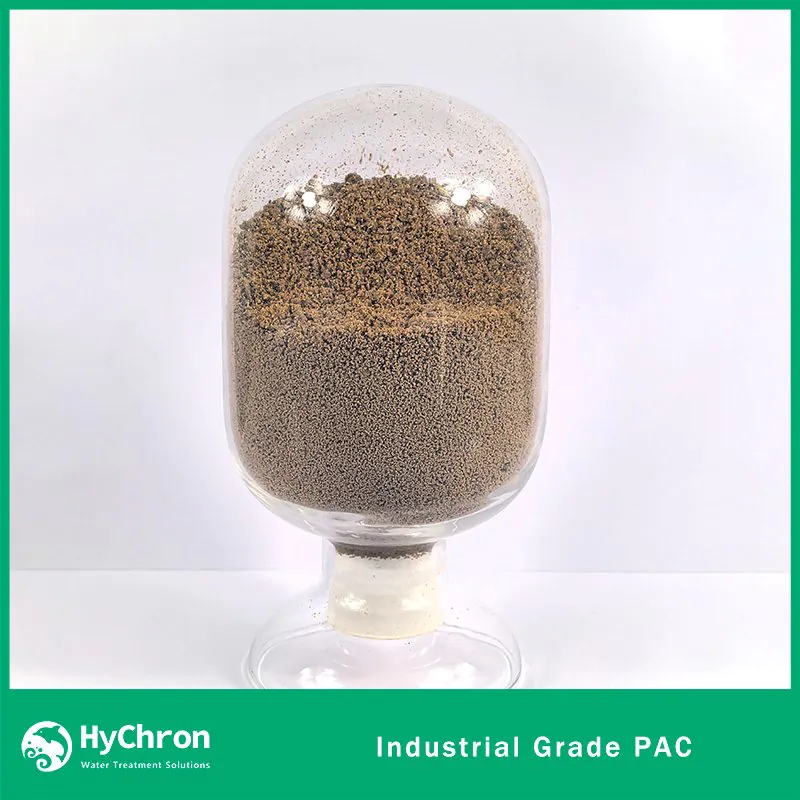
Industrial PAC is mainly designed for high-load wastewater environments, where removal efficiency and cost control are prioritized over ultra-high purity.
Production Process and Cost Advantage
Industrial wastewater PAC is usually produced using the drum (rotary kiln) process.
This method:
- Has lower production cost
- Uses traditional aluminum and iron-containing raw materials
- Produces a polymer flocculant suitable for harsh wastewater conditions
Because of its economic advantage and strong coagulation ability, it is widely applied in:
- Industrial wastewater treatment
- Municipal sewage treatment
- Mining, steel, chemical, and paper mill effluent
👉 Learn more about PAC applications in industrial wastewater treatment.
Limitations for Drinking Water Use
Industrial-grade PAC may contain:
- Higher iron content
- Trace heavy metals
- Higher insoluble matter
These impurities are acceptable in wastewater treatment but do not meet drinking water safety standards.
❗ Industrial PAC should never be used for drinking water treatment.
2. Drinking Water Treatment PAC (Potable Grade)
Appearance and Purity
- Color: Light yellow or golden
- Al₂O₃ content: ≈30%
- Heavy metal content: strictly controlled
- Residual insoluble matter: very low
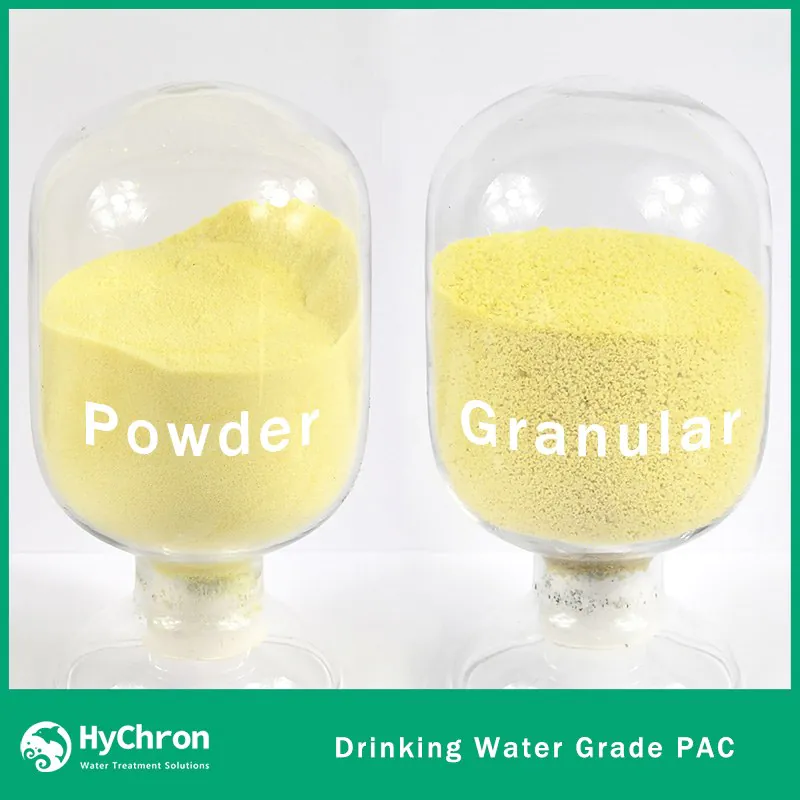
Drinking water PAC is formulated specifically to ensure human safety and regulatory compliance.
Why Higher Content and Higher Standards Matter
Drinking water PAC is produced using:
- Plate-and-frame pressure filtration, or
- Spray drying technology
These processes:
- Remove iron and heavy metal impurities
- Improve product purity and stability
- Reduce residual aluminum in treated water
As a result:
- Coagulation efficiency is more stable
- Sludge production is lower
- Finished water quality meets potable standards
Typical Applications
Drinking water PAC is widely used in:
- Municipal water treatment plants
- Drinking water circulation systems
- Reservoir and surface water purification
- Emergency water supply treatment
Although its manufacturing cost is higher than industrial PAC, it is considered a safe and efficient water purification agent for human consumption.
3. Key Differences at a Glance
| Item | Industrial PAC | Drinking Water PAC |
|---|---|---|
| Color | Yellow or brown powder or granular form. | Fine yellow powder or granular form. |
| Al₂O₃ content | 22% -30% | 30% ± 0.5%. |
| Heavy metals | Higher tolerance | Strictly limited |
| Production method | Drum process | Pressure filtration / spray drying |
| Cost | Lower | Higher |
| Suitable for drinking water | ❌ No | ✅ Yes |
4. How to Choose the Right PAC for Your Application
When selecting PAC, always match the grade to the application:
- For industrial wastewater or municipal sewage → choose industrial-grade PAC
- For potable water or human-related use → choose drinking water-grade PAC only
Using the wrong grade may lead to:
- Regulatory violations
- Health risks
- Long-term liability
👉 If needed, PAC can also be combined with polyacrylamide flocculant to reduce dosage and improve settling performance.
Conclusion: Safety Determines the Grade
While both products are called polyaluminium chloride, wastewater PAC and drinking water PAC differ significantly in purity, production process, safety standards, and intended use.
✔ Industrial PAC = cost-effective, high-efficiency, not potable
✔ Drinking water PAC = high purity, compliant, safe for human use
Choosing the correct PAC grade is not only a technical decision — it is a safety and compliance responsibility.