
In industrial wastewater treatment, operators sometimes encounter a frustrating issue: Chemical Oxygen Demand (COD) increases despite adding more chemicals. One common cause is the overdosing of polyacrylamide (PAM), a widely used flocculant and sludge dewatering agent.
Understanding why excessive PAM raises effluent COD is essential for optimizing treatment performance, reducing operating costs, and maintaining discharge compliance.
The Core Principle: PAM Is an Organic Polymer
Polyacrylamide (PAM) is a high-molecular-weight, water-soluble organic polymer.
Its main function is to:
- Bridge destabilized particles
- Form large, settleable flocs
- Capture suspended solids and organic matter
However, because PAM itself is an organic substance, improper dosing can directly impact COD levels.
3 Key Reasons Why Excess PAM Raises Effluent COD
1. Direct Contribution as Soluble COD
COD measures all chemically oxidizable organic material in water.
When PAM is overdosed:
- Excess polymer remains dissolved
- It fails to bind into flocs
- It stays in the treated water
During COD testing, this residual PAM is oxidized and measured as organic pollution.
In simple terms:
You are unintentionally adding measurable COD into the effluent.
2. “Colloidal Protection” and Reduced Flocculation Efficiency
Optimal PAM dosage promotes particle aggregation through polymer bridging.
Overdosing causes:
- Particle surfaces to become oversaturated
- Formation of a steric barrier
- Re-stabilization of colloids
This phenomenon, known as colloidal protection, results in:
- Poor floc formation
- Slow or incomplete settling
- Reduced removal of dyes, lignin, and organics
- Carryover of untreated pollutants
Both residual PAM and untreated organics contribute to higher COD.
3. Interference with Primary Coagulants (e.g., PAC)
In many systems:
- PAC performs charge neutralization
- PAM acts as a coagulant aid
Excessive PAM can disrupt this synergy by:
- Prematurely coating particles
- Blocking effective charge neutralization
- Reducing turbidity removal efficiency
This weakens the overall coagulation–flocculation process and increases organic carryover.
Impact on Sludge Dewatering and Operational Costs
PAM overdose affects more than effluent quality.
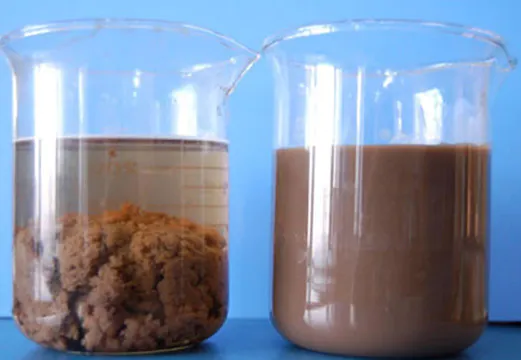
Increased Sludge Volume
- Excess polymer increases sludge mass
- Higher transportation and disposal costs
Poor Dewatering Performance
- Sludge becomes sticky or gelatinous
- Reduced centrifuge or filter press efficiency
- Lower cake solids content
This leads to higher energy use and operating expenses.
Best Practices for Optimal PAM Dosing
To prevent COD spikes and ensure stable treatment performance:
Conduct Jar Testing
- Identify correct PAM type (anionic, cationic, nonionic)
- Determine precise optimal dosage
Use Automated Dosing Systems
- Apply flow-proportional control
- Maintain consistent chemical feed
Monitor Key Parameters
Track:
- Effluent COD
- Turbidity
- Sludge dewatering performance
Work with Technical Experts
Partner with a professional water treatment chemical supplier for:
- Dosing optimization
- Product selection
- On-site technical support
Conclusion
In wastewater treatment, more chemicals do not equal better performance.
Overdosing polyacrylamide (PAM):
- Increases effluent COD
- Disrupts flocculation efficiency
- Reduces sludge dewatering performance
- Raises operational costs
Achieving the correct PAM dosage through testing and control is essential for efficient, compliant, and cost-effective wastewater treatment operations.