Skip to content
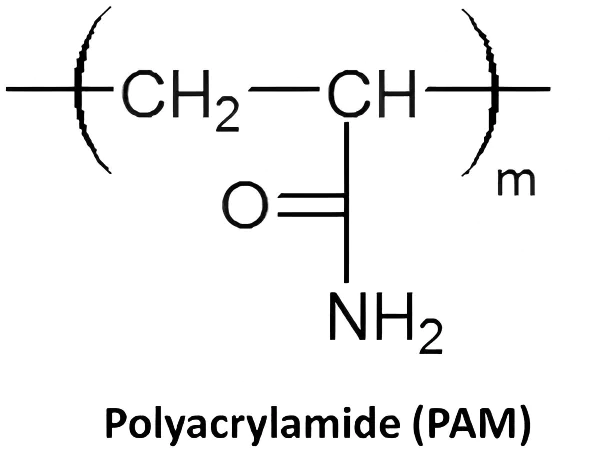
Polyacrylamide (PAM) is one of the most widely used flocculants in wastewater treatment, sludge dewatering, and many industrial processes. However, not all polyacrylamide products perform the same. One of the most important parameters that determines its effectiveness is charge density.
Charge density refers to the amount of electrical charge carried by the polymer molecule. It plays a critical role in how the polymer interacts with suspended particles and contaminants in water.
Understanding charge density helps operators choose the right polymer for their treatment systems and achieve better flocculation performance.
What Is Charge Density?
Charge density describes the proportion of charged functional groups along the polymer chain.
Polyacrylamide molecules can carry positive or negative charges depending on their chemical structure. Based on these charges, PAM products are generally classified into three types:
- Anionic polyacrylamide
- Cationic polyacrylamide
- Nonionic polyacrylamide
Each type has different charge characteristics and is suitable for different applications.
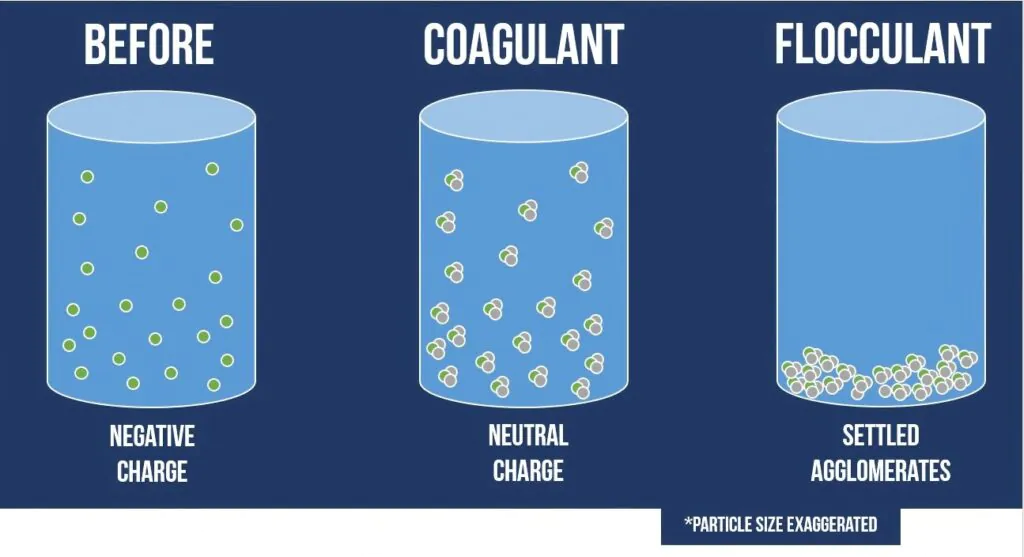
The correct charge density allows the polymer to effectively neutralize the electrical charges on suspended particles in wastewater.
Why Charge Density Matters in Flocculation
Most particles suspended in wastewater carry electrical charges. These charges cause particles to repel each other, which prevents them from settling naturally.
Polyacrylamide improves flocculation through charge neutralization and polymer bridging.
When the polymer has the correct charge density, it can neutralize particle charges and allow them to combine into larger flocs.
Proper charge density leads to:
- Faster floc formation
- Larger and stronger flocs
- Improved sedimentation
- Better sludge dewatering
If the charge density is too low or too high, flocculation efficiency may decrease.
Types of Charge Density in Polyacrylamide
Polyacrylamide products are available with different charge density levels to match different wastewater conditions.
Low Charge Density
Low charge density polymers contain fewer charged functional groups.
They are often used when wastewater contains low levels of charged particles or when gentle flocculation is required.
Typical applications include:
- mineral processing
- clarification processes
- low-solids wastewater
Medium Charge Density
Medium charge density polymers provide balanced performance for many treatment systems.
They are widely used in:
- municipal wastewater treatment
- industrial wastewater clarification
- sludge thickening processes
These polymers provide a good balance between charge neutralization and polymer bridging.
High Charge Density
High charge density polymers carry a large number of charged groups.
They are particularly effective for wastewater containing high levels of organic matter or negatively charged particles.
Typical applications include:
- sludge dewatering
- food processing wastewater
- municipal sewage sludge treatment
How Charge Density Affects Polymer Performance
The charge density of polyacrylamide influences several important treatment parameters.
Floc Formation Speed
Higher charge density can accelerate particle neutralization, allowing flocs to form more quickly.
Floc Strength
Correct charge density produces stronger flocs that resist breakage during mixing.
Sludge Dewatering Efficiency
Proper polymer selection improves sludge structure and increases solids concentration after dewatering.
These improvements contribute to better overall treatment performance.
👉 Related article:
How to Calculate PAM Dosage Accurately
Proper dosage control also helps optimize polymer performance.
Selecting the Right Charge Density
Choosing the correct charge density requires understanding the characteristics of the wastewater.
Important factors include:
- suspended solids concentration
- organic matter content
- pH level
- treatment process type
Jar testing is commonly used to evaluate different polymer grades and determine the most effective charge density.
Treatment plants often test several polymers before selecting the best option.
👉 You may also read:
Reducing Operational Downtime with Proper Polymer Selection
Selecting the correct polymer not only improves treatment efficiency but also reduces operational problems.
Importance of Polymer Quality
Even when the correct charge density is selected, product quality still plays a major role in treatment performance.
High-quality polyacrylamide offers several advantages:
- consistent charge density
- high molecular weight stability
- fast dissolution performance
- reliable flocculation efficiency
These characteristics allow treatment plants to achieve stable results with lower polymer consumption.
Our polyacrylamide products are manufactured under strict quality control standards to ensure reliable performance in various wastewater treatment applications.
Conclusion
Charge density is one of the most important properties of polyacrylamide. It determines how effectively the polymer interacts with suspended particles and influences flocculation performance.
By selecting the correct charge density, wastewater treatment plants can improve sedimentation efficiency, enhance sludge dewatering, and reduce chemical consumption.
Understanding this parameter helps operators make better polymer selection decisions and optimize treatment processes.
If your wastewater treatment system requires high-performance polyacrylamide with reliable charge density and stable quality, our technical team can help you choose the most suitable product for your application.
Contact us today to receive expert recommendations and competitive pricing for high-quality polyacrylamide solutions.