
Written by the HyChron Technical Team — water treatment specialists with over 15 years of field experience in municipal and industrial systems. Last reviewed: April 2026
PAC is a highly capable coagulant in most applications — but certain water types and treatment targets expose the limits of any single coagulant. High-NOM source water, very low-turbidity conditions, colored industrial effluent, and fine mineral slimes all present coagulation challenges that PAC alone may not fully resolve at economical dosage levels.
Coagulant aids — chemical additives used alongside PAC to enhance specific aspects of coagulation performance — can close these performance gaps without requiring a change of coagulant or a capital equipment upgrade.
This article identifies the most effective coagulant aids for PAC-based systems, explains how and when to use them, and provides practical guidance on optimizing multi-chemical treatment programs.
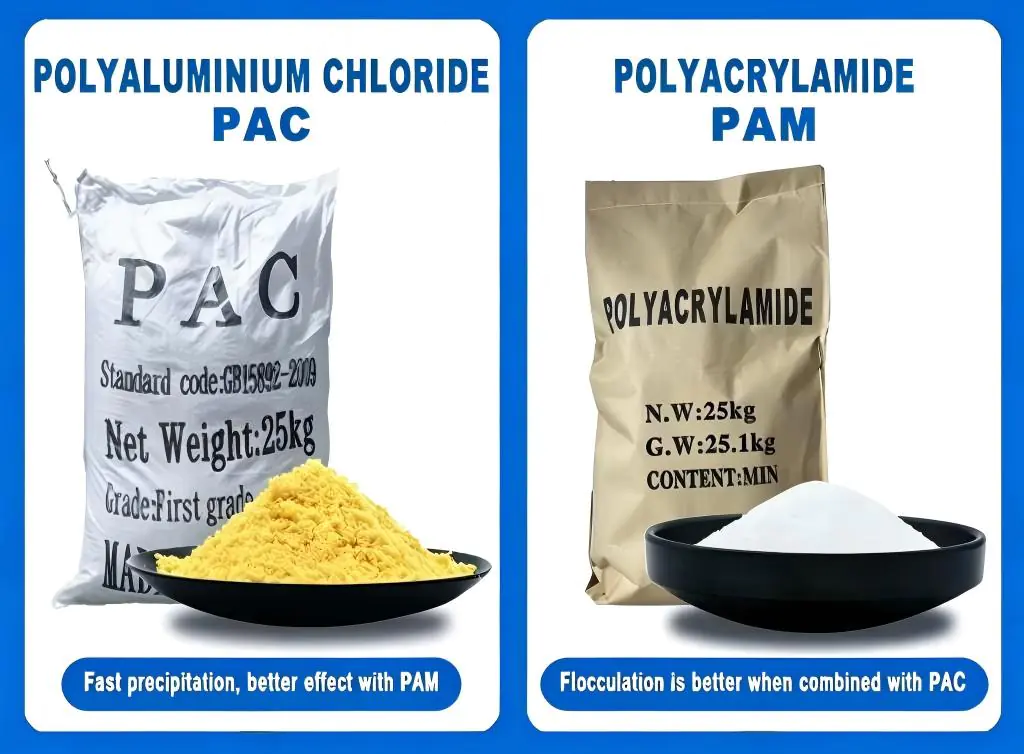
When PAC Alone Is Not Enough
PAC-only treatment is sufficient for the majority of water treatment applications. But specific conditions create performance gaps that coagulant aids address more effectively than simply increasing PAC dose:
High natural organic matter (NOM). Humic and fulvic acids consume PAC’s active aluminum species before they reach particle surfaces, increasing effective dosage requirements significantly. At high NOM levels, the cost of compensating with more PAC may exceed the cost of a targeted NOM removal aid.
Very low turbidity (below 5 NTU). At low particle concentrations, sweep flocculation is less effective and charge neutralization must be highly efficient. Coagulant aids that increase particle collision probability or provide additional bridging improve performance in conditions where PAC alone struggles.
Colored industrial effluent. Color from reactive dyes, tannins, and chromophore compounds responds to PAC coagulation but may require pH optimization or an oxidative pre-treatment aid to achieve regulatory color limits.
Cold water below 5°C. Even PAC’s cold-water advantage has limits. In very cold conditions, additional polymer bridging (PAM) or coagulant aids that accelerate floc growth compensate for viscosity-limited particle collision rates.
Coagulant Aid 1 — Anionic PAM (Polyacrylamide)
What it does: Bridges PAC microflocs into larger, faster-settling aggregates through polymer chain extension between particle surfaces.
When to use: Almost universally beneficial in PAC systems where floc size or settling rate is limiting performance — particularly in cold water, fine particle applications, and high-throughput clarifier systems.
How to dose: After PAC flash mixing, at the flocculation stage inlet. Dose 0.5–5 mg/L depending on application. Conduct jar testing to confirm optimal dose.
Expected improvement: Floc size increases 3–5×, settling rate improves 40–70%, effluent turbidity decreases 20–50%.
For complete PAC + PAM guidance: Using PAC with PAM: Best Practices
Coagulant Aid 2 — Activated Silica
What it does: Activated silica (polysilicic acid) is a colloidal silica compound with strong negative charge that acts as a bridging and nucleation aid — promoting faster, more compact floc formation at lower PAC doses. It is particularly effective in cold water and for fine inorganic particle removal.
When to use: Cold-water municipal drinking water treatment, low-turbidity surface water, and applications where PAC alone produces fragile flocs that break up in high-shear zones.
How to dose: Prepared on-site by acidifying sodium silicate solution. Dose at 1–5 mg/L as SiO₂, added before or simultaneously with PAC in the flash mixing zone.
Expected improvement: Faster floc formation in cold water, stronger floc structure, reduced PAC dosage requirement (10–25% reduction possible in cold-water applications).
Limitations: Activated silica requires on-site preparation and careful pH control during preparation. It is more operationally complex than PAM addition and is primarily used in municipal water treatment with dedicated technical staff.
Coagulant Aid 3 — Bentonite Clay
What it does: Bentonite clay particles act as ballast and nucleation sites for floc formation — increasing particle concentration in very low-turbidity water and providing physical surface area for PAC flocs to grow on.
When to use: Very low-turbidity source water (below 2 NTU) where insufficient particle concentration limits charge neutralization effectiveness and sweep flocculation produces inadequate flocs.
How to dose: 5–20 mg/L bentonite added before or simultaneously with PAC in the flash mixing zone. The bentonite particles provide nucleation sites that improve floc formation even when natural particle concentrations are too low for effective unaided coagulation.
Expected improvement: Significant improvement in effluent turbidity removal for very low-turbidity source water — achieving sub-0.5 NTU effluent in conditions where PAC alone struggles to get below 2 NTU.
Limitations: Increases sludge volume. Best for seasonal use during low-turbidity periods rather than year-round.
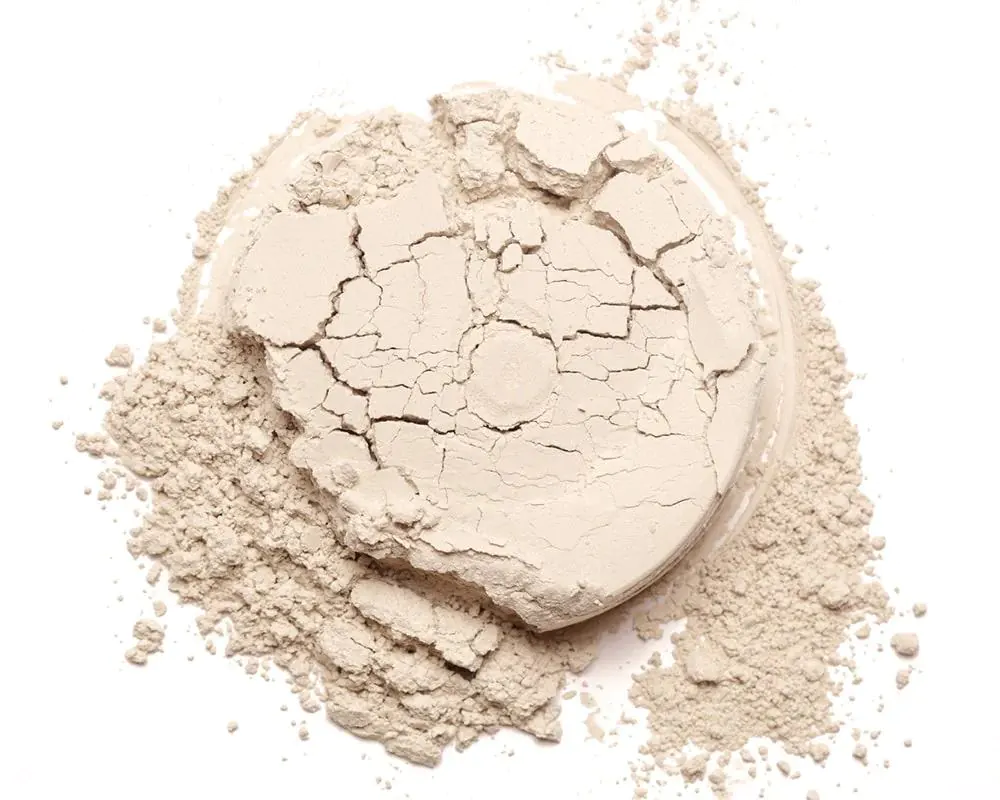
Coagulant Aid 4 — Lime (Ca(OH)₂)
What it does: Lime is primarily used for pH adjustment before PAC dosing in acidic or very-high-pH effluent. However, at higher doses in industrial effluent, lime also contributes to coagulation through calcium carbonate and metal hydroxide co-precipitation.
When to use: Acid mine drainage (AMD) treatment, high-metal industrial effluent, and applications where pH must be raised to 7–9 for both effective PAC coagulation and metal precipitation.
How to dose: Before PAC dosing in the treatment sequence. Dose to achieve target pH at the PAC addition point.
Expected improvement in combined use: pH adjustment with lime enables effective PAC coagulation in acidic streams where PAC alone cannot function. Metal co-precipitation with PAC reduces heavy metal levels more effectively than either chemical alone.
For mining application details: PAC for Mining Wastewater Treatment
Multi-Chemical Program Optimization
When using PAC with one or more coagulant aids, optimizing the complete program requires systematic jar testing — not just of individual chemicals, but of the full combination under your specific water conditions.
Jar Test Protocol for Multi-Chemical Systems
- Establish PAC-only baseline — determine optimal PAC dose without aids
- Add one aid at a time — evaluate each aid at multiple doses against the PAC-only baseline
- Combine the best-performing aids — test PAC + Aid 1 + Aid 2 combinations
- Optimize dosing sequence — confirm which chemical should be dosed first, second, and third
The sequence is as important as the dose. General sequence for multi-chemical PAC programs:
pH adjustment → PAC (flash mix) → Activated silica or bentonite (if used) → PAM (slow-mix flocculation stage)
Cost Optimization
Multi-chemical programs are justified when the combined cost of PAC + coagulant aids is lower than the cost of achieving the same performance with higher PAC dose alone, or when the performance target cannot be achieved with PAC alone at any economical dose.
Calculate cost per cubic meter treated for:
- PAC-only at the dose required to meet the target
- PAC + coagulant aid at optimized doses
If the combination is more cost-effective or enables meeting targets that PAC alone cannot achieve, the multi-chemical program is justified.
Frequently Asked Questions
Can I use PAM and activated silica together with PAC?
Yes. PAM and activated silica address different stages — activated silica improves initial floc nucleation during coagulation, while PAM enhances floc growth during flocculation. The combination is used in some municipal drinking water plants treating cold, low-turbidity source water. The dosing sequence is: PAC + activated silica simultaneously at flash mixing, followed by PAM at the flocculation stage inlet.
Is bentonite addition practical for continuous treatment operations?
Bentonite requires a dissolution and dosing system — a day tank, agitator, and dosing pump. For continuous use in very-low-turbidity conditions, this is a manageable addition. For seasonal use, prepare bentonite slurry as needed. The improvement in effluent quality during low-turbidity periods typically justifies the operational complexity.
Will adding coagulant aids increase my sludge volume significantly?
PAM addition does not materially increase sludge volume — it typically reduces it slightly by improving floc compaction. Bentonite addition increases sludge volume in proportion to the dose. Lime addition increases sludge volume through calcium carbonate and metal hydroxide precipitation. Activated silica adds minimal sludge volume at typical doses. Factor sludge volume into the cost-benefit analysis for each aid.
Conclusion
Coagulant aids — particularly PAM, activated silica, bentonite, and lime — extend PAC’s effective performance range into conditions where PAC alone reaches its practical limits. Used in the correct sequence and at optimized doses confirmed by jar testing, they deliver measurable performance improvements at lower total chemical cost than attempting to achieve the same results with higher PAC doses alone.
The key is systematic evaluation — jar testing each aid individually and in combination with your specific water before committing to a full-scale multi-chemical program.
Contact our technical team today for a free multi-chemical program assessment, product samples for jar testing evaluation, and a customized treatment recommendation for your application. We respond within 24 hours.