Skip to content
Written by the HyChron Technical Team — water treatment specialists with over 15 years of field experience in municipal and industrial systems. Last reviewed: April 2026
A dual chemical system — using two or more treatment chemicals in a defined sequence — is the standard design approach in modern wastewater treatment for any application where a single coagulant cannot achieve all treatment objectives at an economical dose.
PAC-based dual chemical systems are among the most widely used configurations in industrial and municipal wastewater treatment. When designed correctly, they consistently outperform single-chemical alternatives in effluent quality, sludge management, and total treatment cost.
This article explains how dual chemical systems work, when they are the right choice, and how to design and operate them for maximum effectiveness.
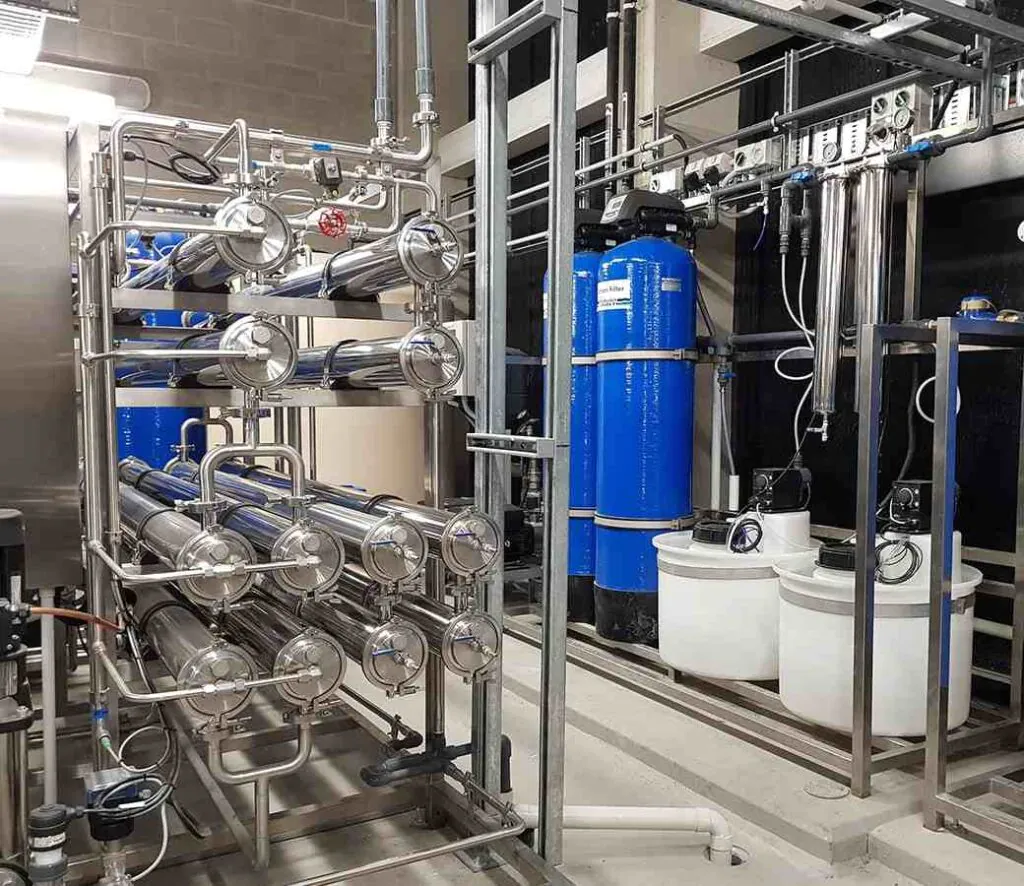
What a Dual Chemical System Actually Is
A dual chemical system uses two chemicals that address different aspects of the treatment problem — in a specific sequence that allows each chemical to perform its function without interference from the other.
The most common PAC-based dual chemical configurations:
PAC + PAM (coagulation-flocculation): PAC provides coagulation — charge neutralization and microfloc formation. PAM provides flocculation enhancement — polymer bridging between microflocs. This is the most widely used dual chemical system in water and wastewater treatment.
PAC + lime (pH adjustment + coagulation): Lime raises pH for metal precipitation or to bring strongly acidic effluent into PAC’s effective range. PAC then coagulates the metal hydroxide precipitates and remaining suspended solids. Used in acid mine drainage, electroplating, and metal finishing applications.
PAC + oxidant (pre-oxidation + coagulation): An oxidant (chlorine, ozone, or hydrogen peroxide) is applied before PAC to break down organic color compounds, reduce COD, or oxidize soluble iron and manganese to insoluble forms that PAC can then coagulate. Used in colored surface water, high-iron groundwater, and some industrial effluent applications.
PAC + carbon (coagulation + adsorption): Powdered activated carbon (PAC-C, not to be confused with poly aluminum chloride PAC) is dosed before or simultaneously with poly aluminum chloride to adsorb dissolved organics, taste and odor compounds, and micropollutants that coagulation alone cannot remove. Used in drinking water treatment and advanced industrial effluent polishing.
When Dual Chemical Systems Are Justified
Single-chemical PAC treatment is sufficient for the majority of applications. A dual chemical system is justified when:
- The single-chemical treatment target cannot be met at any economical PAC dose — for example, very low turbidity targets in high-NOM water, or color limits in reactive dye effluent
- A second objective must be achieved alongside turbidity removal — metal precipitation, color removal, taste and odor control
- Cold-water conditions reduce PAC-only performance below acceptable levels — PAM addition restores performance at lower cost than the PAC dose increase that would otherwise be required
- Sludge dewatering is a major cost driver — PAM addition to sludge treatment significantly reduces dewatering chemical cost and improves cake dryness
Designing a PAC + PAM Dual Chemical System
PAC + PAM is the most frequently implemented dual chemical system and the one most operators encounter first. Key design principles:
Chemical Dosing Points
- PAC dosing point: flash mixing zone — highest turbulence in the treatment train
- PAM dosing point: flocculation stage inlet — immediately after rapid mixing is complete, at the start of slow mixing
Separating the dosing points by one complete flash mixing residence time (30–60 seconds minimum) ensures PAC charge neutralization is complete before PAM contacts the particles.
Mixing Requirements
- Flash mixing (PAC stage): G = 200–400 s⁻¹, 30–60 seconds
- Slow mixing (PAM stage): G = 20–40 s⁻¹, 15–25 minutes
- Tapered flocculation (decreasing G from inlet to outlet) produces the best results when the flocculation tank design allows it
Chemical Storage and Dosing Equipment
- PAC: bulk storage tank (HDPE or fibreglass) + metering pump, flow-proportional or manually adjusted
- PAM: day tank with agitator for continuous solution preparation + metering pump
PAM solution must be prepared fresh — do not store dissolved PAM solution for more than 24 hours, as polymer degradation reduces effectiveness.

Designing a PAC + Lime Dual Chemical System
Used in metal-bearing wastewater and acid mine drainage applications. Key design principles:
Treatment Sequence
Raw effluent → Lime dosing (pH adjustment tank) → PAC dosing (flash mixing) → Flocculation → Clarification
Lime is always dosed before PAC. Lime neutralizes acid, precipitates metals as hydroxides, and brings pH into PAC’s effective range. PAC then coagulates the fine metal hydroxide precipitates that settle poorly on their own.
pH Target
Set lime dosing to achieve pH 8.0–9.5 at the PAC dosing point — within PAC’s effective range and optimal for metal hydroxide precipitation for most common metals.
For metal-specific treatment: Heavy Metal Removal Using PAC For mining applications: PAC for Mining Wastewater Treatment
Operating a Dual Chemical System: Common Problems
Problem: PAM added before PAC is fully mixed. If PAM is introduced too early — before flash mixing is complete — it contacts partially treated water with unstabilized particles. PAM adsorbs onto particle surfaces but cannot bridge them because electrostatic stability is not fully eliminated. Result: wasted PAM, no improvement in floc size. Fix: Extend the distance or time between PAC dosing and PAM dosing points. Minimum 30–60 seconds of flash mixing before PAM addition.
Problem: PAM dosing too high — floc restabilization. Like PAC, PAM has an optimal dose above which performance deteriorates. Overdosed PAM can restabilize particles through steric hindrance — polymer chains cover particle surfaces so completely that bridging between particles is blocked. Fix: Always determine PAM dose by jar test. If performance is declining after a PAM dose increase, the overdose threshold has been exceeded — reduce PAM dose.
Problem: Inconsistent PAM solution concentration. PAM dissolved at inconsistent concentrations produces variable effective doses even when pump flow rate is constant. This produces variable treatment results between batches. Fix: Weigh PAM accurately for each batch and use a fixed volume of water. Standardize the preparation procedure and post it at the dosing station.
Performance Benchmarks for PAC-Based Dual Chemical Systems
| System | Application | Typical Turbidity Target | Achievable with Dual System |
|---|---|---|---|
| PAC + PAM | Municipal drinking water | < 0.5 NTU | < 0.1 NTU with filtration |
| PAC + PAM | Industrial wastewater | < 10 mg/L TSS | < 5 mg/L TSS |
| PAC + PAM | Mining thickener | < 50 NTU overflow | < 10 NTU overflow |
| PAC + lime | AMD / metal effluent | < 1 mg/L total metals | < 0.5 mg/L with filtration |
| PAC + oxidant | Colored surface water | < 15 color units | < 5 color units |
Frequently Asked Questions
Can I use three chemicals simultaneously — PAC + PAM + lime?
Yes, in specific applications. The typical sequence for three-chemical systems is: lime (pH adjustment) → PAC (flash mixing) → PAM (flocculation). This configuration is used in heavy metal wastewater treatment where pH control, coagulation, and floc enhancement are all required. Jar testing with the complete three-chemical program is essential before full-scale implementation.
How do I monitor whether both chemicals in my dual system are working correctly?
Monitor at two points: (1) after flash mixing — zeta potential or streaming current measurement confirms PAC charge neutralization is complete; (2) after flocculation — visual observation of floc size confirms PAM bridging is effective. Online turbidity at the clarifier outlet provides the final performance indicator.
Does a dual chemical system require more operator attention than a single-chemical system?
Initially yes — two dosing systems require separate optimization and monitoring. Once optimized, a well-designed dual system typically requires the same or less operator attention than a struggling single-chemical system, because the treatment is more stable and less sensitive to raw water variability.
Conclusion
Dual chemical systems — PAC combined with PAM, lime, oxidants, or activated carbon — address treatment challenges that single-chemical approaches cannot resolve at economical cost. When designed correctly with appropriate dosing points, mixing conditions, and chemical sequences confirmed by jar testing, they deliver reliable, cost-effective treatment across the full range of water and wastewater applications.
For most operators, PAC + PAM is the first and highest-value dual chemical system to implement — delivering immediate, measurable improvements in floc quality, settling rate, and effluent turbidity at low incremental chemical cost.
Contact our technical team today for a free dual chemical system design assessment, product samples for jar testing, and a customized treatment program for your application. We respond within 24 hours.