
Written by the HyChron Technical Team — water treatment specialists with over 15 years of field experience in municipal and industrial systems. Last reviewed: April 2026
Industries that discharge wastewater containing heavy metals face a dual challenge: meeting increasingly strict regulatory limits while managing the cost and complexity of treatment. Heavy metals including chromium, nickel, zinc, copper, lead, and cadmium are acutely toxic to aquatic ecosystems and accumulate in the food chain — which is why discharge limits are measured in milligrams or even micrograms per liter.
Conventional treatment — pH adjustment followed by sedimentation — removes a significant fraction of dissolved metals by precipitating them as metal hydroxides. But fine hydroxide precipitates settle slowly, colloidal metal species resist precipitation entirely, and chelated metals from cleaning agents bypass the process altogether.
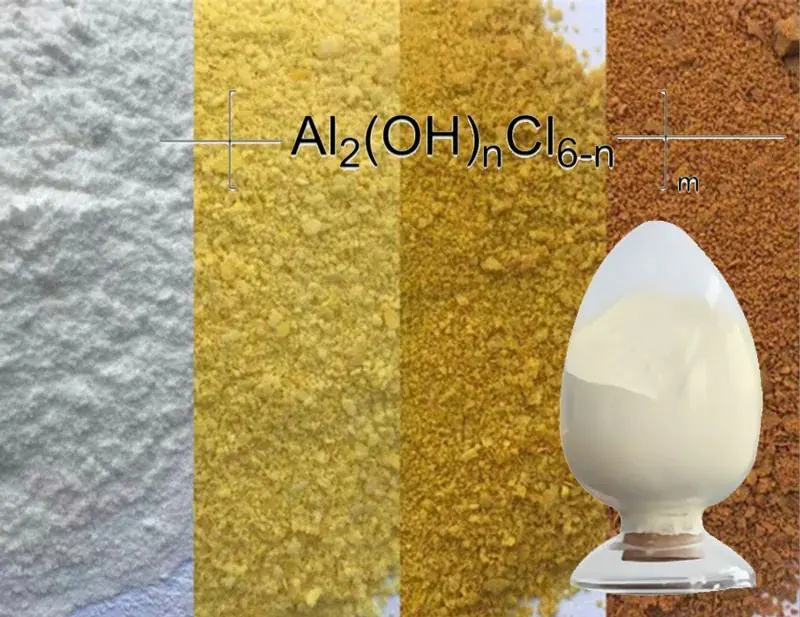
PAC (Poly Aluminum Chloride) addresses the gaps in conventional metal precipitation by coagulating fine hydroxide precipitates, capturing colloidal metal species, and removing suspended solids — significantly improving overall metal removal efficiency without requiring major equipment changes.
Struggling to achieve consistent heavy metal compliance? Contact our technical team for a free effluent assessment and PAC recommendation.
Why Conventional Metal Precipitation Falls Short
pH adjustment and sedimentation is the foundation of heavy metal treatment — but it has well-documented limitations:
Fine precipitate carry-over. Metal hydroxide precipitates form as fine colloidal particles, especially at the early stages of precipitation. These particles are often too small and too light to settle efficiently in standard clarifiers, and they carry over in the effluent — contributing to discharge limit exceedances even when total dissolved metal is within limits.
Colloidal metal species. At certain pH values and in the presence of organic ligands, some metal species exist as stable colloidal complexes rather than simple dissolved ions. These colloidal species do not precipitate fully with pH adjustment alone.
Chelated metals. Cleaning agents containing EDTA, citrates, NTA, and gluconates form strong complexes with heavy metals that are highly resistant to conventional hydroxide precipitation. The chelated fraction passes through pH-and-settle treatment largely intact.
PAC addresses the first two limitations directly. For chelated metals, additional pre-treatment steps are required before PAC coagulation.
How PAC Improves Heavy Metal Removal
Coagulating Fine Metal Hydroxide Precipitates
After pH adjustment, metal hydroxide precipitates form in the nano- to micro-particle size range. These particles carry negative surface charges that keep them dispersed and slow to settle.
PAC introduces positively charged aluminum species that neutralize these surface charges, causing fine metal hydroxide particles to aggregate into larger, denser, faster-settling flocs. The result is significantly improved metal removal in the clarification step — and lower residual metal in the treated effluent.
Capturing Colloidal Metal Species
Colloidal metal species — stabilized by natural organic matter or synthetic surfactants — also carry negative surface charges. PAC’s sweep flocculation mechanism physically entraps these colloidal species in the aluminum hydroxide floc matrix, removing them from the water column even when charge neutralization alone is insufficient.
Reducing Total Suspended Solids
High TSS in metal-bearing effluent is itself a compliance issue — metals adsorb to suspended particles and are carried out in the effluent even after dissolved metal treatment. PAC removes these metal-laden suspended particles, reducing both TSS and total metal discharge simultaneously.
Metals PAC Is Most Effective Against
| Metal | Optimal Precipitation pH | PAC Enhancement |
|---|---|---|
| Chromium (Cr³⁺) | 8.0–9.0 | High — fine Cr(OH)₃ flocs aggregate well with PAC |
| Nickel (Ni²⁺) | 9.0–11.0 | Moderate — PAC improves fine precipitate settling |
| Zinc (Zn²⁺) | 8.5–10.5 | High — PAC significantly improves Zn(OH)₂ capture |
| Copper (Cu²⁺) | 8.0–9.5 | Moderate — PAC captures fine Cu(OH)₂ precipitates |
| Lead (Pb²⁺) | 8.0–9.5 | High — PAC effective for fine PbCO₃/Pb(OH)₂ |
| Cadmium (Cd²⁺) | 9.0–11.0 | Moderate — PAC improves settling of Cd(OH)₂ |
Note: Cr⁶⁺ must be chemically reduced to Cr³⁺ before pH adjustment and PAC coagulation. PAC does not directly remove hexavalent chromium.
Dosage Guidelines
| Application | Typical PAC Dosage |
|---|---|
| Post-precipitation clarification | 20–60 mg/L |
| High suspended solids metal effluent | 40–100 mg/L |
| Mixed metal wastewater | 30–80 mg/L |
| Pre-treatment before ion exchange | 15–40 mg/L |
Jar testing is required — metal speciation, pH history, and chelating agent content all affect optimal PAC dosage.
Treatment Sequence
- Equalization — homogenize effluent before treatment
- Pre-treatment — cyanide destruction, Cr⁶⁺ reduction if applicable
- pH adjustment — raise to optimal range for target metals
- PAC dosing — flash mixing at G-value 200–400 s⁻¹ for 30–60 seconds
- Slow-mix flocculation — G-value 20–60 s⁻¹ for 15–25 minutes
- Sedimentation — clarifier or tube settler
- Polishing — filtration or ion exchange for final compliance where needed
PAC vs Alum for Heavy Metal Removal
Both PAC and alum improve metal hydroxide floc formation compared to pH adjustment alone. PAC offers specific advantages in this application:
- Faster floc formation — PAC’s pre-polymerized structure reacts more quickly, producing well-formed flocs even at lower temperatures
- Lower dosage — 30–50% less PAC than alum for equivalent clarification, reducing reagent costs and aluminum loading to the sludge
- Less sludge — less chemical addition means less sludge volume, reducing hazardous waste disposal costs
- Wider pH tolerance — PAC maintains effective coagulation across the wide pH range (8.5–10.5) used for precipitating mixed metal streams
For the full PAC versus alum comparison: PAC vs Alum: Which Coagulant Is Better?
For electroplating-specific guidance: PAC for Electroplating Wastewater Treatment
For broader industrial wastewater context: PAC for Industrial Wastewater Treatment
Frequently Asked Questions
Can PAC remove dissolved heavy metals without pH adjustment?
No. PAC is a coagulant, not a precipitant. It captures fine precipitates and colloidal species but does not directly precipitate dissolved ionic metals. pH adjustment to the optimal range for hydroxide precipitation must occur before PAC dosing for effective metal removal.
What is the lowest metal concentration PAC can achieve?
With optimized PAC coagulation followed by sedimentation and sand filtration, total metal concentrations below 0.5 mg/L are achievable for most common heavy metals. For stricter limits (below 0.1 mg/L for chromium or nickel, for example), a final polishing step such as ion exchange or activated carbon is typically required after PAC treatment.
How should metal-laden PAC sludge be disposed of?
Sludge from heavy metal wastewater treatment is classified as hazardous waste in most jurisdictions. PAC produces 30–50% less sludge than alum, reducing hazardous waste volumes. Sludge should be characterized for metal content and disposed of through a licensed hazardous waste management contractor in compliance with local regulations.
Conclusion
PAC fills the critical gap between conventional pH-and-settle metal treatment and the stricter discharge standards that modern regulations impose. By coagulating fine metal hydroxide precipitates, capturing colloidal metal species, and removing metal-laden suspended solids, PAC consistently achieves lower residual metal concentrations than pH adjustment and sedimentation alone.
For industries facing heavy metal compliance challenges — electroplating, metal finishing, mining, and chemical manufacturing — PAC coagulation is one of the most direct and cost-effective process improvements available.
Contact our technical team today for a free heavy metal effluent assessment, PAC product samples, and a treatment protocol recommendation. We respond within 24 hours.