 Skip to content
Written by the HyChron Technical Team — water treatment specialists with over 15 years of field experience in municipal and industrial systems. Last reviewed: April 2026
Two plants using the same PAC product at the same dose can get dramatically different results. One achieves effluent turbidity below 1 NTU consistently. The other struggles to get below 10 NTU and cannot understand why.
The difference is rarely the chemical. It is almost always one or more of the factors that govern how effectively PAC coagulates in a specific water — pH, temperature, natural organic matter, mixing energy, and particle characteristics. Understanding these factors is what separates operators who achieve consistent results from those who do not.
Experiencing inconsistent PAC coagulation results? Contact our technical team for a free process assessment and optimization recommendation.

Factor 1 — pH
pH is the single most influential variable in PAC coagulation performance. It affects both the distribution of active aluminum species and the surface charge of colloidal particles.
PAC’s effective pH range is 5.0–9.0. Within this range, performance is relatively stable. Outside it, coagulation efficiency drops sharply:
- Below pH 5.0: aluminum exists predominantly as Al³⁺ — mononuclear and less effective for charge neutralization than polynuclear species
- pH 6.0–8.0: optimal range for most applications — polynuclear Al species including the highly active Al₁₃ polycation predominate
- Above pH 9.0: aluminum begins converting to negatively charged aluminate (Al(OH)₄⁻), which cannot contribute to positive charge neutralization
Practical implication: If your raw water pH is consistently outside pH 6.0–8.5, pH adjustment before PAC dosing will improve coagulation efficiency significantly — often more than increasing PAC dose.
For comparison with alum’s narrower pH window: PAC vs Alum: Which Coagulant Is Better?
Factor 2 — Temperature
Temperature affects PAC coagulation through two mechanisms: the kinetics of aluminum hydrolysis and the viscosity of water.
Hydrolysis kinetics. PAC is pre-polymerized, so its active species are already formed — this makes it significantly less temperature-sensitive than alum. However, below 5°C, even PAC’s hydrolysis reactions slow measurably, and additional contact time or slightly higher dosage may be needed.
Water viscosity. Cold water is more viscous than warm water. Higher viscosity reduces particle collision frequency in the flocculation stage — slowing floc growth and settling. This effect is separate from the chemical kinetics and is why flocculation time should be extended in cold-weather operation (below 10°C).
Practical implication: In cold climates, extend flocculation time by 20–40% and monitor floc size before the clarifier. If flocs are visibly smaller in winter than summer at the same PAC dose, the issue is viscosity-related — consider adding PAM to enhance floc growth.
Factor 3 — Natural Organic Matter (NOM)
Natural organic matter — humic acids, fulvic acids, and other dissolved organic compounds from soil and biological sources — competes with colloidal particles for PAC’s active aluminum species.
NOM carries negative charges that consume positively charged aluminum species before they can adsorb onto particle surfaces. The result: more PAC is required to achieve effective charge neutralization in high-NOM water than in low-NOM water at the same turbidity level.
Additionally, NOM forms complexes with aluminum that alter the coagulation pathway — in high-NOM water, NOM removal (measured as dissolved organic carbon, DOC, or color) may occur alongside or instead of turbidity reduction, depending on which is the dominant aluminum demand.
Practical implication: High-NOM source water requires higher PAC doses than NOM-poor water at the same turbidity. Seasonal NOM increases — spring snowmelt and autumn leaf fall in temperate climates — require dosage recalibration. Monitor both turbidity and color removal when treating high-NOM water.
Factor 4 — Mixing Energy and Contact Time
Even perfect PAC chemistry fails if mixing is inadequate. Coagulation requires rapid, uniform PAC dispersion throughout the water volume before hydrolysis is complete — a process that happens in milliseconds to seconds.
Insufficient mixing energy (too low G-value) leaves PAC concentrated near the dosing point, producing localized coagulation and poor overall turbidity removal.
Excessive mixing energy in the flocculation stage breaks apart flocs that have already formed, reducing effective floc size and settling rate.
Recommended mixing parameters:
- Flash mixing (coagulation): G-value 200–400 s⁻¹, 30–60 seconds
- Slow mixing (flocculation): G-value 20–60 s⁻¹, 15–30 minutes
Practical implication: If PAC dose is optimized by jar test but full-scale results are poor, check mixing equipment. Common issues include worn impeller blades, incorrect motor speed, poorly positioned dosing injection points, and inadequate flash mixer residence time.
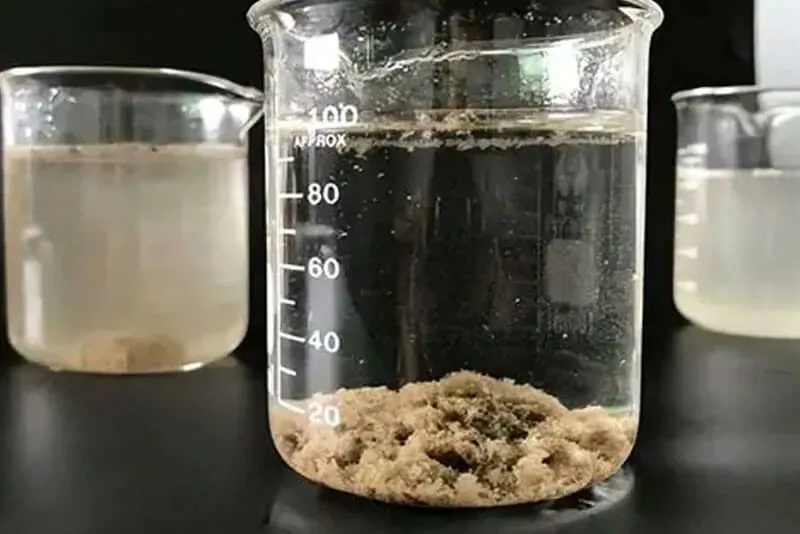
Factor 5 — Initial Turbidity and Particle Characteristics
The type and concentration of particles in the water affects which coagulation mechanism dominates and how efficiently PAC removes turbidity.
High-turbidity water (above 50 NTU): Sweep flocculation dominates — PAC at appropriate dose forms aluminum hydroxide precipitate that sweeps particles out of suspension. This mechanism is relatively dose-forgiving and less sensitive to pH and NOM variations.
Low-turbidity water (below 5 NTU): Charge neutralization must be highly efficient because particle concentrations are too low for sweep flocculation to be effective. This condition requires precise PAC dosing, optimal pH, and sometimes a higher basicity PAC product.
Fine clay-rich water: Clay minerals (kaolinite, montmorillonite) have strong negative surface charges and high cation exchange capacity — they require more PAC per unit of turbidity than mineral sands or organic turbidity.
Practical implication: Raw water characterization — particle type, size distribution, and zeta potential — helps explain why PAC dosage requirements vary between sources with similar turbidity values. Jar testing with your specific source water remains the most reliable method for dose determination.
Factor 6 — PAC Product Quality and Basicity
Not all PAC products coagulate equally. Product quality variables — Al₂O₃ content, basicity, and batch consistency — directly affect how efficiently PAC performs in water.
High basicity PAC (70–85%) contains more pre-polymerized aluminum species and delivers more effective charge neutralization per unit of Al₂O₃ than low basicity products (40–60%). In cold water, variable pH, and low-turbidity conditions, basicity differences between products translate directly into performance differences.
For detailed guidance on PAC grade and basicity selection: High Basicity PAC vs Low Basicity PAC
For PAC grade comparison: Comparing PAC Grades: 28% vs 30% vs 31%
Diagnosing Poor PAC Coagulation: A Practical Checklist
If your PAC-treated effluent is not meeting turbidity or TSS targets, work through this checklist before increasing dosage:
| Check | What to look for | Action if problem found |
|---|---|---|
| Raw water pH | Outside 5.5–8.5? | Adjust pH before PAC dosing |
| Water temperature | Below 10°C? | Extend flocculation time, consider PAM |
| Flash mixer G-value | Below 200 s⁻¹? | Increase mixing energy or reduce flow rate |
| Flocculation G-value | Above 80 s⁻¹? | Reduce mixing energy in flocculation stage |
| PAC dose vs jar test optimum | Under- or overdosing? | Recalibrate dose to jar test result |
| PAC basicity | Below 60%? | Evaluate higher basicity product |
| NOM level | Seasonal color increase? | Increase PAC dose for high-NOM periods |
Frequently Asked Questions
Why does my PAC system perform well in summer but poorly in winter?
The most common cause is a combination of lower temperature (increasing water viscosity and slowing floc growth) and higher NOM from autumn leaf fall in surface water sources. Extending flocculation time, adding PAM, and slightly increasing PAC dose are the most effective responses to seasonal performance deterioration.
If jar test results are good but full-scale performance is poor, what should I check first?
Check mixing. Jar tests are conducted under controlled, optimal mixing conditions. Full-scale systems frequently have dead zones, poorly positioned dosing points, or aging mixing equipment that does not replicate jar test conditions. G-value measurement in the full-scale flash mixer is the starting point.
Can I use online sensors to monitor coagulation efficiency in real time?
Yes. Online turbidity sensors at the clarifier outlet provide continuous feedback on coagulation performance. More advanced systems use streaming current detectors (SCDs) to monitor the electrokinetic charge of treated particles — providing a direct measure of charge neutralization efficiency that enables automatic PAC dose adjustment.
Conclusion
PAC coagulation efficiency is not determined by chemical selection alone — it is the product of chemistry, water characteristics, and operational conditions working together. pH, temperature, NOM, mixing energy, particle type, and product quality all influence how effectively PAC performs in your specific water.
Understanding these factors is what enables operators to diagnose performance problems accurately, optimize dosage correctly, and achieve consistent results across the seasonal and operational variability that real water sources present.
Contact our technical team today for a free coagulation efficiency assessment and optimization recommendation for your system. We respond within 24 hours.


