
Written by the HyChron Technical Team — water treatment specialists with over 15 years of field experience in municipal and industrial systems. Last reviewed: April 2026
Treatment plant managers who focus exclusively on chemical purchase cost when evaluating coagulants are measuring the wrong thing. Chemical cost is one line item in a treatment plant’s budget. The coagulant affects at least five others — and in most plants, the savings on those other line items more than offset the price premium of switching to PAC.
This article examines each cost reduction pathway that PAC delivers, with specific mechanisms and quantified impact ranges so you can assess the relevance to your own operation.

Cost Reduction 1 — Lower Chemical Purchase Volume
Mechanism: PAC’s pre-polymerized active aluminum species are more efficient at charge neutralization than alum’s mononuclear species. This allows equivalent turbidity removal at 30–50% lower dosage by weight.
Impact: Chemical purchase volume (and cost) decreases proportionally with dosage reduction. For a plant currently using 500 kg of alum per day, switching to PAC at 40% lower effective dose reduces daily consumption to approximately 300 kg equivalent — directly reducing chemical purchase frequency, storage turnover, and handling labor.
Quantified range: 25–45% reduction in coagulant consumption by weight, depending on water quality and the specific PAC grade and basicity versus alum comparison.
Cost Reduction 2 — Lower Sludge Disposal Costs
Mechanism: Lower PAC dosage means less aluminum hydroxide precipitate entering the sludge stream. PAC’s denser floc structure also produces more compact sludge that dewaters to higher dry solids content — reducing disposal volume further.
Impact: PAC consistently produces 30–50% less sludge volume than alum at equivalent treatment performance. For plants paying for sludge disposal by volume or weight, this reduction is a direct operating cost saving that appears every disposal cycle.
Quantified range: 30–50% reduction in sludge generation. At a disposal cost of $150/tonne and a medium-scale plant generating 2 tonnes of alum sludge per day, switching to PAC saves approximately $110/day → $40,000/year from sludge alone.
For detailed sludge cost calculation: Cost Analysis of Using PAC in Treatment Plants
Cost Reduction 3 — Reduced or Eliminated pH Adjustment Chemical Cost
Mechanism: Alum coagulates effectively only within pH 6.5–7.5. Many natural surface water sources and industrial effluents fall outside this range, requiring acid or alkali addition before alum dosing. PAC’s wider effective range (pH 5.0–9.0) eliminates the need for pH pre-adjustment in many applications.
Impact: Plants currently adding lime, caustic soda, or acid to adjust pH before alum dosing can eliminate this cost entirely when switching to PAC. For plants treating variable-pH industrial effluent, the saving is continuous and significant.
Quantified range: $0–$0.005/m³ depending on current pH adjustment chemical usage. For plants with significant pH adjustment costs, this is often the second-largest cost reduction after sludge.
Cost Reduction 4 — Extended Filter Run Times
Mechanism: PAC’s faster, denser floc formation and lower sludge carry-over from the clarifier reduces the suspended solids load entering downstream filters. Less loading means longer filter run times before backwashing is required.
Impact: Extended filter run times reduce backwash water consumption, backwash pump energy, and filter media replacement frequency. For plants with significant backwash costs or water recycling constraints, this is a meaningful saving.
Quantified range: 15–30% increase in filter run time between backwashes in well-optimized PAC systems. Equivalent to reducing backwash frequency from, for example, every 8 hours to every 10–11 hours — reducing backwash water consumption and pump energy proportionally.
Cost Reduction 5 — Lower Equipment Maintenance and Replacement Costs
Mechanism: Alum (aluminum sulfate) and ferric sulfate are corrosive chemicals due to their sulfate content. Dosing pumps, storage tanks, pipelines, and chemical injection points all experience accelerated wear in sulfate-rich environments. PAC, as a chloride-based compound, is significantly less corrosive.
Impact: Plants switching from alum to PAC consistently report reduced dosing pump maintenance frequency, fewer pipe and fitting replacements, and longer storage tank service life. These savings are difficult to quantify precisely but are real and recurring.
Quantified range: $0.001–$0.003/m³, depending on equipment condition, age, and current maintenance expenditure. More significant for older plants with a history of corrosion-related maintenance.
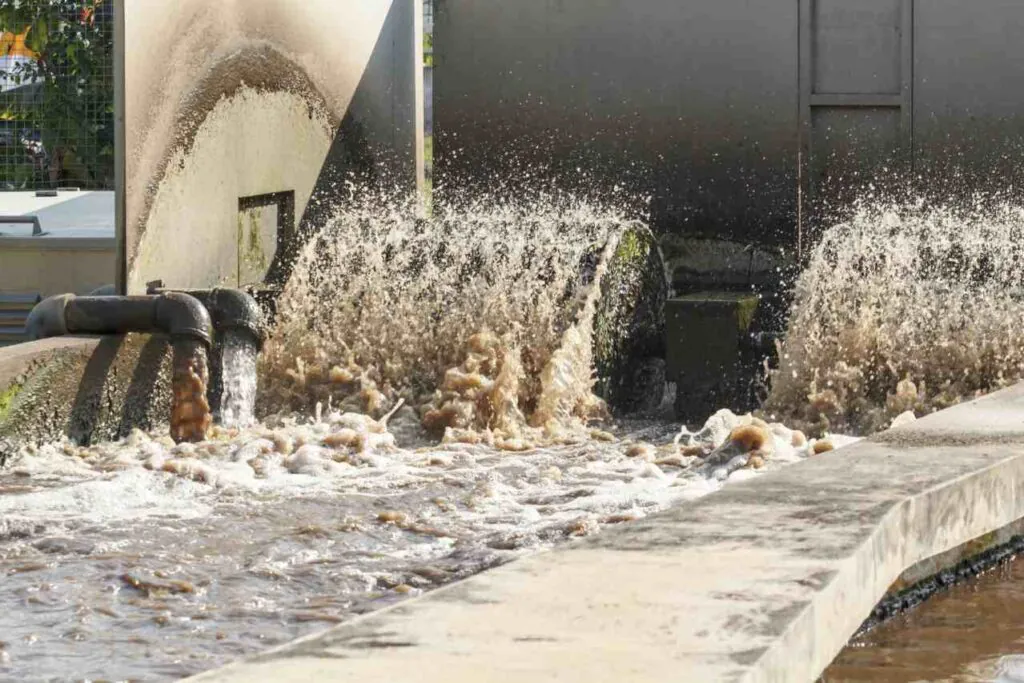
Cost Reduction 6 — Reduced Biological Treatment Operating Costs (Sewage and Industrial Applications)
Mechanism: When PAC is used for chemically enhanced primary treatment (CEPT) in sewage or industrial wastewater applications, it removes 40–65% of BOD and COD in the primary stage. This reduces the organic load entering biological secondary treatment — lowering aeration energy requirements and biological sludge production.
Impact: Aeration represents 50–70% of energy costs in activated sludge systems. A 40–65% reduction in biological load entering secondary treatment corresponds to proportional energy savings. Biological sludge production also decreases, reducing total sludge handling costs further.
Quantified range: $0.003–$0.015/m³ in sewage and industrial applications with biological secondary treatment, depending on plant size and energy costs.
For sewage treatment application: PAC for Sewage Treatment Plants: Complete Guide
Total Cost Reduction Summary
| Cost Component | Typical Saving (PAC vs Alum) |
|---|---|
| Chemical purchase cost | 10–30% lower cost per m³ |
| Sludge disposal | 30–50% less volume |
| pH adjustment chemicals | 0–100% eliminated (application-dependent) |
| Filter run extension | 15–30% longer run times |
| Equipment maintenance | Moderate reduction |
| Biological treatment energy | 20–40% reduction (CEPT applications) |
| Net total treatment cost | 20–40% lower than alum |
Identifying Where PAC Saves Most at Your Plant
Not every cost reduction pathway applies equally to every plant. The most impactful pathways depend on your specific operation:
- High sludge disposal cost: sludge reduction is the primary saving driver — quantify this first
- pH adjustment currently required: eliminating this cost may be the biggest single saving
- Biological treatment present: CEPT with PAC delivers energy and sludge savings beyond primary treatment
- Old or corrosion-affected equipment: maintenance savings are more significant
Frequently Asked Questions
Is the 20–40% total cost reduction realistic for all plants?
The range applies to most plants switching from alum to PAC with proper dosage optimization. Plants with very low sludge disposal costs or minimal pH adjustment needs may see savings at the lower end. Plants with high disposal costs, significant pH adjustment, or biological secondary treatment will typically be at the higher end or above it.
How long does it take to see the cost savings after switching to PAC?
Chemical purchase savings appear immediately — from the first delivery cycle after switching. Sludge savings appear within days as sludge generation decreases. Equipment maintenance savings accumulate over months and years. The full annual saving typically becomes visible within the first billing year.
Do I need to change anything in my treatment process to capture these savings?
The main requirement is dosage recalibration — setting the PAC dose at the jar-test-confirmed optimum for your water. Plants that switch to PAC but continue dosing at their previous alum-equivalent dose rates do not capture the full saving. Proper dose optimization is the prerequisite for realizing the full cost benefit.
Conclusion
PAC reduces overall treatment costs through six independent mechanisms — lower chemical consumption, less sludge, reduced pH adjustment, longer filter runs, lower equipment maintenance, and reduced biological treatment load. Together, these mechanisms deliver 20–40% lower total treatment cost per cubic meter in most applications.
The key to capturing these savings is treating the decision as a total cost calculation — not a unit price comparison.
Contact our technical team today for a free total cost reduction analysis for your specific plant, with calculations based on your actual flows, disposal costs, and water quality data. We respond within 24 hours.