
Written by the HyChron Technical Team — water treatment specialists with over 15 years of field experience in municipal and industrial systems. Last reviewed: April 2026 | Reading time: ~5 minutes
Sewage treatment plants face a dual challenge: meeting increasingly strict effluent discharge standards while keeping operating costs under control. Chemical coagulation is one of the most effective tools available for improving effluent quality — and PAC (Poly Aluminum Chloride) is the coagulant that delivers the best combination of performance and cost efficiency in sewage applications.
This guide covers everything a sewage plant operator needs to know about using PAC effectively — where to apply it, how to dose it correctly, how it affects sludge management, and what results to expect.
Operating a sewage treatment plant and want to evaluate PAC? Contact our technical team for a free assessment and dosage recommendation.
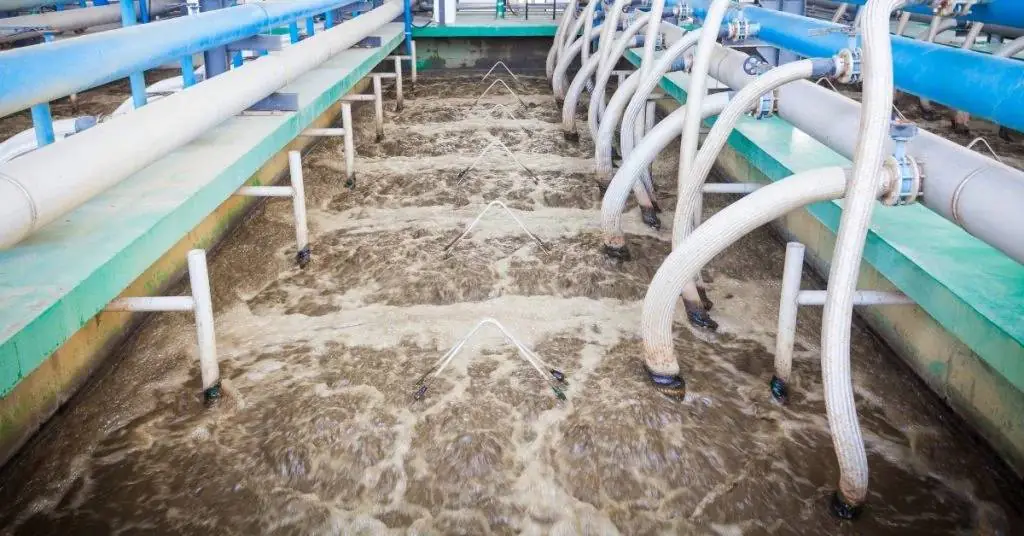
Where PAC Fits in the Sewage Treatment Process
Sewage treatment involves multiple stages, and PAC can be applied at several points depending on the plant’s configuration and treatment objectives.
Primary Treatment — Enhanced Primary Clarification
PAC is most commonly added ahead of primary sedimentation to enhance the removal of suspended solids and colloidal matter that would otherwise pass through to secondary treatment. This process — sometimes called chemically enhanced primary treatment (CEPT) — can:
- Increase TSS removal from 50–60% (conventional) to 80–90%
- Reduce BOD entering the secondary stage by 40–60%
- Reduce the hydraulic and organic load on biological treatment, improving its stability and capacity
Tertiary Treatment — Polishing
In plants with tertiary treatment stages, PAC is used as a polishing coagulant to achieve the low turbidity, phosphorus, and suspended solids levels required by stringent discharge standards. This is particularly relevant for plants discharging to sensitive water bodies or operating under nutrient removal requirements.
Sludge Thickening and Dewatering
PAC can also be used as a conditioning agent in sludge treatment to improve thickener and belt press performance — though polyacrylamide (PAM) flocculants are more commonly the primary conditioning agent at this stage, with PAC as a supplementary coagulant where needed.
Key Benefits of PAC in Sewage Treatment
Improved TSS and turbidity removal. PAC’s charge neutralization and sweep flocculation mechanisms effectively capture fine suspended particles and colloidal matter that conventional primary clarification misses.
Phosphorus removal. PAC reacts with soluble phosphate to form aluminum phosphate precipitates, which are then removed with the sludge. This makes PAC a cost-effective option for plants with phosphorus discharge limits — without requiring a separate chemical phosphorus removal step.
Reduced secondary treatment load. By removing more organic and suspended matter in primary treatment, PAC reduces the load on biological secondary treatment — improving its stability, reducing aeration energy, and extending the capacity of existing equipment.
Lower sludge volume than alum. PAC produces 30–50% less sludge per cubic meter treated compared to alum, directly reducing dewatering costs, transport volumes, and disposal expenses — significant savings for plants processing large daily flows.
Wide pH operating range. Sewage pH can vary with influent composition and upstream industrial contributions. PAC’s effective range of pH 5.0–9.0 covers these variations without requiring constant pH correction.
Dosage Guidelines for Sewage Treatment
| Application Point | Typical PAC Dosage |
|---|---|
| Enhanced primary clarification (CEPT) | 20–60 mg/L |
| Tertiary polishing | 5–20 mg/L |
| Phosphorus removal | 15–40 mg/L (dose adjusted to influent P concentration) |
Dosing Procedure
- Jar test before full-scale application — sewage composition varies by time of day and season; establish baseline dose under representative conditions
- Dose at the flash mixing zone — ahead of primary clarifiers; G-value 150–300 s⁻¹ for 30–60 seconds
- Flocculation stage — G-value 20–50 s⁻¹ for 15–20 minutes before sedimentation
- Monitor continuously — online TSS or turbidity monitoring at the clarifier outlet enables real-time dosage adjustment

Effect on Sludge Management
Adding PAC to primary treatment increases primary sludge volume relative to untreated primary sludge — but this is offset by the significant reduction in sludge produced compared to alum, and by the reduced biological sludge generated in secondary treatment due to the lower organic load entering that stage.
In practice, most plants using PAC for CEPT find that:
- Primary sludge volume increases moderately
- Secondary (biological) sludge volume decreases more significantly
- Net sludge volume is comparable or lower than without chemical addition
- Sludge dewaterability improves, reducing dewatering energy and polymer consumption
For plants where sludge handling is a major cost driver, the combination of PAC in primary treatment and PAM in sludge dewatering often delivers the best overall result. See: Key Advantages of PAC in Water Treatment
Meeting Discharge Standards with PAC
Discharge standards for sewage treatment plants typically cover:
- TSS (Total Suspended Solids) — PAC directly and effectively reduces TSS
- BOD / COD — reduced by removing colloidal organic matter in primary treatment
- Phosphorus — PAC achieves significant phosphorus removal through chemical precipitation
- Turbidity — PAC’s coagulation mechanism is specifically designed for turbidity removal
For plants currently failing to meet TSS or phosphorus discharge limits, adding PAC to the primary treatment stage is often the fastest and most cost-effective path to compliance — faster than biological process optimization and without the capital cost of new equipment.
Frequently Asked Questions
Will adding PAC to primary treatment affect my biological secondary stage?
Positively, in most cases. Reducing the organic and suspended solids load entering secondary treatment improves biological process stability, reduces aeration energy demand, and can increase the effective capacity of the biological stage without capital upgrades.
How do I justify the cost of adding PAC to our treatment process?
The cost of PAC addition is typically offset by savings in secondary treatment energy, reduced sludge disposal costs, and the avoidance of regulatory fines for discharge limit exceedances. A cost-benefit analysis based on your plant’s actual flow and sludge disposal costs will usually show a positive return. Contact our team for a plant-specific calculation.
Can PAC be used alongside existing biological treatment without interference?
Yes. PAC applied in primary treatment is removed with the primary sludge before the effluent reaches biological treatment. It does not interfere with biological processes when applied correctly at the primary stage.
Conclusion
PAC is one of the most practical and cost-effective tools available for sewage treatment plant operators looking to improve effluent quality, meet tightening discharge standards, and reduce overall operating costs. Whether applied in primary treatment, tertiary polishing, or phosphorus removal, it delivers consistent, controllable results with lower sludge production than traditional coagulants.
Contact our technical team today for a free plant assessment, PAC product samples with full COA documentation, and a dosage recommendation tailored to your sewage treatment configuration. We respond within 24 hours.

