
Coal washing plants face a daily challenge that directly impacts profitability: how to separate fine coal particles from slurry water efficiently, recover clean water for reuse, and manage sludge disposal without excessive cost.
When slurry settlement is slow, water recycling becomes inefficient, thickeners overflow, and filter presses struggle to produce dry enough cake. The result is higher operating costs, environmental compliance risk, and lost production time.
Polyacrylamide (PAM) is the most widely used flocculant in coal washing operations worldwide. When the right grade is applied at the correct dosage, it dramatically accelerates slurry settlement, improves water clarity, and reduces sludge volume—directly lowering operational costs and helping plants meet discharge regulations.
This guide explains how PAM works in coal washing, which grades perform best, and how to optimize dosage for maximum efficiency.
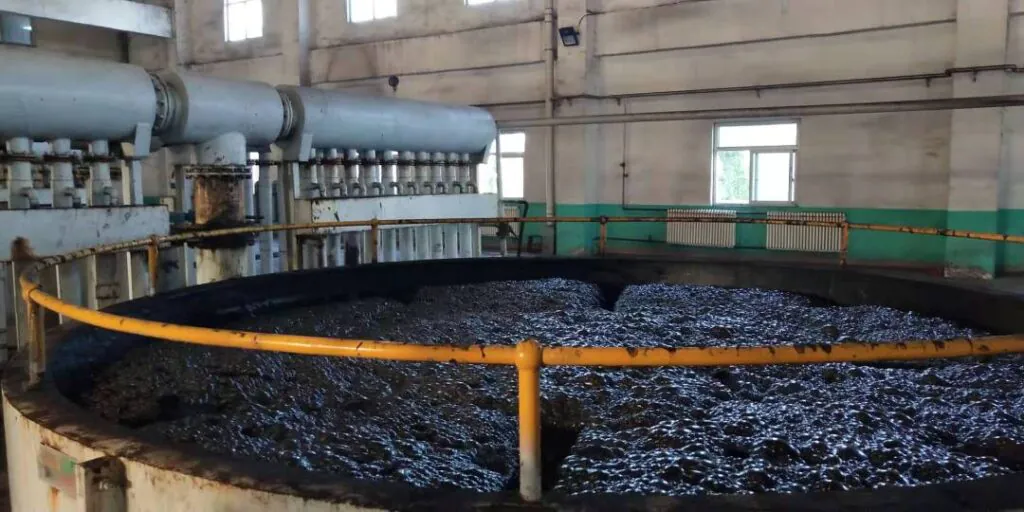
Why Coal Washing Produces Difficult Wastewater
The coal washing process uses large volumes of water to separate coal from rock, clay, and other impurities. This process generates slurry water containing:
| Contaminant | Typical Concentration | Treatment Challenge |
|---|---|---|
| Fine coal particles (<0.5mm) | 5,000–30,000 mg/L | Very slow natural settlement |
| Clay and silica particles | 2,000–15,000 mg/L | Colloidal stability, hard to flocculate |
| Suspended solids (total) | 10,000–50,000 mg/L | High polymer demand |
| pH range | 6.5–8.5 | Affects charge density performance |
Fine coal and clay particles carry natural surface charges that keep them suspended in water indefinitely. Without chemical treatment, natural settlement can take days—far too slow for continuous plant operation.
This is where polyacrylamide delivers immediate, measurable value.
How PAM Works in Coal Washing Applications
Polyacrylamide improves coal slurry treatment through two complementary mechanisms:
Charge neutralization: The ionic groups on the PAM chain neutralize the surface charge on suspended particles, reducing the repulsive forces that keep them apart.
Polymer bridging: The long molecular chains of high-MW PAM physically link multiple particles together, forming large, dense flocs that settle rapidly under gravity.
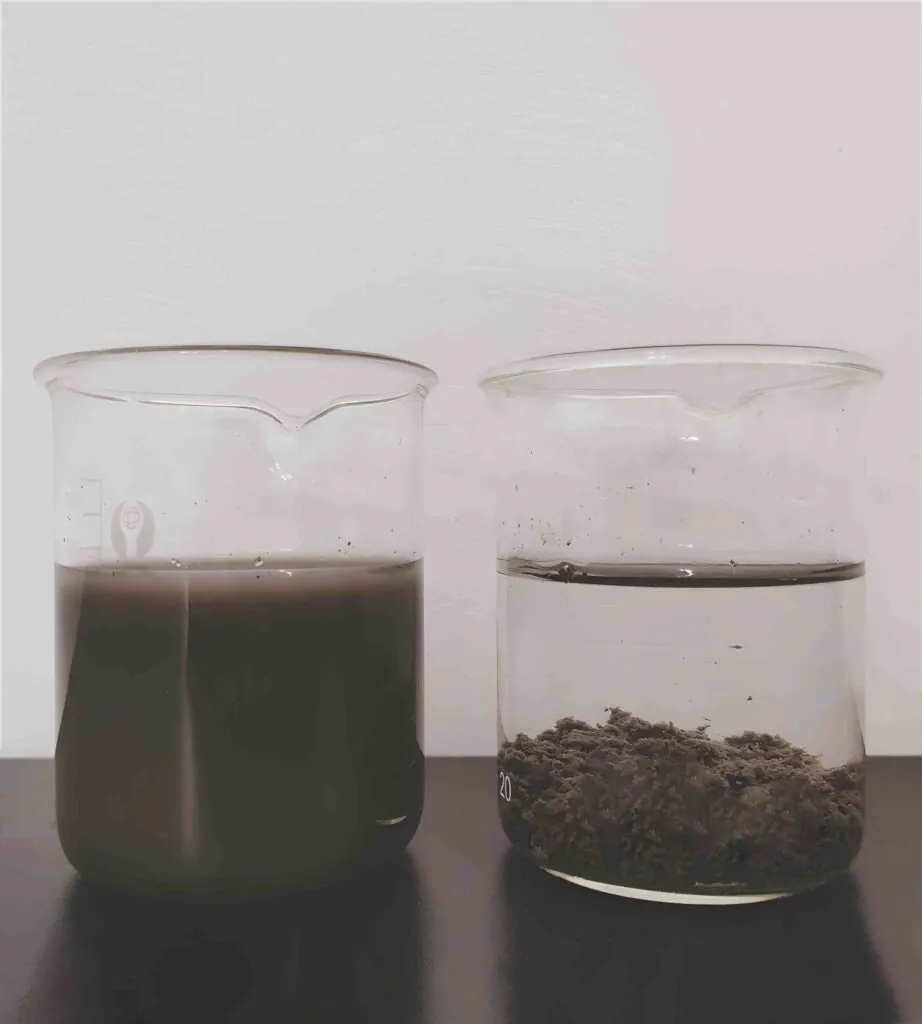
The combined effect is that particles which would take hours to settle naturally form visible flocs within seconds of polymer addition and settle completely within minutes.
In practical terms, a well-optimized PAM dosing program in a coal washing plant can achieve:
- Settled water turbidity below 50 NTU (suitable for direct recycling)
- Thickener underflow solids content of 45–65%
- Filter press cake moisture below 25%
- Water recovery rate above 85%
If your plant is currently falling short of these benchmarks, polymer selection and dosage optimization are the most cost-effective place to start.
Contact our technical team today for a free PAM grade recommendation based on your slurry characteristics. → [Get Free Recommendation]
Choosing the Right PAM Grade for Coal Washing
Not all polyacrylamide products perform equally in coal washing applications. Grade selection depends on the specific characteristics of your slurry.
Anionic PAM — Most Common Choice
Anionic polyacrylamide is the standard choice for most coal washing thickener and clarifier applications.
Why anionic works best for coal slurry:
- Coal fines and clay particles typically carry negative surface charges
- High-MW anionic PAM provides strong bridging between particles
- Works effectively across the typical coal washing pH range (6.5–8.5)
Recommended specifications:
- Molecular weight: 12–20 million Daltons
- Charge density: 20–40% (medium anionic)
- Application: Thickeners, clarifiers, tailings ponds
Cationic PAM — For Specific Conditions
Cationic PAM performs better in certain coal washing scenarios:
- Slurry with high clay content and strong negative charge
- Filter press and centrifuge dewatering stages
- Wastewater with low pH (below 6.5)
Nonionic PAM — For High-Salinity Conditions
In coal washing operations using recycled water with high dissolved salt content, nonionic PAM maintains consistent performance where ionic grades may underperform.
👉 For a detailed breakdown of grade selection criteria, see: Choosing the Right PAM Grade for Your Industry
Recommended PAM Dosage for Coal Washing
Dosage requirements vary significantly depending on slurry concentration and coal type. The following ranges provide a practical starting point:
| Application Point | PAM Type | Typical Dosage Range |
|---|---|---|
| Thickener feed (fine coal) | Anionic, high MW | 15–40 g/tonne dry solids |
| Clarifier (overflow water) | Anionic, medium MW | 5–15 g/tonne dry solids |
| Filter press feed | Cationic, medium MW | 20–50 g/tonne dry solids |
| Tailings pond treatment | Anionic, high MW | 10–30 g/tonne dry solids |
These are industry reference ranges. Actual optimal dosage must be determined through jar testing on representative slurry samples from your specific operation.
Important: Overdosing PAM in coal washing does not improve performance and increases cost. Restabilization—where excess polymer re-disperses settled particles—is a common and expensive mistake.
The Economic Case for PAM Optimization in Coal Washing
Many coal washing plants significantly underestimate the financial impact of poor polymer performance. Consider the full cost picture:
Direct costs of poor flocculation:
- Higher polymer consumption from incorrect grade or overdosing
- Increased water treatment cost from poor clarifier performance
- Higher sludge disposal cost from wet, poorly dewatered cake
- Production slowdowns when thickeners overflow or underperform
What optimized PAM dosing delivers:
- 15–25% reduction in polymer consumption after proper grade selection and jar testing
- 10–20% improvement in filter press throughput from better floc structure
- Reduced fresh water intake through higher recycled water recovery
- Lower energy consumption in centrifuge and belt press operations
For a plant processing 1,000 tonnes of coal per day, even a 15% reduction in polymer consumption can represent savings of $50,000–$150,000 per year depending on current usage rates and product pricing.
Request a cost analysis for your operation today. Our technical team will review your current polymer program and identify specific savings opportunities. → [Request Cost Analysis]
Preparing and Dosing PAM in Coal Washing Plants
Correct preparation and dosing of polymer solution is essential to achieving the performance described above. The most common cause of underperformance in coal washing applications is not the wrong product—it is incorrect preparation.
Key preparation guidelines:
- Prepare PAM at 0.1%–0.2% solution concentration
- Use clean water at 20°C–35°C for dissolution
- Allow 30–45 minutes mixing time before dosing
- Add polymer powder slowly into the mixing tank with agitator running
- Do not dose solution that has been prepared for more than 24 hours
For a complete guide to polymer preparation best practices, including how to prevent fish eye formation and optimize mixing time, see: Factors Affecting Polymer Dissolution Speed
Dosing point location: In thickener applications, the optimal dosing point is at the feed well or feedpipe, where turbulent mixing ensures rapid polymer-particle contact before the slurry enters the settling zone. Avoid dosing directly into the thickener tank, as insufficient mixing will reduce floc formation efficiency.
Troubleshooting Common PAM Problems in Coal Washing
Problem: Thickener overflow is turbid despite polymer addition
Likely causes:
- Incorrect PAM grade (charge density too low for clay content)
- Underdosing due to slurry concentration increase
- Poor dosing point location — insufficient mixing before settling zone
- Polymer solution prepared incorrectly (fish eyes, incomplete dissolution)
Solutions: Run jar test with current slurry sample, verify dosing point location, check polymer preparation procedure.
Problem: Filter press cake is too wet
Likely causes:
- Using anionic PAM instead of cationic for dewatering stage
- Insufficient polymer contact time before press
- Dosage too low for current feed solids content
Solutions: Switch to cationic PAM for filter press application, increase dosage, extend contact time before pressing.
Problem: High polymer consumption with poor results
Likely causes:
- Overdosing causing restabilization
- Polymer degraded due to high-shear pumping after dissolution
- Solution concentration too high (>0.3%) causing incomplete activation
Solutions: Reduce dosage in controlled steps, move dosing point to reduce shear exposure, reduce preparation concentration.
Problem: Inconsistent performance across shifts
Likely causes:
- Variable slurry feed concentration not matched by dosage adjustment
- Polymer solution aging beyond 24 hours between shifts
- Water temperature changes affecting dissolution quality
Solutions: Install turbidity monitoring on thickener overflow for real-time feedback, establish solution preparation schedule aligned with shift changes.
Frequently Asked Questions
What type of PAM is used in coal washing?
High molecular weight anionic PAM is the most common choice for thickener and clarifier applications in coal washing. Cationic PAM is used specifically for filter press and centrifuge dewatering stages where stronger particle-polymer binding is needed.
What is the typical PAM dosage for coal slurry thickeners?
Most coal washing thickener applications require 15–40 grams of PAM per tonne of dry solids processed. Exact dosage depends on slurry concentration, coal type, and clay content. Jar testing is the most reliable method to determine site-specific optimal dosage.
Can PAM be used with other coagulants in coal washing?
Yes. In operations with very high clay content or low pH, combining a coagulant (such as polyaluminum chloride or ferric sulfate) with high-MW anionic PAM can improve performance. The coagulant handles charge neutralization, while PAM provides bridging. Contact our team for dual-program recommendations.
How does PAM affect recycled water quality in coal washing?
Properly dosed PAM significantly improves recycled water clarity, typically reducing suspended solids from 10,000+ mg/L to below 200 mg/L. This allows direct reuse in washing circuits, reducing fresh water consumption by 60–80% in well-optimized plants.
What is the shelf life of PAM used in coal washing?
Dry PAM powder has a shelf life of 18–24 months when stored in cool, dry conditions away from direct sunlight. Dissolved polymer solution should be used within 24 hours of preparation. Always check product-specific storage guidelines from your supplier.
Do you supply PAM specifically formulated for coal washing applications?
Yes. We supply high molecular weight anionic and cationic PAM grades specifically tested for coal washing performance. All products come with full technical data sheets including dissolution time, molecular weight range, and charge density specifications. Contact us to request product documentation and pricing.
Why PAM Product Quality Matters in Coal Washing
Coal washing plants run continuously, often 24 hours a day. Inconsistent polymer performance—caused by batch-to-batch variation in product quality—directly disrupts thickener and clarifier operation and forces operators into constant manual adjustment.
High-quality polyacrylamide provides:
- Consistent molecular weight across every batch, ensuring predictable flocculation performance
- Narrow particle size distribution for faster, more uniform dissolution
- Stable charge density so dosage requirements remain consistent
- Full technical documentation including dissolution specs, molecular weight range, and application guidelines
Our industrial-grade PAM is trusted by coal washing operations across Asia, the Middle East, and Southeast Asia. Every batch is quality-tested before shipment, and our technical team provides ongoing application support to ensure consistent results.
Ready to improve your coal washing performance? Contact us today to request product samples, technical data sheets, and a competitive price quote. → [Contact Us Now]
Conclusion
Polyacrylamide is the most effective and cost-efficient tool available to coal washing plants for slurry settlement, water recovery, and sludge dewatering. The key to maximizing its value lies in selecting the correct grade, optimizing dosage through jar testing, and following proper preparation procedures.
Plants that invest in proper polymer optimization consistently achieve lower operating costs, better water recovery, and more stable day-to-day operation compared to those using a trial-and-error approach to polymer dosing.
If your coal washing operation is struggling with slow settlement, poor water clarity, or high sludge disposal costs, the solution may be simpler than you think. Our technical team works directly with plant operators to identify the right polymer grade, establish optimal dosage, and provide ongoing support.
Get in touch today — tell us your slurry characteristics and we will recommend the right PAM solution with full technical and pricing support.

