Skip to content
Poor settling is one of the most common performance complaints in wastewater treatment — and one of the most misdiagnosed. When a clarifier or settling pond underperforms, the default response is often to increase polymer dose or switch products. Sometimes that helps. More often, it does not, because the real cause lies elsewhere.
Settling performance depends on a chain of factors: wastewater characteristics, polymer selection, dosage, preparation quality, mixing conditions, and hydraulic loading. A problem at any point in that chain produces the same visible symptom — turbid effluent, slow settlement, thin sludge layer — regardless of where the failure actually occurred.
This guide walks through the most common causes of poor settling in a structured sequence, so you can identify the real problem before making any changes.
Start Here: Four Quick Field Checks
Before running any tests, four quick observations can immediately narrow down the cause.
Check 1 — When did the problem start? Sudden onset usually points to a specific change: new PAM batch, shift in production, equipment fault, or chemical interference. Gradual deterioration over weeks usually indicates drift in influent characteristics or seasonal temperature change.
Check 2 — What do the flocs look like? No visible flocs → underdosing or dissolution problem. Small, fine flocs that will not grow → overdosing or wrong grade. Flocs forming but breaking apart before settling → shear damage or pH problem. Flocs forming well but settling slowly → hydraulic overload or density mismatch.
Check 3 — Has anything changed recently? New PAM batch, new raw material source, production rate increase, recent equipment maintenance, or a new chemical addition upstream — any of these can cause settling performance to change without any obvious operational adjustment.
Check 4 — Is the problem consistent or intermittent? Consistent poor performance across all shifts suggests a systematic issue — wrong grade, structural underdosing, or hydraulic overload. Intermittent problems that vary by shift often point to inconsistent polymer preparation or dosage adjustments being made differently by different operators.
The Diagnostic Sequence
Step 1: Rule Out Hydraulic Overload
Before assuming a polymer problem, confirm that your settling unit is not simply receiving more flow than it was designed to handle.
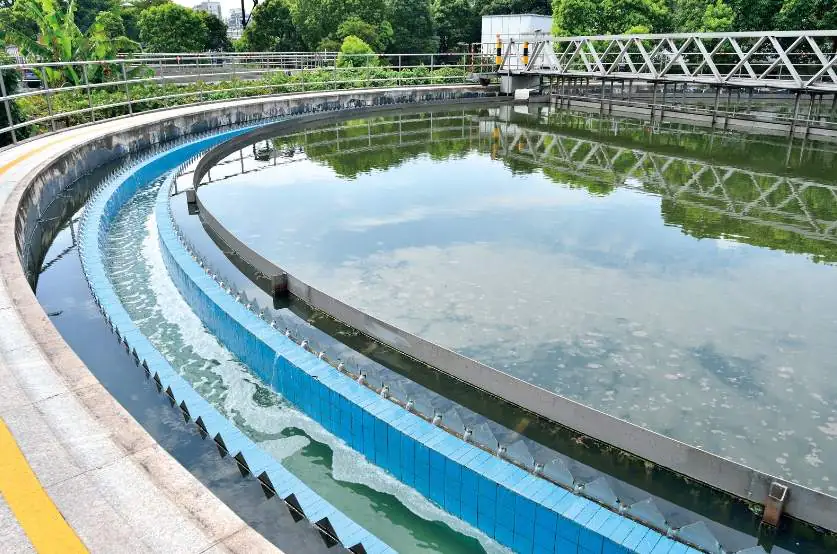
Clarifiers and thickeners have a design surface loading rate — the maximum volume of wastewater per unit of surface area per unit of time that allows adequate residence for settlement. When flow exceeds this rate, even perfectly flocculated water will not settle completely before reaching the overflow weir.
How to check: Compare current hydraulic loading against the design specification for your settling unit. If current flow rate exceeds design capacity by more than 10–15%, hydraulic overload is contributing to poor performance regardless of polymer optimization.
Fix: Reduce influent flow rate if possible, or distribute flow across multiple settling units. If hydraulic overload is structural and persistent, polymer optimization alone cannot fully compensate — but switching to a higher molecular weight grade that produces faster-settling flocs can partially offset the deficit.
Step 2: Run a Jar Test at Current Conditions
A jar test conducted on fresh influent from your system right now is the single most informative diagnostic tool available. It answers three questions simultaneously: Is the current PAM grade capable of treating this wastewater? Is the current dosage correct? Is the problem in the full-scale system rather than the chemistry?
What the jar test tells you:
- If flocs form well and settle clearly in the jar → the chemistry is correct and the problem is in the full-scale system (shear, hydraulics, dosing point)
- If flocs are small and settling is poor at all dosages → wrong PAM grade for current wastewater
- If performance improves at lower dosage → overdosing in the full-scale system
- If performance improves at higher dosage → underdosing in the full-scale system
For a step-by-step jar testing procedure, see: Calculating PAM Dosage Accurately
Contact our technical team today if you need guidance interpreting jar test results or selecting an alternative PAM grade to trial. → Contact our technical team today
Step 3: Check Polymer Preparation Quality
If the jar test shows good chemistry but full-scale performance is poor, preparation quality is the next place to look. Poorly dissolved polymer — regardless of grade or dosage — cannot perform to its rated capability.
Key preparation parameters to verify:
| Parameter | Recommended Range | Common Fault |
|---|---|---|
| Water temperature | 20°C – 35°C | Below 15°C in winter — extend mixing time |
| Solution concentration | 0.1% – 0.2% | Above 0.3% — incomplete dissolution |
| Mixing time | 30 – 45 minutes minimum | Under 20 minutes — partially hydrated chains |
| Powder addition rate | Slow and steady | Added too fast — fish eyes forming |
Inspect the preparation tank directly. Gel accumulation on tank walls or agitator blades, visible lumps in the solution, or solution that appears unusually thick or stringy all indicate dissolution problems.
For a complete guide to preparation best practices, see: Factors Affecting Polymer Dissolution Speed
Step 4: Verify the Dosing Point
Where polymer enters the wastewater stream has a significant effect on performance — often as much as what polymer is used or how much is dosed.
Two common dosing point problems:
Too little mixing after dosing: If the dosing point is too close to the settling zone, polymer does not have enough contact time with particles before the water enters the low-turbulence settling environment. Flocs are small and incompletely formed.
Too much shear after dosing: If flocculated water passes through pumps, valves, or constrictions on its way to the settling zone, formed flocs are broken apart before they can settle. This produces the characteristic symptom of good jar test performance but poor full-scale results.
Fix: The optimal dosing point is in a zone of moderate turbulence — enough mixing energy to distribute polymer rapidly, but not so much shear that flocs are destroyed immediately after forming. In thickener applications, the feed well is typically the best location. In pond systems, dose at the inlet channel where natural flow turbulence provides mixing.
Step 5: Evaluate PAM Grade Suitability
If all of the above are within acceptable parameters and settling performance remains poor, the PAM grade may no longer be matched to your current wastewater.
Wastewater characteristics change over time — production processes evolve, raw material sources shift, and seasonal variation affects particle type and concentration. A grade that performed well six months ago may be mismatched to current conditions.
Key indicators of grade mismatch:
- Jar test shows floc formation but flocs are consistently small regardless of dosage
- Increasing dosage beyond the normal range produces only marginal improvement
- Performance was adequate previously but has declined without any obvious operational change
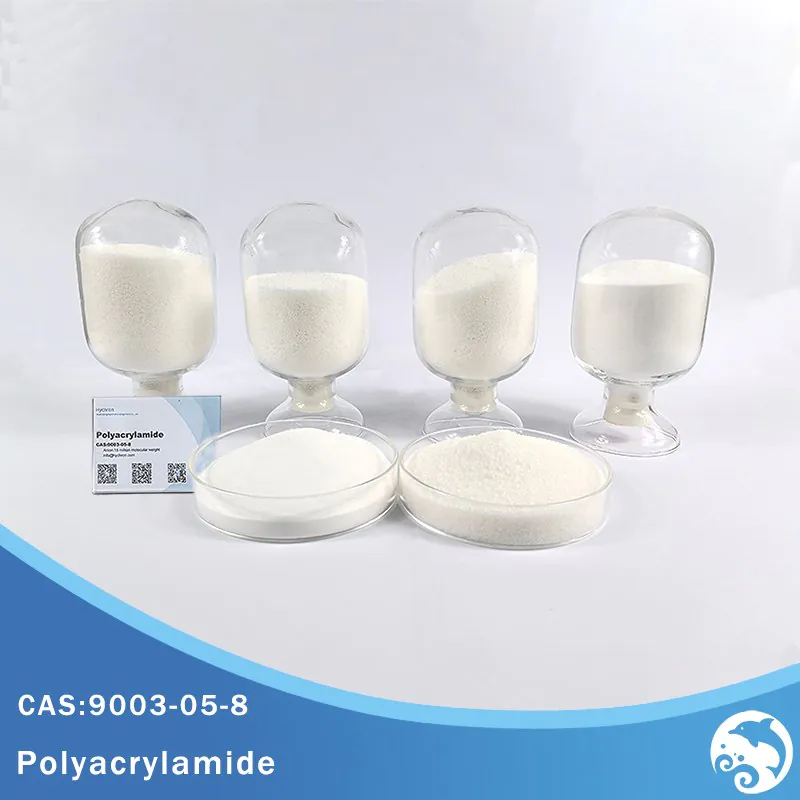
Fix: Trial an alternative grade — typically higher molecular weight, or different charge density — through jar testing before making a full-scale switch. Request trial quantities from your supplier with technical data sheets showing molecular weight and charge density specifications.
Common Settling Problems at a Glance
| Symptom | Most Likely Cause | First Action |
|---|---|---|
| No flocs forming | Underdosing or dissolution failure | Jar test + check preparation |
| Flocs forming, not settling | Hydraulic overload or shear damage | Check flow rate + dosing point |
| Milky, hazy effluent | Overdosing (restabilization) | Reduce dose 15–20%, re-evaluate |
| Good jar test, poor full-scale | Shear in flow path | Map dosing point to settling zone |
| Gradual performance decline | Grade mismatch or influent change | Fresh jar test with current influent |
| Shift-to-shift variation | Inconsistent preparation | Standardize preparation procedure |
Frequently Asked Questions
My settling was fine last month but has gotten worse — what changed?
The most common causes of gradual performance decline are changes in influent characteristics (production rate, raw material source, seasonal temperature) and new PAM batches with slightly different activity levels. Run a fresh jar test with current influent and compare against your established optimal dosage to identify whether the chemistry or the conditions have changed.
Can I improve settling without changing my PAM grade?
Often yes. Dosage optimization, improved preparation procedure, and dosing point relocation frequently resolve poor settling without any product change. Work through the diagnostic sequence in this guide before concluding that a grade change is necessary.
How do I know if my clarifier is hydraulically overloaded?
Compare the current volumetric flow rate to the clarifier design specification. If you do not have the original design data, a surface overflow rate above 1.5–2.0 m³/m²/hour for most conventional clarifiers is a reasonable indicator of potential overload. Contact your equipment supplier or an engineering consultant to confirm design limits.
Conclusion
Poor settling performance has multiple possible causes — hydraulic, chemical, mechanical, and procedural. Reaching for more polymer before diagnosing the real cause rarely fixes the problem and often creates new ones.
The four field checks and five diagnostic steps in this guide give operators a structured path from symptom to root cause. In most cases, the fix is practical and immediate: adjust dosage, improve preparation, relocate the dosing point, or address hydraulic loading.
If you have worked through this sequence and are still struggling with settling performance, the issue may be product quality or grade mismatch — both of which our technical team can help evaluate.
Contact us today for a free technical consultation and PAM grade recommendation tailored to your settling system. → Get in touch today