
Industrial facilities that recycle process water face a problem that compounds over time: every cycle through the production process adds more suspended solids, fine particles, and contaminants to the water. Without effective treatment between cycles, recycled water quality deteriorates until it can no longer be used—forcing plants to draw more fresh water, increase discharge volumes, or both.
Rising water costs, tightening discharge regulations, and increasing pressure to reduce environmental impact have made industrial water recycling a operational priority across manufacturing, mining, construction materials, and heavy industry sectors worldwide.
Polyacrylamide (PAM) is the most widely used polymer for industrial recycling water treatment. Applied at the right grade and dosage, it removes suspended solids rapidly, restores water clarity to reusable standards, and enables closed-loop water systems that dramatically reduce both fresh water consumption and discharge volumes.
This guide explains how PAM improves industrial recycling water treatment, which industries benefit most, and how to build an optimized polymer program for your facility.
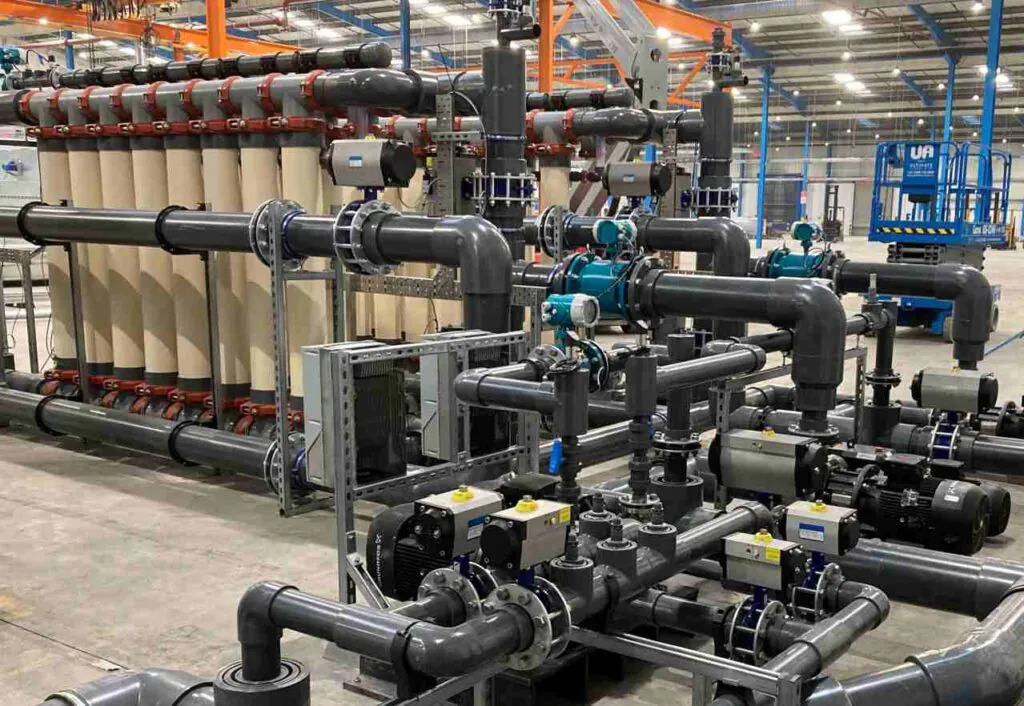
Why Industrial Recycling Water Requires Chemical Treatment
Industrial process water picks up contaminants at every stage of production. The specific contaminants depend on the industry, but the treatment challenge is consistent across sectors: fine suspended particles that resist natural settlement and prevent direct water reuse.
| Industry | Primary Contaminants | Typical TSS Range |
|---|---|---|
| Sand and gravel washing | Fine silica, clay, silt | 5,000–40,000 mg/L |
| Coal processing | Fine coal, clay, ash | 10,000–50,000 mg/L |
| Concrete and cement | Cement fines, aggregate dust | 3,000–20,000 mg/L |
| Steel and metal processing | Metal oxides, mill scale, oils | 2,000–15,000 mg/L |
| Paper and pulp | Fiber fines, fillers, coatings | 1,000–10,000 mg/L |
| Chemical manufacturing | Process solids, reaction byproducts | Variable |
In most cases, these particles are fine enough to remain in stable suspension for hours or days without chemical treatment—making direct recycling without flocculation impractical for continuous industrial operations.
How PAM Enables Effective Water Recycling
Polyacrylamide works by aggregating fine suspended particles into large, rapidly settling flocs through two complementary mechanisms:
Charge neutralization: Ionic PAM groups interact with charged particle surfaces, reducing the electrostatic repulsion that keeps particles dispersed.
Polymer bridging: The long molecular chains of high-MW PAM physically connect multiple particles simultaneously, forming dense floc structures that settle quickly under gravity.
The result is that suspended solids which would take hours to settle naturally are removed within 10–20 minutes of PAM addition—producing clarified water suitable for direct reuse in most industrial processes.
Typical recycling water quality achievable with optimized PAM treatment:
- Suspended solids reduced from 10,000+ mg/L to below 100 mg/L
- Turbidity reduced from 1,000+ NTU to below 30 NTU
- Water recycling rate of 80–95% in closed-loop systems
- Sludge solids content of 40–65% after dewatering
These results directly translate into lower fresh water costs, reduced discharge fees, and more stable production operations.
Contact our technical team today for a free PAM recommendation tailored to your industry and process water characteristics. → Contact our technical team today
PAM Applications Across Industrial Water Recycling Systems
Thickeners and Clarifiers
Thickeners and clarifiers are the primary treatment units in most industrial water recycling systems. PAM is dosed into the feed stream before the settling zone, where it rapidly forms flocs that settle to the underflow while clarified water overflows for reuse.
High molecular weight anionic PAM is the standard choice for most thickener and clarifier applications, providing strong bridging performance across a wide range of particle types and concentrations.
Settling Ponds
In facilities using open settling ponds for water recycling, PAM dramatically reduces the required residence time for adequate clarification—allowing smaller pond capacity to achieve the same water quality, or improving performance from existing pond infrastructure without capital investment.
Filter Presses and Belt Presses
At the sludge dewatering stage, cationic PAM is typically used to condition settled sludge before mechanical dewatering. Proper polymer conditioning improves filter press throughput, reduces cycle time, and produces drier cake—lowering sludge disposal costs.
Cooling Tower Blowdown
In facilities recycling cooling tower blowdown water, PAM helps remove suspended solids and colloidal particles before the water re-enters the cooling system, reducing fouling and extending equipment life.
Selecting the Right PAM Grade for Your Recycling System
PAM grade selection for industrial water recycling depends on three primary factors: the type of suspended solids, the pH of the process water, and the specific treatment unit being used.
| Treatment Stage | Recommended PAM Type | Molecular Weight | Charge Density |
|---|---|---|---|
| Thickener / clarifier (mineral solids) | Anionic | 15–20 million Da | 20–40% |
| Settling pond (mixed solids) | Anionic | 12–18 million Da | 15–30% |
| Filter press conditioning | Cationic | 8–15 million Da | 40–70% |
| High-salinity recycled water | Nonionic | 10–18 million Da | N/A |
| Oily wastewater (after oil removal) | Anionic | 12–16 million Da | 20–35% |
For facilities with complex process water containing mixed contaminant types, combining a coagulant with PAM often improves performance. The coagulant handles charge neutralization of fine colloids, while PAM provides bridging to form settleable flocs.
For a detailed guide to matching PAM grade to your specific application, see: Choosing the Right PAM Grade for Your Industry
Dosage Guidelines for Industrial Recycling Water Treatment
PAM dosage requirements vary significantly across industries and process water characteristics. The following table provides practical starting points for common industrial recycling applications:
| Application | PAM Type | Typical Dosage Range |
|---|---|---|
| Mineral processing thickener | Anionic, high MW | 10–35 g/tonne dry solids |
| Construction materials settling | Anionic, high MW | 8–25 g/tonne dry solids |
| Steel mill water recycling | Anionic, medium-high MW | 5–20 g/tonne dry solids |
| Paper mill white water recovery | Anionic, medium MW | 3–15 g/tonne dry solids |
| Filter press conditioning | Cationic, medium MW | 20–60 g/tonne dry solids |
Optimal dosage for any specific facility must be confirmed through jar testing on representative process water samples. Jar testing identifies the minimum effective dose, preventing overdosing—which increases cost without improving performance and can cause restabilization of fine particles.
For a step-by-step jar testing procedure, see: Calculating PAM Dosage Accurately
The Business Case for PAM-Optimized Water Recycling
Investing in an optimized PAM program for industrial water recycling delivers returns across multiple cost categories simultaneously:
Fresh water cost reduction: Increasing water recycling rate from 60% to 90% cuts fresh water consumption by 75%. For an industrial facility using 1,000 m³/day of process water, this can represent annual savings of $100,000–$500,000 depending on local water costs and availability.
Discharge fee reduction: Most industrial discharge fees are based on volume and suspended solids load. Higher recycling rates reduce discharge volume directly, while better treatment reduces SS concentration—both lowering discharge costs.
Sludge disposal savings: Better flocculation produces drier, more compact sludge from dewatering equipment. Reducing cake moisture from 35% to 25% can cut sludge disposal volume—and cost—by 15–25%.
Regulatory compliance protection: Discharge limits for suspended solids and turbidity are tightening in most markets. PAM-optimized recycling systems consistently achieve effluent quality well within current and anticipated future regulatory limits, reducing compliance risk.
Production stability: Consistent recycled water quality reduces variability in production processes that use water as a process input—improving product quality consistency and reducing production line disruptions.
Request a cost-benefit analysis for your facility today. Our technical team will calculate your potential savings based on current water consumption, discharge volumes, and polymer costs. → Request a free cost analysis
Implementation: Building an Effective PAM Dosing Program
Step 1: Characterize Your Process Water
Collect representative samples from your recycling system at each key point: thickener or clarifier feed, overflow, and underflow. Measure TSS, turbidity, pH, and conductivity. This data determines grade selection and dosage starting points.
Step 2: Conduct Jar Testing
Run jar tests with 3–5 different PAM grades at a range of dosages. Evaluate floc formation speed, floc size, settling rate, and supernatant clarity. Select the grade and dosage that achieves target water quality at minimum polymer consumption.
Step 3: Optimize Preparation Procedure
Prepare PAM at 0.1%–0.2% concentration using clean water at 20°C–35°C. Allow 30–45 minutes mixing time before dosing. Establish a consistent preparation schedule to ensure solution quality is maintained across all operating shifts.
Step 4: Optimize Dosing Point
Dose PAM at the point of maximum mixing energy in your system—typically the feed pipe or feed well of a thickener, or the inlet launder of a settling pond. Adequate mixing ensures rapid polymer-particle contact before the treated water enters the settling zone.
Step 5: Monitor and Adjust
Install turbidity monitoring on clarifier overflow or settling pond outlet. Use turbidity readings to adjust PAM dosage in response to changes in feed solids loading. This prevents both underdosing—which reduces water quality—and overdosing—which increases cost.
Troubleshooting Common Problems in Industrial Recycling Systems
Problem: Recycled water quality deteriorating over successive cycles
Likely causes:
- Accumulation of fine colloidal particles that PAM cannot bridge efficiently
- Increasing conductivity from dissolved salts reducing anionic PAM performance
- Insufficient dosage for increasing solids loading
Solutions: Add coagulant pre-treatment step, switch to nonionic PAM for high-conductivity conditions, increase dosage to match higher solids loading.
Problem: Thickener underflow too dilute for effective dewatering
Likely causes:
- PAM dosage too low for feed solids concentration
- Incorrect grade — molecular weight too low for bridging at current solids level
- Dosing point too far from settling zone
Solutions: Increase dosage, upgrade to higher MW grade, relocate dosing point closer to feed well.
Problem: High polymer cost with marginal water quality improvement
Likely causes:
- Overdosing causing restabilization
- Wrong grade for contaminant type
- Polymer degraded due to high-shear handling after dissolution
Solutions: Reduce dosage in steps to find true optimum, conduct fresh jar test with current process water, minimize pumping between dissolution tank and dosing point.
Problem: Inconsistent performance across operating shifts
Likely causes:
- Variable feed solids not matched by dosage adjustment
- Inconsistent polymer preparation between shifts
- Solution aging beyond 24 hours
Solutions: Establish standardized preparation procedure for all shifts, install online turbidity control for automatic dosage adjustment, enforce 24-hour solution replacement schedule.
Frequently Asked Questions
What type of PAM is best for industrial water recycling?
High molecular weight anionic PAM (15–20 million Daltons, 20–40% charge density) is the most common choice for clarifier and thickener applications in industrial recycling systems. Cationic PAM is used at the sludge dewatering stage. The optimal grade depends on your specific process water characteristics and should be confirmed by jar testing.
How much can PAM reduce fresh water consumption in industrial plants?
Well-optimized PAM programs typically enable water recycling rates of 80–95% in industrial closed-loop systems. A facility currently recycling 60% of process water can often increase this to 85–90% with proper PAM optimization, reducing fresh water intake by 60–75%.
Can PAM be used in drinking water or food-contact applications?
Food-grade and drinking water-approved PAM grades are available with residual acrylamide monomer content below regulatory limits (typically <0.05%). Always confirm the specific grade and its certifications with your supplier before use in food-contact or potable water applications.
How often should PAM dosage be adjusted in a recycling system?
Dosage should be adjusted whenever feed water characteristics change significantly—typically when production rates change, raw material sources change, or seasonal variations affect process water composition. Online turbidity monitoring allows real-time dosage adjustment for maximum efficiency.
Do you supply PAM for industrial water recycling applications?
Yes. We supply a full range of anionic, cationic, and nonionic PAM grades for industrial water recycling applications across mining, construction materials, steel, paper, and chemical manufacturing sectors. All products include full technical documentation and application support. Contact us to request samples and pricing.
Why Product Consistency Matters in Industrial Recycling Systems
Industrial water recycling systems operate continuously, and polymer performance directly affects production stability. Batch-to-batch variation in PAM quality—common in lower-grade products—forces constant manual adjustment and creates unpredictable treatment performance.
Our industrial-grade polyacrylamide is manufactured to tight quality specifications, delivering:
- Consistent molecular weight across every production batch
- Stable charge density ensuring predictable dosage requirements
- Fast, uniform dissolution reducing preparation time and improving dosing accuracy
- Full technical support from application engineers with industrial water recycling experience
We supply industrial facilities across Asia, the Middle East, Africa, and Southeast Asia, with reliable delivery and competitive pricing for both trial quantities and large-volume supply contracts.
Contact us today to request product samples, full technical data sheets, and a competitive price quote for your industrial water recycling application. → Get in touch today
Conclusion
Polyacrylamide is the most cost-effective chemical treatment solution for industrial recycling water systems. By rapidly removing suspended solids, restoring water clarity, and enabling high recycling rates, an optimized PAM program simultaneously reduces fresh water costs, lowers discharge fees, cuts sludge disposal expenses, and improves regulatory compliance.
The key to maximizing PAM performance in industrial recycling applications is matching the polymer grade to your specific process water, optimizing dosage through jar testing, and maintaining consistent preparation and dosing procedures across all operating shifts.
Whether your facility is in mining, construction materials, steel processing, paper manufacturing, or chemical production, our technical team has the application experience and product range to design an effective PAM program for your specific recycling system.
Speak to our team today — tell us your industry, process water characteristics, and current treatment challenges, and we will provide a specific PAM recommendation with full technical and commercial support.